Where This Job Goes Sideways
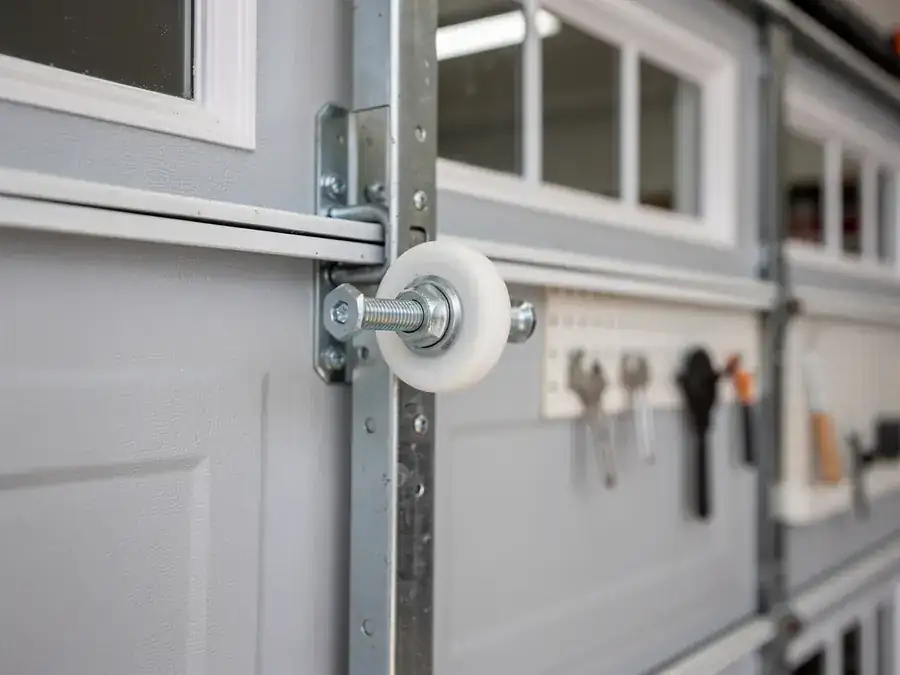
Clover sits about 17 miles from our shop in Fort Mill, and that distance changes how we handle a panel job before we ever load the truck. A dented or cracked panel is rarely a one-part fix - the hinge spacing, the track rollers, and sometimes the strut all need to match the section you're replacing, and guessing wrong on a 17-mile drive means a second trip and a half-day lost. So when you call about a damaged panel here, we ask more questions up front than you'd expect: door brand if you can read it off the label, approximate age, whether it's a two-car or single door, and whether the rest of the door is sagging or just that one section. We'd rather spend five extra minutes on the phone than show up with the wrong panel width. The honest trade-off is that we can't offer a same-day emergency slot the way a shop based in town could - we schedule panel jobs here around the route, not around the minute you call. For a cracked panel that isn't blocking the door from closing, that's a fine wait. For a panel torn loose and jamming the track, say so when you call, because that changes how we route the day.
What You Are Seeing
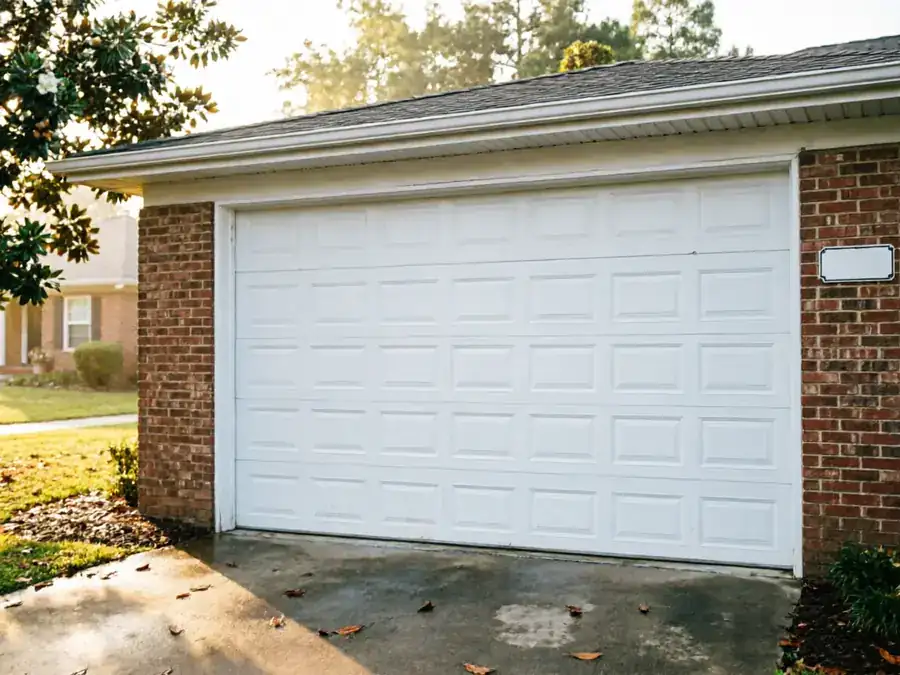
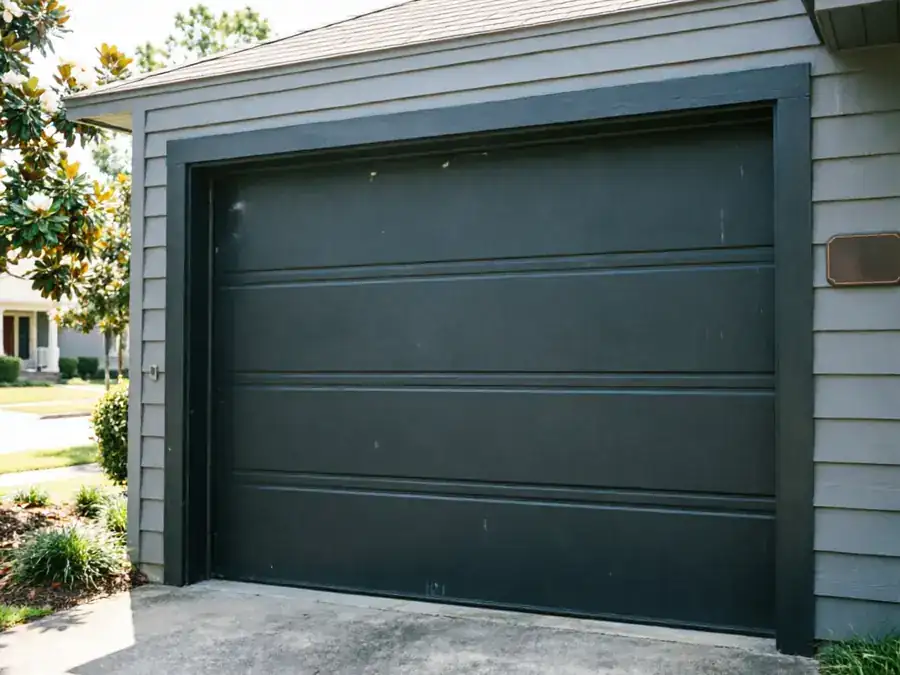
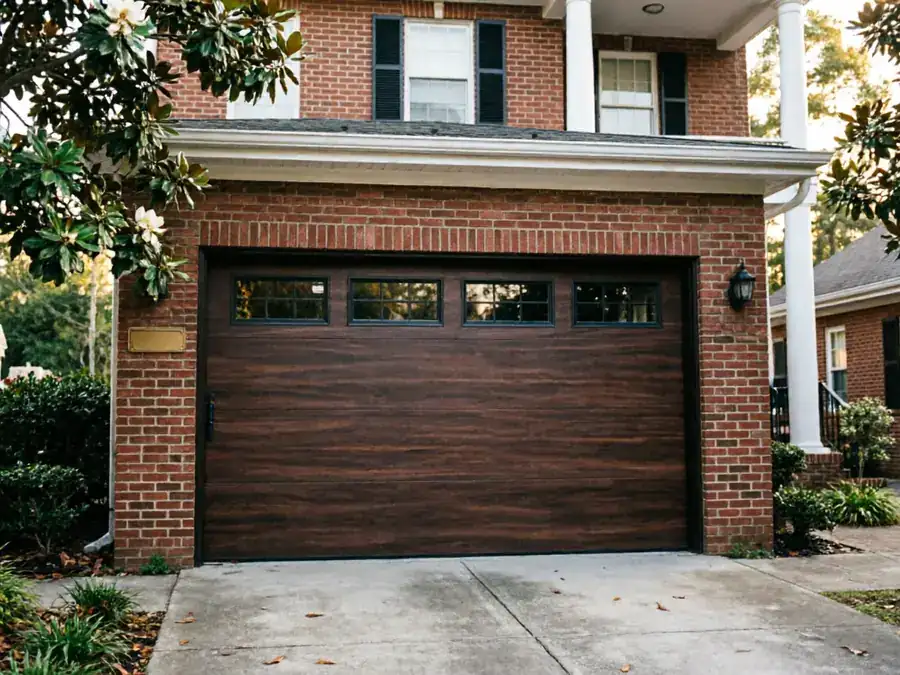
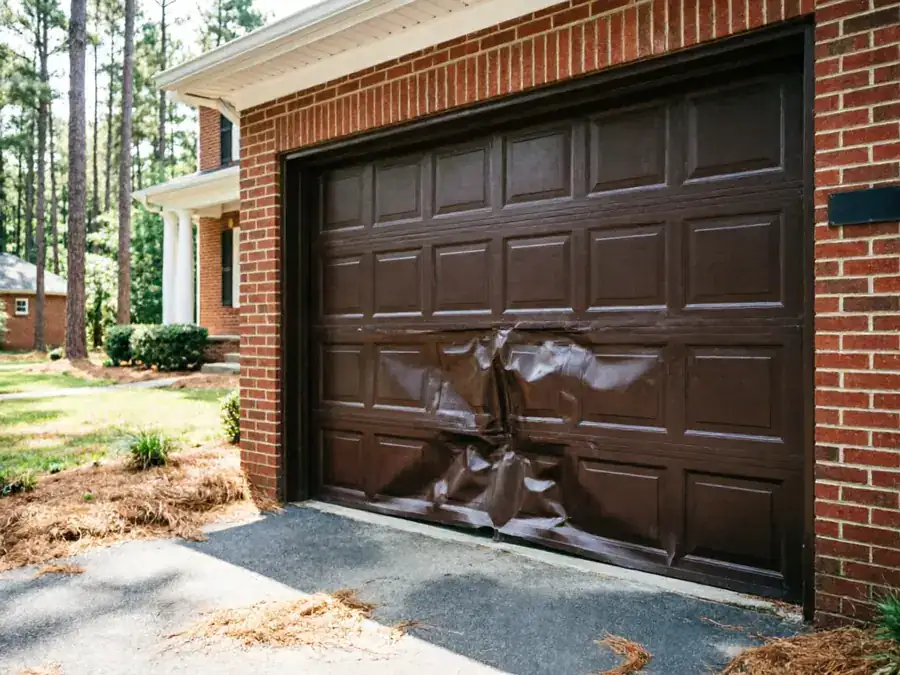
Most houses in this part of the county were built between 1979 and 2006, with the typical Clover build landing around 1997 - right in the era when steel sectional doors with foam-backed panels became the standard replacement for the older wood and hollow steel slab doors. If your door is from that build window, you're very likely looking at a 24- or 25-inch raised-panel steel section, often with a factory texture stamped into it, not a smooth flush panel. Damage on these usually shows up as a caved-in long panel from a backed-into car, a split seam where the foam backing has separated from the steel skin, or rust starting at the bottom panel where water sits after rain. Because the broader area runs a cold-moderate climate rather than deep freeze, we don't see the ice-jacking cracking that shows up further north - what we see instead is slow moisture damage at the bottom rail and panel edges that have been sitting wet for years without anyone noticing until the section buckles. If your door predates that late-century building wave, the panel sizing and hinge pattern can be different enough that we treat it as its own case rather than assume it matches the newer stock.
What the Repair Takes
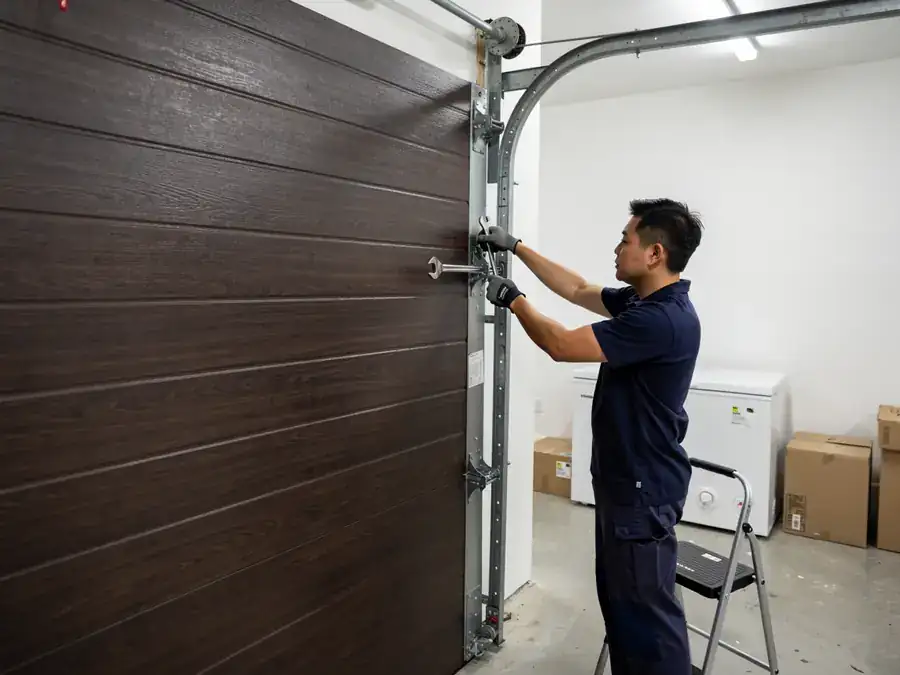
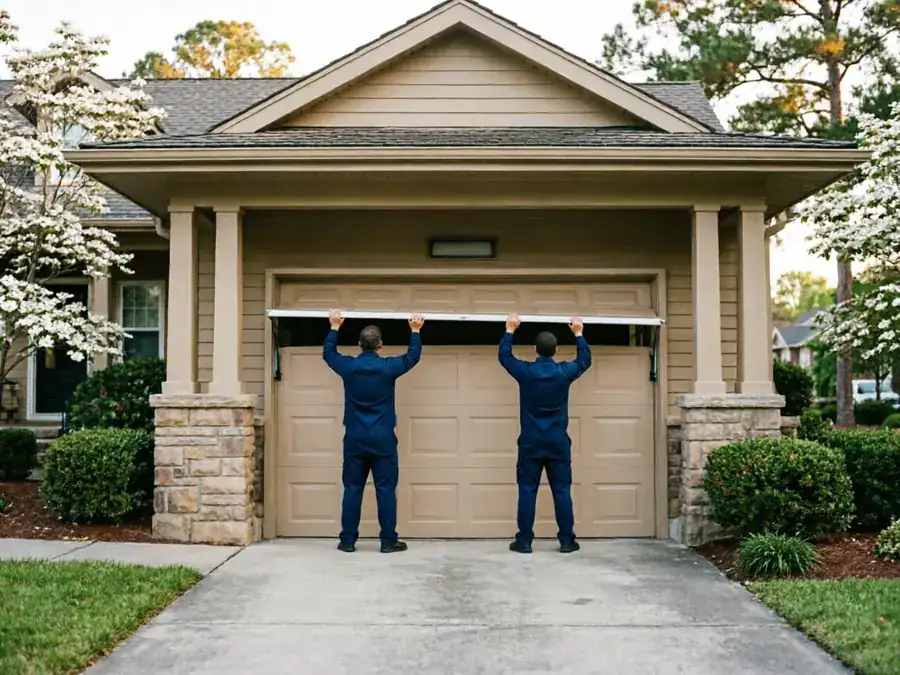
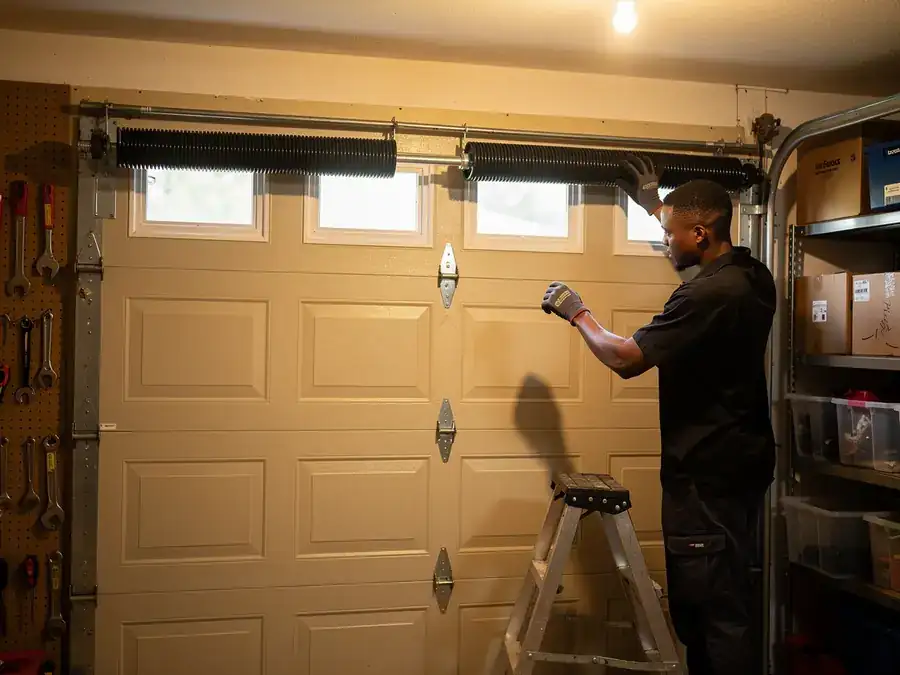
A straightforward single-panel swap, once we've confirmed the match, is usually an hour or so of work: pull the damaged section, transfer hardware, set the new panel, and run the door through a few open-close cycles to check it tracks true. Because we're driving in from Fort Mill, we try to pair panel jobs with other calls in the Clover, Lesslie, or York direction on the same day where the schedule allows, which keeps the trip efficient without charging you for drive time you didn't ask for. If the panel has to be special-ordered, that adds lead time before we can even schedule the install - we'll give you a realistic window rather than a guess once we know the brand and size. One thing we won't do is force a panel onto a track that's already bent from the same impact that damaged the panel; if the track's off, we fix that first, because a new panel riding a bent track just fails again.