What You Are Seeing
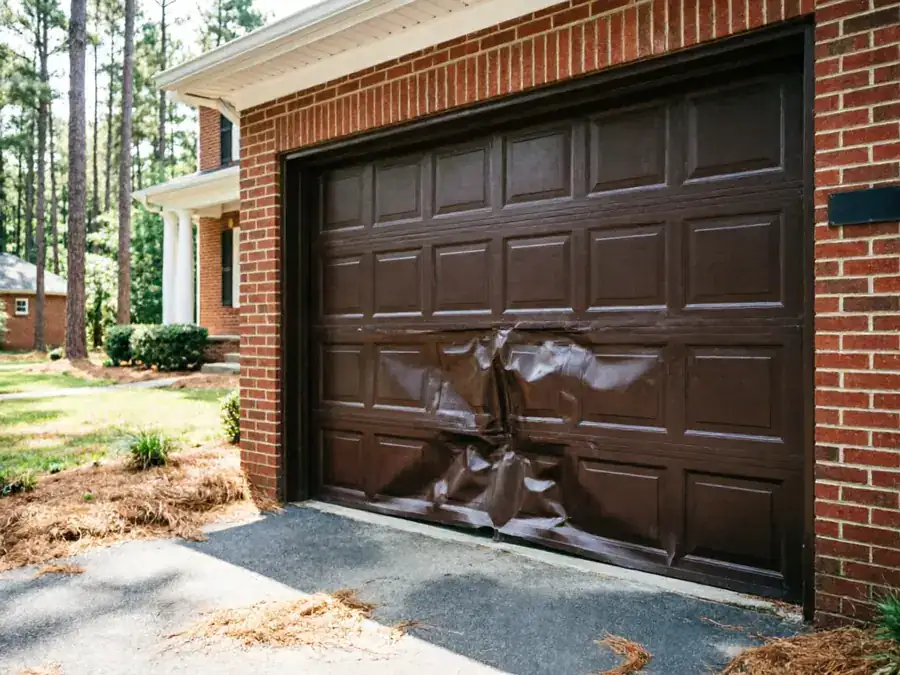
You hit the opener button and the door hesitates, groans, or doesn't move at all. Maybe it comes down crooked, one side dropping faster than the other. Maybe there's a bang from the garage when nobody touched the opener. These are the calls we get most from Fort Mill, and they almost always trace back to original hardware that's finally worn out.
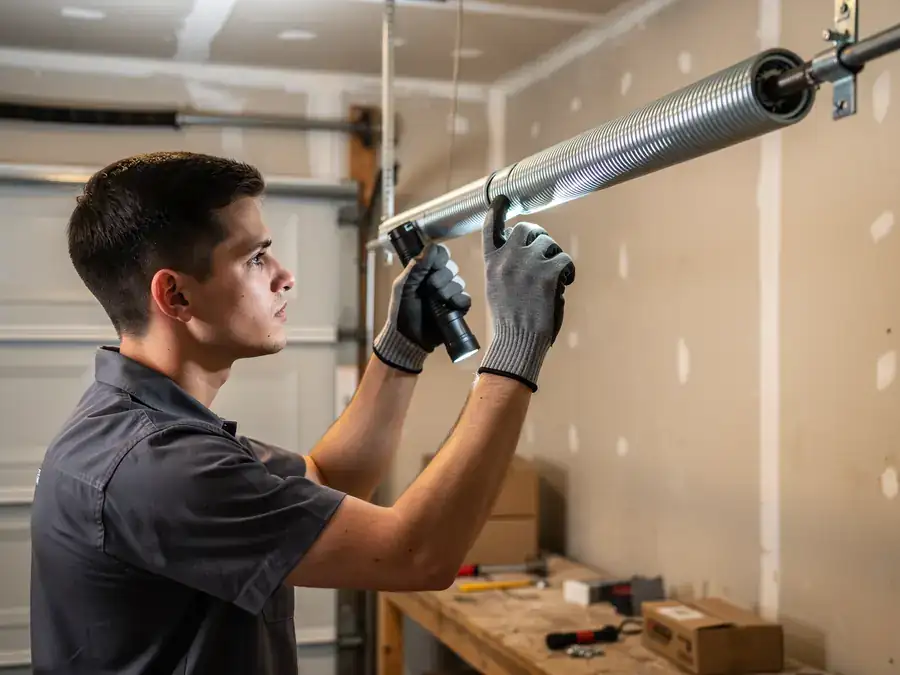
Fort Mill's housing stock mostly went up between 1979 and 2006, with a lot of it clustered around 1997. That means a huge share of the doors and openers in this area are the same units the house came with. A torsion spring, a set of rollers, a drive gear in a chain-drive opener - none of that is built to last 40 years, and a lot of it is now well past what anyone would call a reasonable service life.
If your door is slow to respond, sagging on one side, or making noise it didn't used to make, you're not imagining it. The hardware is aging out at roughly the same pace across whole streets, because the houses went up around the same years.
Why It Happens Here
Two things stack on top of each other in Fort Mill: the age of the housing and the climate. Across neighborhoods like Baxter Village, Riverview, and Tega Cay, the doors and openers installed when those houses were built are now pushing 25 to 45 years old. That's the first factor - sheer time on the hardware.
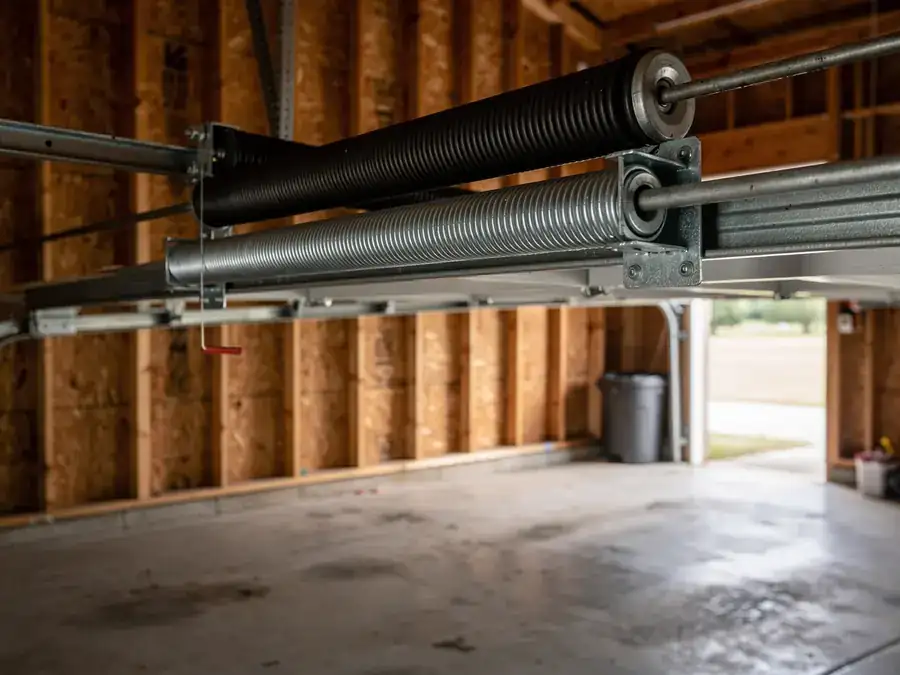
The second is winter. Fort Mill sits in a cold-moderate climate band, so steel torsion springs here deal with seasonal contraction that doors in consistently warm regions never see. Cold steel is less forgiving - a spring that's already fatigued from decades of cycles is more likely to let go on a cold morning than a mild afternoon. Grease and lubricant on tracks and hinges also thickens in cold weather, which adds resistance right when an aging opener has the least power to spare.
Put those together and you get the pattern we actually see on service calls: doors that worked fine all summer start acting up as temperatures drop, on hardware that was already near the end of its run. It's not bad luck. It's 1980s and 90s equipment meeting a Carolina winter.
Parts We Carry
With 11,863 owner-occupied houses across the service area, most still running original 1980s and 90s hardware, worn rollers and stretched cables are the norm on the calls we run, not the exception
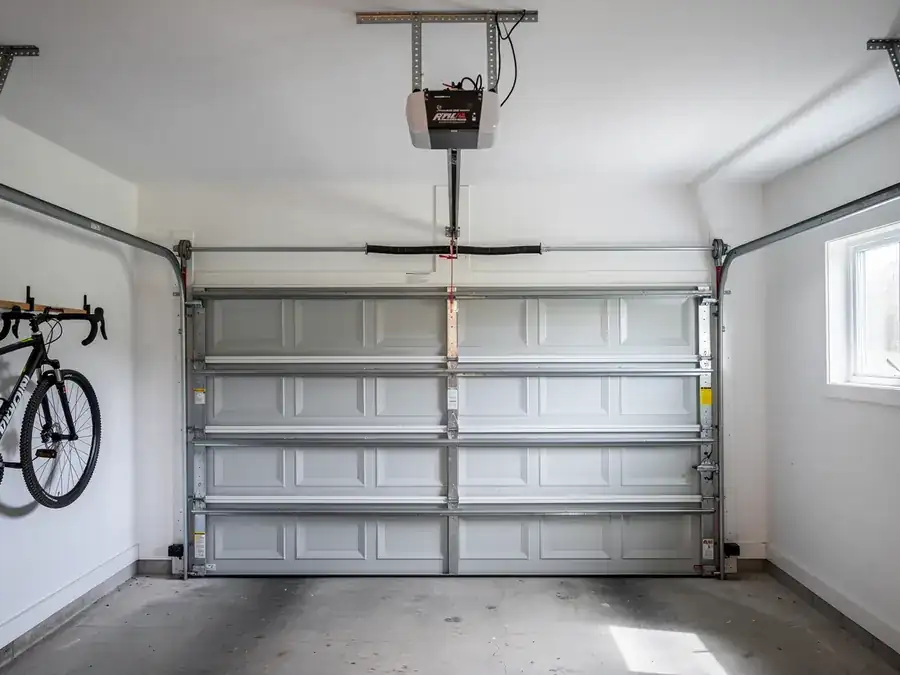
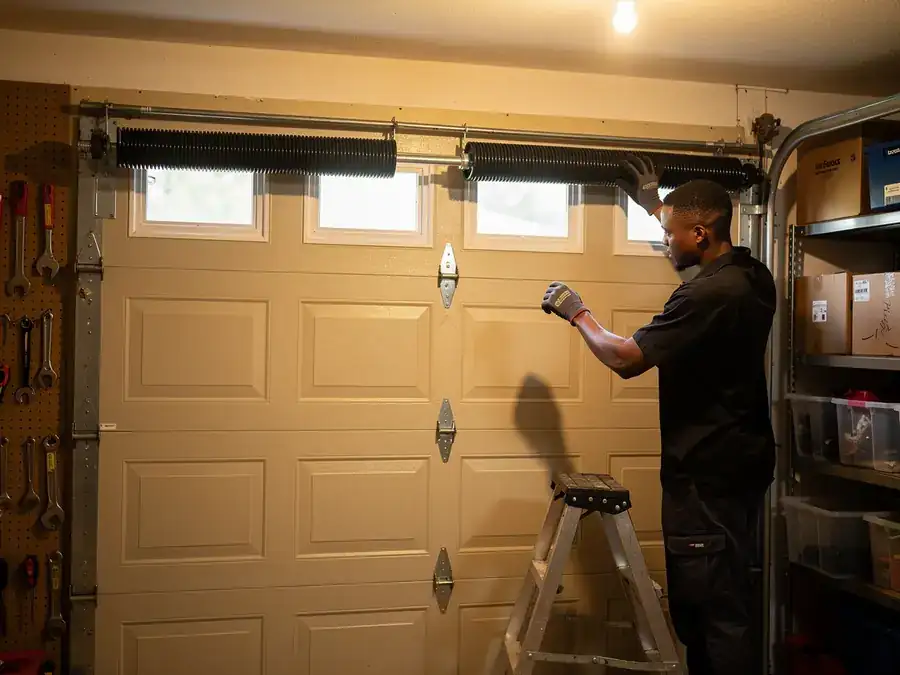
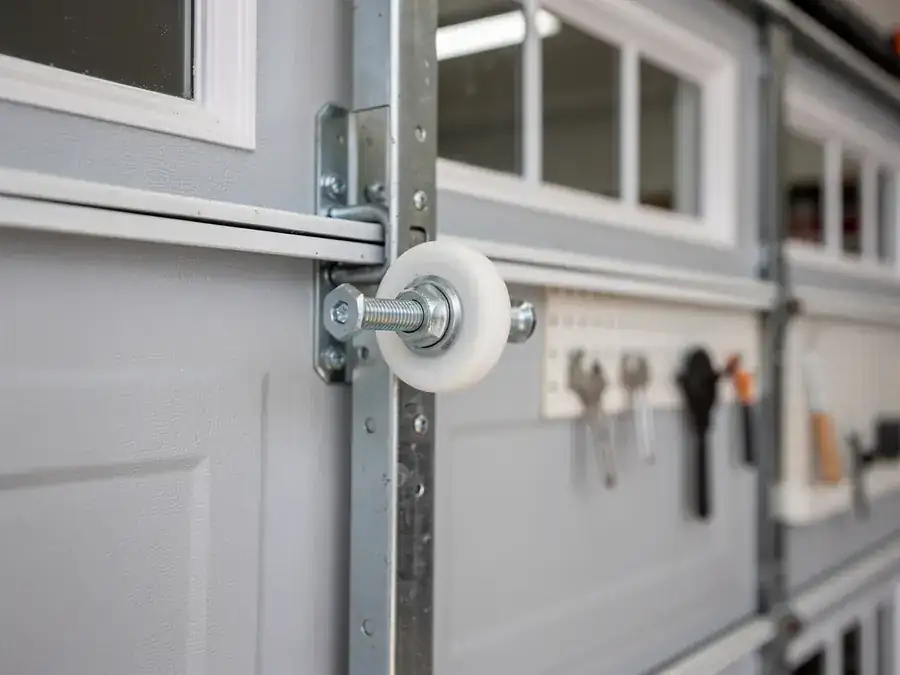
We stock the parts that fail most on that generation of doors: torsion and extension springs in common residential sizes, nylon and steel rollers, lift cables, bottom brackets, and the hinges that crack from fatigue before anything else gives out.
- 11,863 owner-occupied
Opener parts are a mixed bag
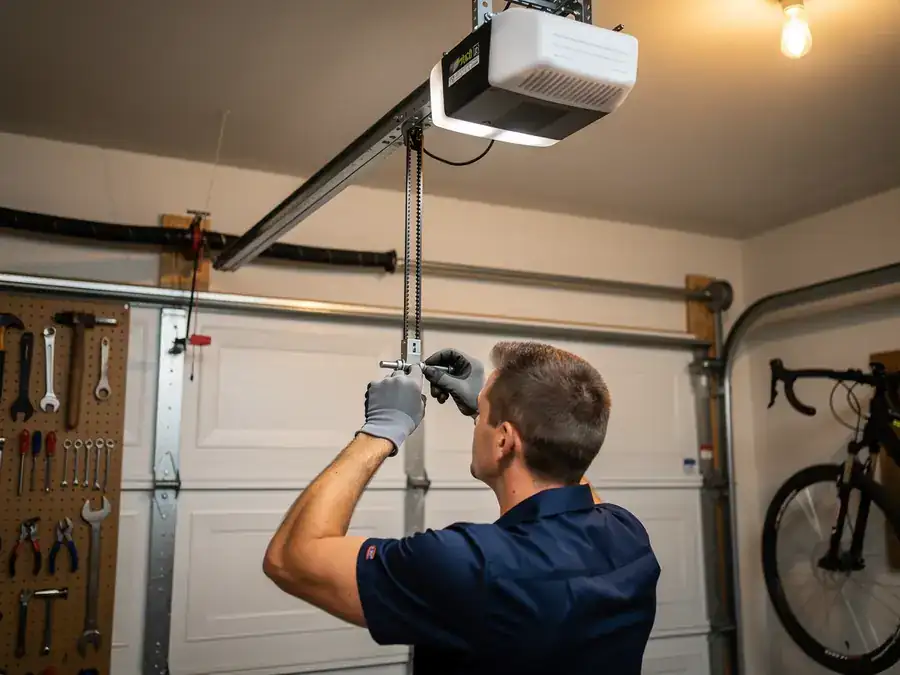
Drive gears and sprockets for chain and belt units from that era are usually in stock. Circuit boards and logic units are a different story - if your opener is an older model with a board that's no longer made, we'll tell you straight that replacement makes more sense than a parts chase that could take weeks.
We don't keep every obscure size on the truck
Custom or oversized doors sometimes need a part ordered in, and we'll give you a real timeline instead of guessing. On a standard residential door built to the sizes common in this area, though, most repairs get done the same visit.
What the Repair Takes
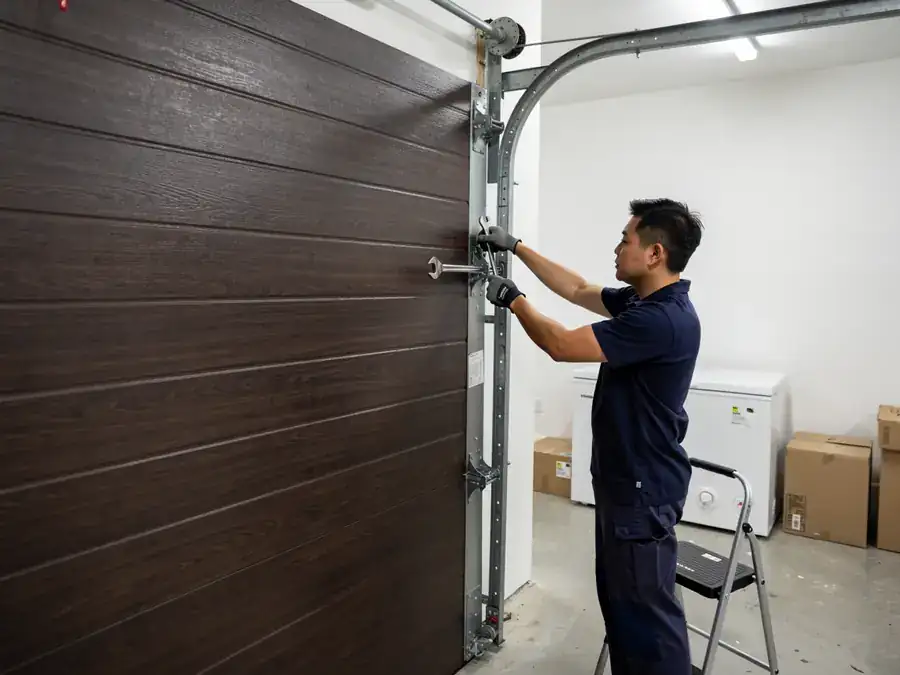
Most spring and roller jobs on a standard double or single door run under two hours once we're on site, start to finish including cleanup. Cable and bracket work is similar. Opener board or gear repairs can take longer if we're diagnosing an intermittent fault rather than a dead one.
We'll walk the door with you first - check spring tension, look at the tracks for rust or bending, test the opener's force settings - before we say what it needs. If a door built in the 1980s or 90s has multiple systems failing at once (springs gone, rollers shot, opener board unreliable), we'll say so plainly: sometimes a full door-and-opener swap costs less over time than patching one failure after another.
We cover Fort Mill and work out to the surrounding areas - Baxter Village, Riverview, Tega Cay, India Hook, and Newport close in, Lesslie a bit further, and out to York and Clover around 17 miles, with McConnells at about 19. Call us and we'll tell you honestly whether what you're hearing is a quick fix or the start of something bigger.