What Is Going On
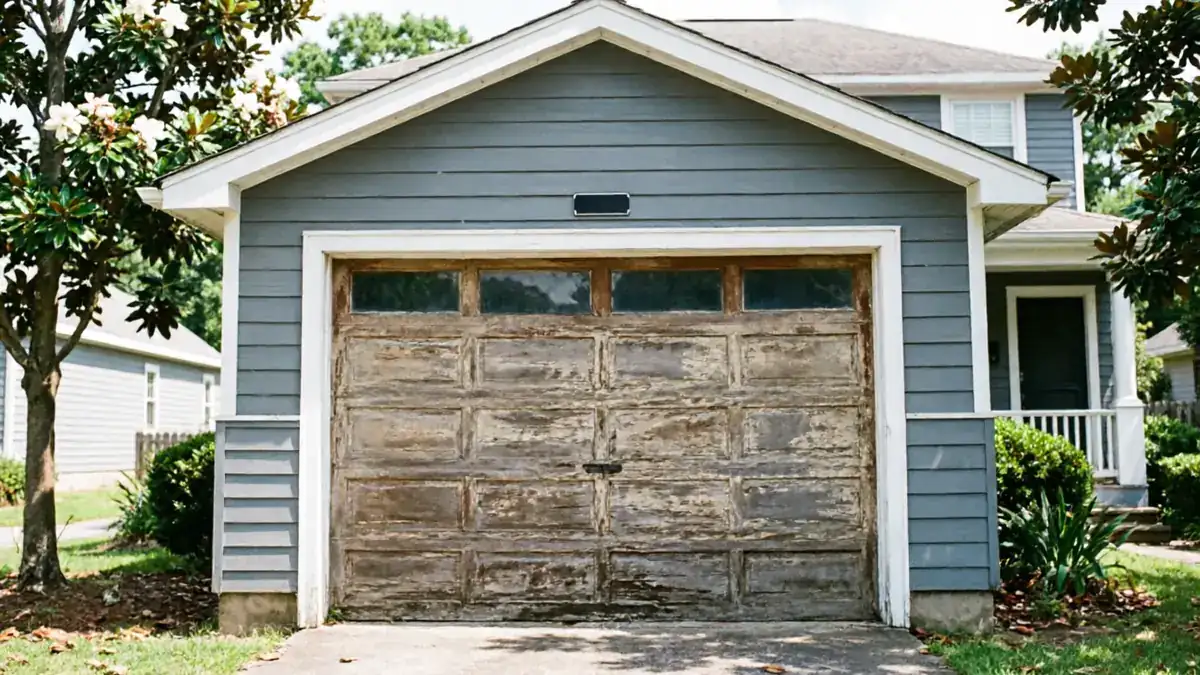
Most of the houses we work on around here went up somewhere between 1979 and 2006, with the bulk of that clustered in the 1980s and 90s across the nine areas we see most - Baxter Village, Riverview, Tega Cay, India Hook, Newport, Lesslie, York, Clover, and McConnells. That matters because a door is not a door. A door installed in 1985 has different steel gauge, a different spring system, and a different opener logic board than one installed in 2004, even if they look the same from the driveway. When a homeowner calls and says "the door is acting up," the first question we ask ourselves is how old the house is, because that tells us more than the symptom does. A door from the earlier end of that build window is likely on its second or third opener already, possibly its original spring, and the track hardware was probably never upgraded. A door from the later end of the window is often still running factory parts that are simply tired, not obsolete. Knowing which era you're in changes whether we show up expecting a quick fix or a conversation about replacement. We don't guess at this - the age of the house usually tells the story before we touch the door.
What the Weather Here Does to It
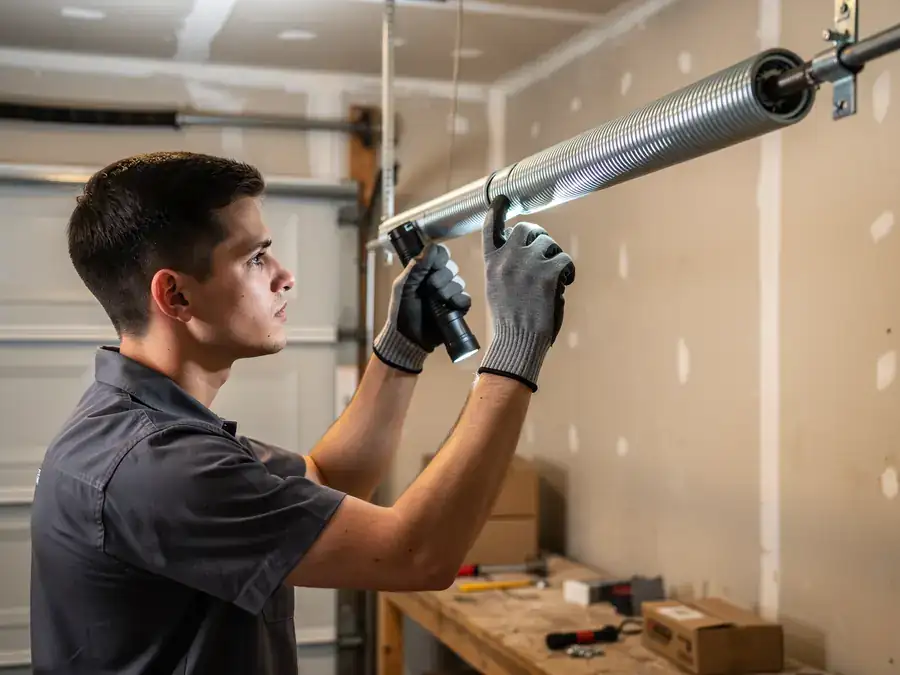
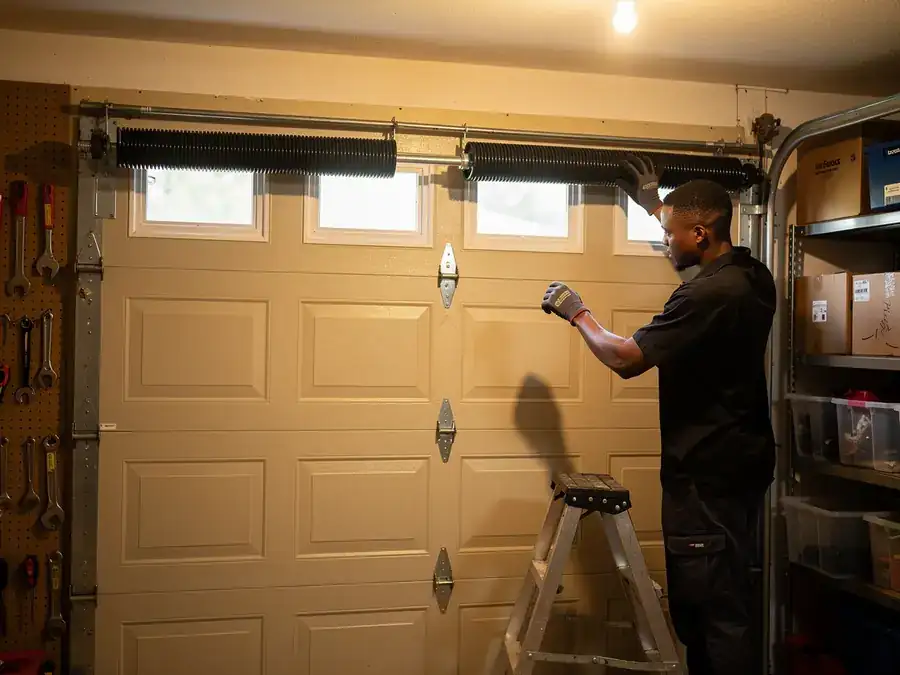
This area sits in a moderate cold climate band, not the deep freeze further north and not the mild winters of the coast. That middle ground is actually harder on garage door hardware than either extreme, because the door cycles through freeze and thaw more often instead of settling into one condition for months. Steel springs lose a little temper every time they contract hard in a cold snap and then expand again a few days later when it warms back up. Over a house built in the 1980s or 90s, that's two or three decades of that cycle on hardware that was never rated for a long service life to begin with. We see it most in torsion springs that look fine, haven't broken, but have lost enough tension that the opener is doing work the spring used to do - which burns out the opener early. It's not a dramatic failure. It's a slow one, and it's the kind that's easy to miss until the day the spring finally lets go.
Where People Go Wrong
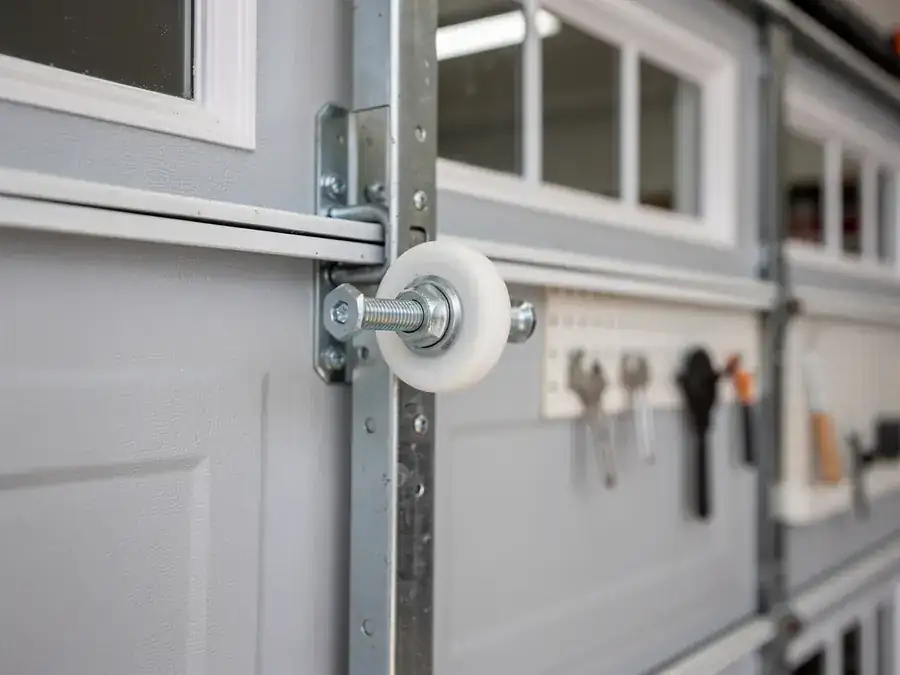
The most common mistake we see is treating every noisy or slow door the same way, regardless of the house's age. On a door from a house built in the late 1990s or 2000s, a tune-up and a new set of rollers is usually money well spent - the opener and track are still in reasonable shape. On a door from the earlier end of our local build range, pouring money into a new opener while the original spring and track hardware stay in place is often throwing good money after bad. Here's the honest limit: if your springs and track are original to a house built in the early 1980s, we will tell you straight that full replacement often costs less over five years than repeated repair calls, and we'd rather lose the smaller job than sell you a patch we know won't hold. We can't tell you which side of that line you're on without seeing the door - a phone description of "grinding" means something different on a 1983 system than it does on a 2003 one.