What You Are Seeing
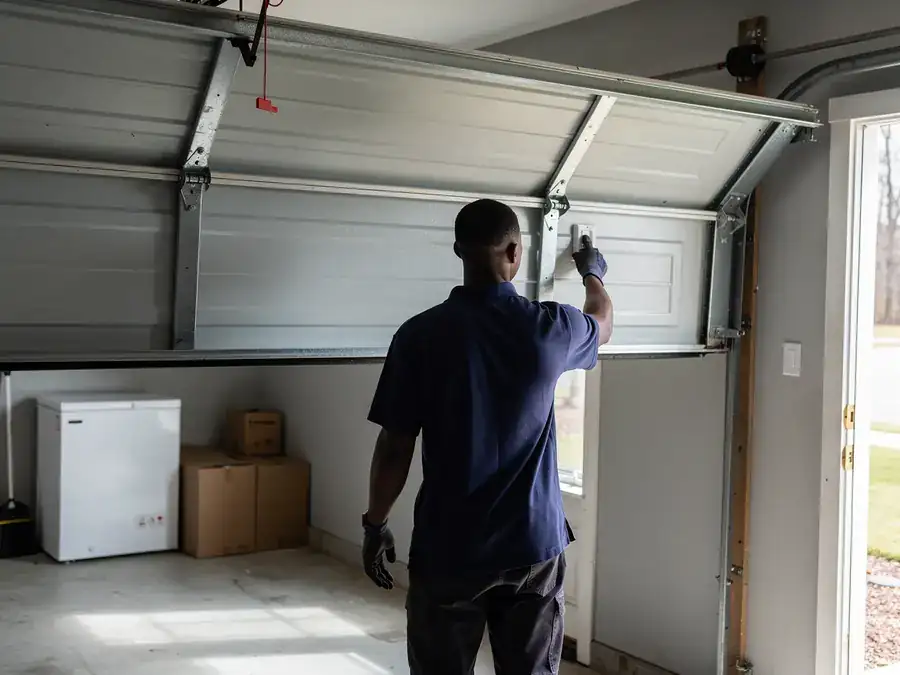
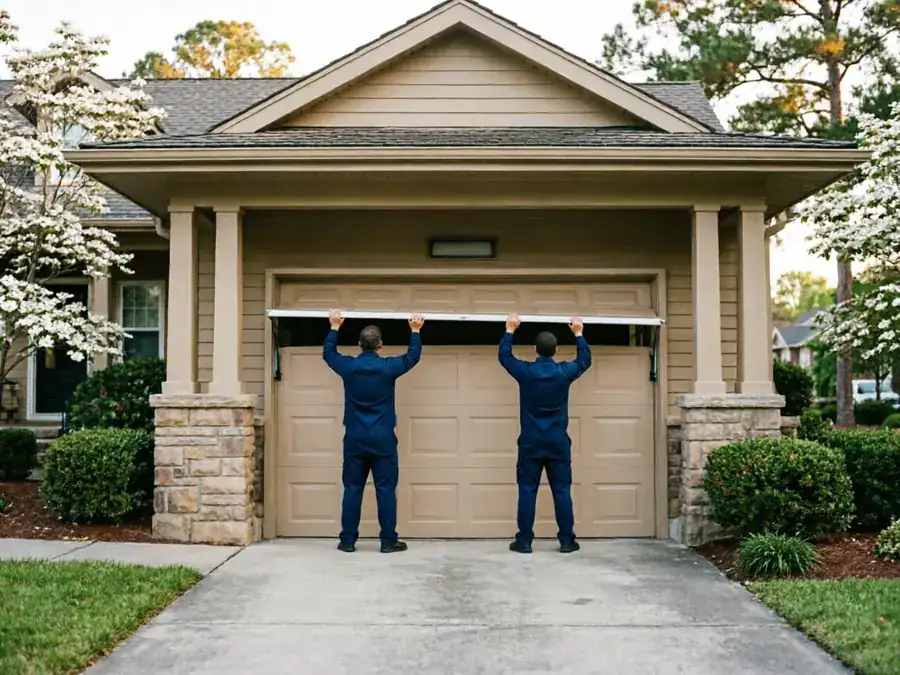
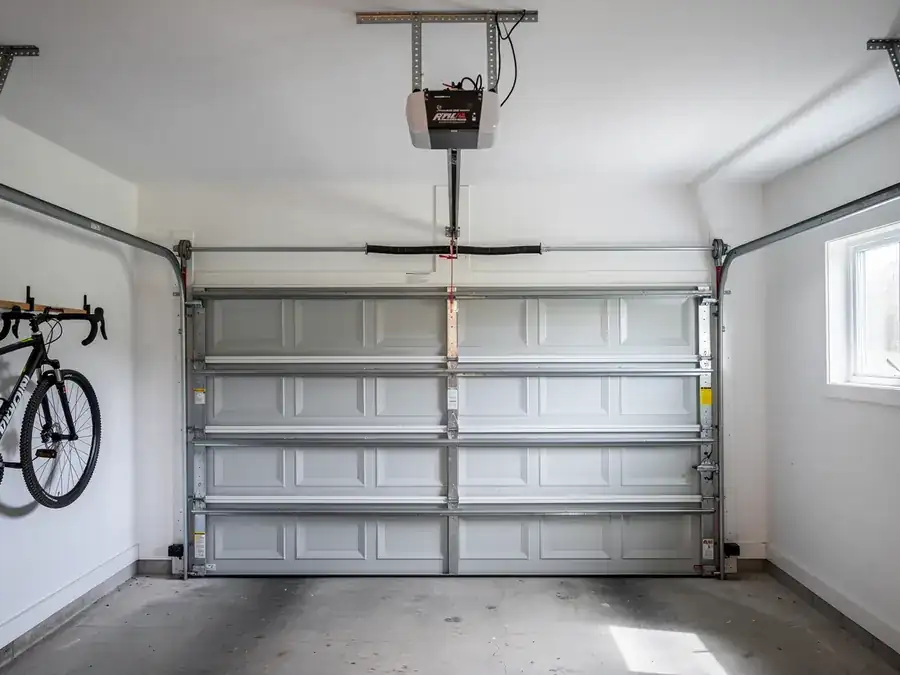
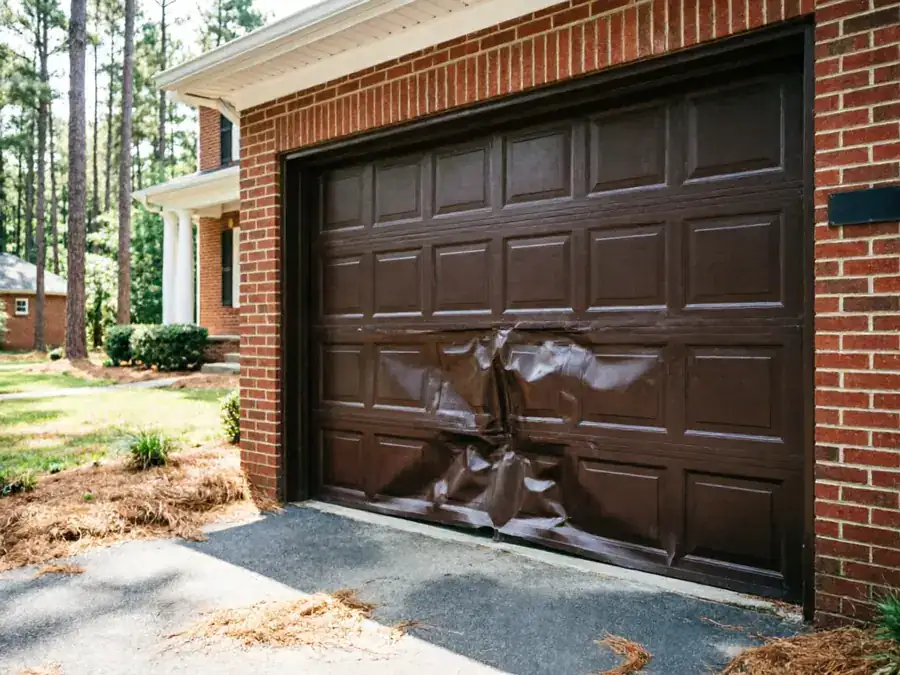
If the door won't budge, or it jumps up a few inches and stops, or you hear a bang from the garage followed by the door going dead - that's almost always a torsion spring that's let go. One side snapped, the cable on that side has slack in it, and the opener either stalls out trying to lift unbalanced weight or trips its own safety reversal and refuses to close.
Sometimes it's less dramatic: the door feels heavier than it used to, it creeps down on its own when you stop lifting halfway, or the opener motor strains and gets hot climbing a door it used to handle fine. That's a spring losing tension gradually instead of snapping outright - same failure, slower version.
We work this call across the Fort Mill service area, including Baxter Village, Riverview, Tega Cay, India Hook, Newport, Lesslie, York, Clover, and McConnells. The fault looks the same house to house, but the housing stock and the weather swings here set the pace at which it shows up, which is what the next section is about.
Why It Happens Here
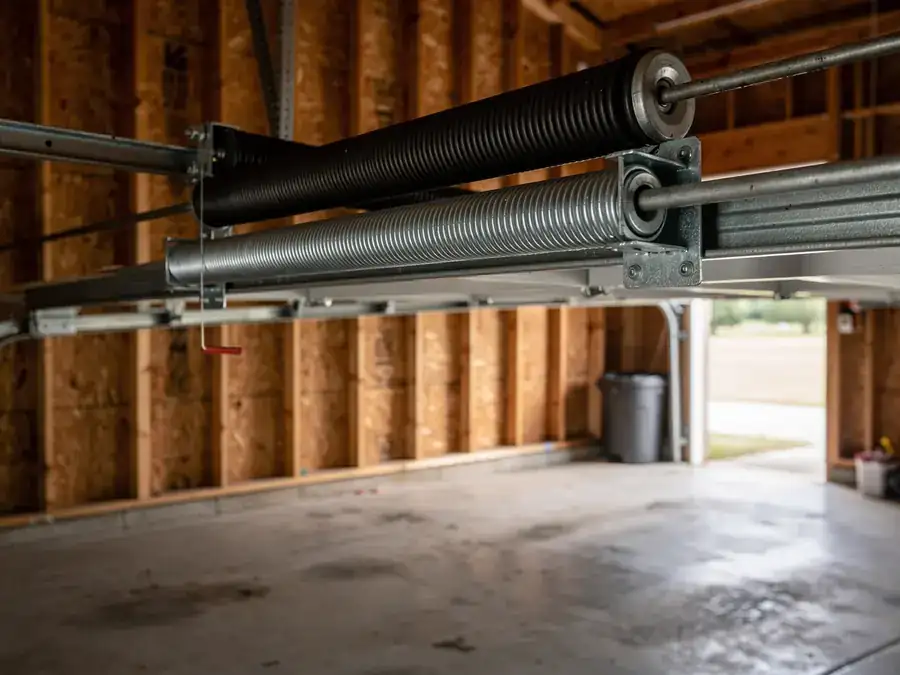
Most of the homes we get spring calls from went up between 1979 and 2006, with a median build year around 1997 - that's the bulk of what's sitting across the nine areas we cover. Torsion springs on doors from that era are rated for a lifecycle, typically somewhere in the 10,000-cycle range depending on the door weight and wind load they were specced for, and a lot of those original springs are now 20-plus years into daily use. They don't fail because anyone did anything wrong. They fail because steel fatigues on a schedule, and that schedule is almost up on a big share of the stock in this area.
The climate plays a second role. We're in a cold-moderate band, which means the garage swings through real temperature changes across the year without the deep-freeze extremes that some regions get. That swing still matters: steel contracts in cold and expands in heat, and a spring already near the end of its rated cycles is more likely to let go on a cold morning when it's stiff and under full load than on a mild afternoon. It's not that the cold breaks the spring outright - it's that cold exposes a spring that was already close to done.
Parts We Carry
We stock torsion springs in the wind sizes that match what's actually on doors in this area
The sizing driven by the door weight and height common to construction from the late 1970s through the mid-2000s. That's the bulk of what we're replacing, so it's what rides on the truck.
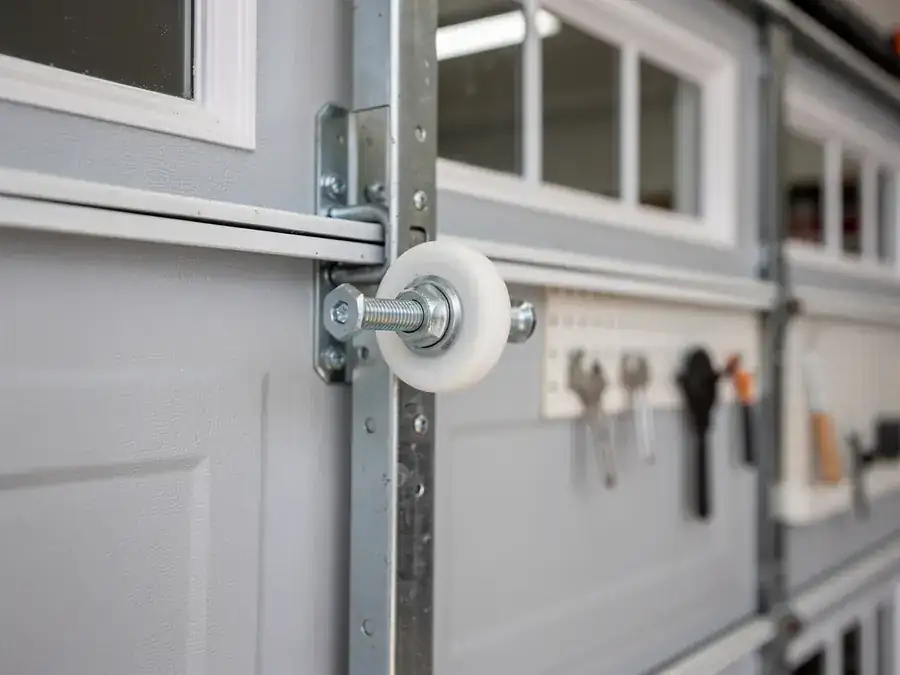
We also carry the matching end bearing plates, center bearing brackets, and cable drums, because a spring rarely fails in isolation - the hardware around it has usually taken wear too, and replacing just the spring on a bearing that's seized or a drum that's cracked is a callback waiting to happen
One honest limit: if your door is an uncommon size, a custom wood door, or an older low-headroom setup with a spring configuration we don't normally see out here, we may need to order that specific spring rather than pull it off the truck same-day
We'll tell you up front if that's the case instead of guessing on a size and making you wait for a second trip.
What the Repair Takes
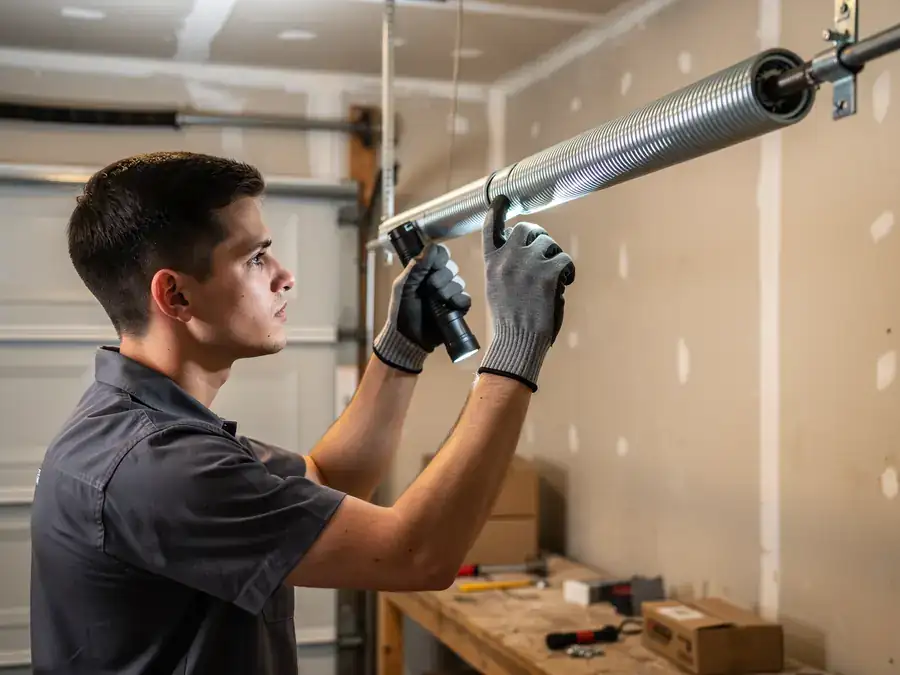
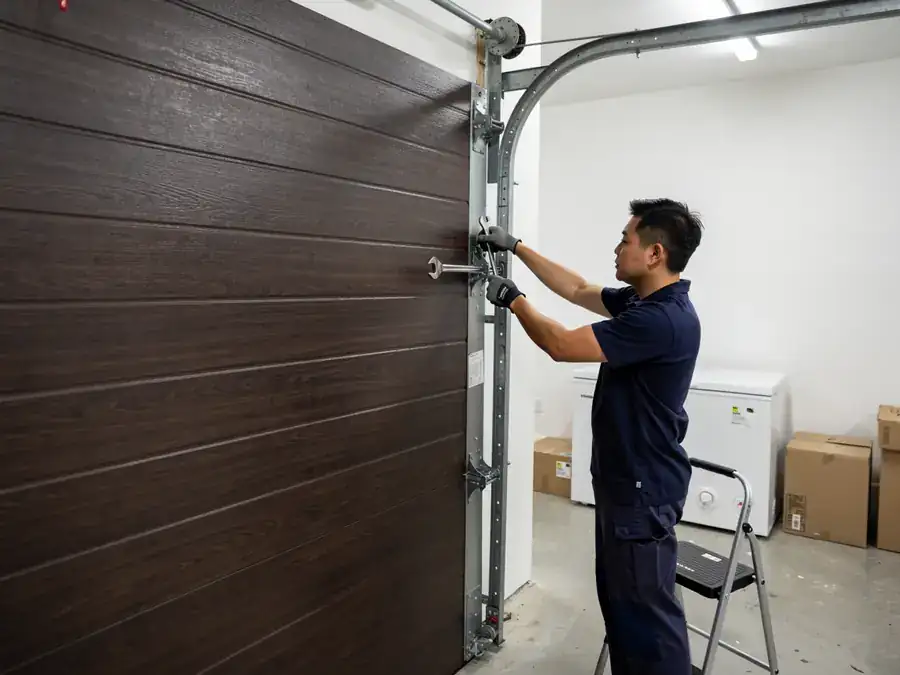
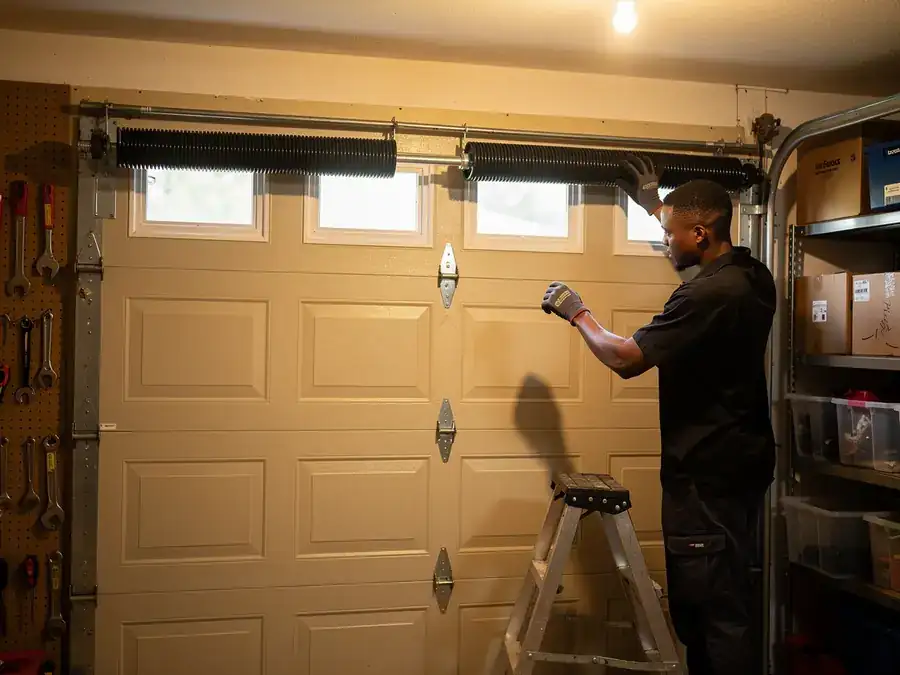
A straightforward torsion spring swap - one or both springs, same wind size, standard door - is a same-visit job. We unload the door, measure and confirm the wind and wire size against what's installed, swap the spring or pair, and reset the tension so the door balances without the opener fighting it in either direction.
If the bearings, drums, or cable are also worn, we replace those at the same time rather than leave a new spring running against old hardware, since that's the fastest way to end up back out here in six months.
We don't recommend re-winding or patching an old spring, and we don't sell a single-spring fix on a double door when the other spring is close behind it in age - that's a short-term save that costs more in a second trip. If the door itself is sagging, the panels are cracked, or the track is bent from the unbalanced pull of a broken spring, we'll say so plainly rather than quote a spring job that won't actually fix what's wrong.