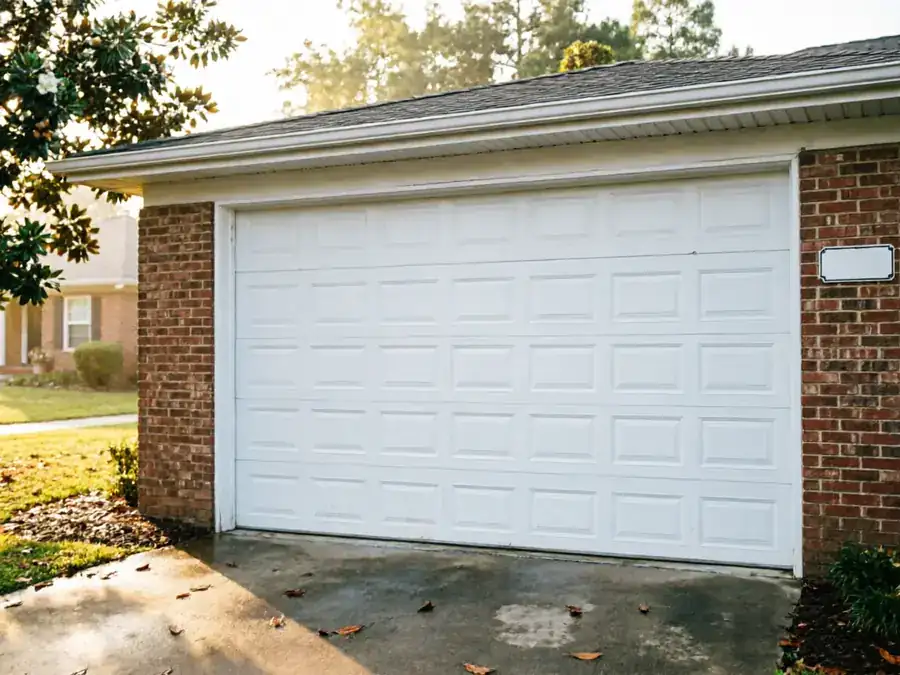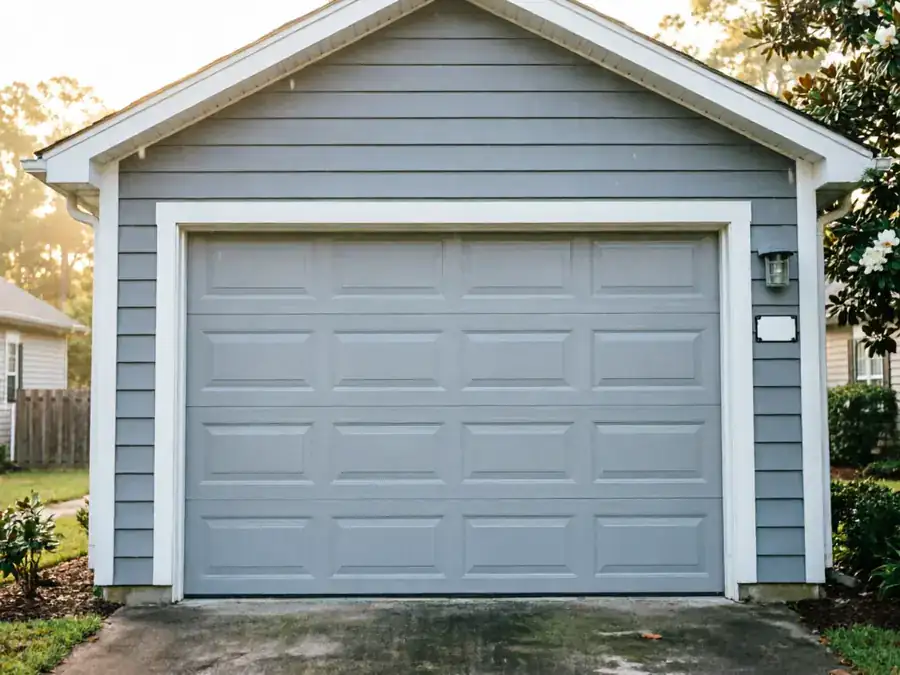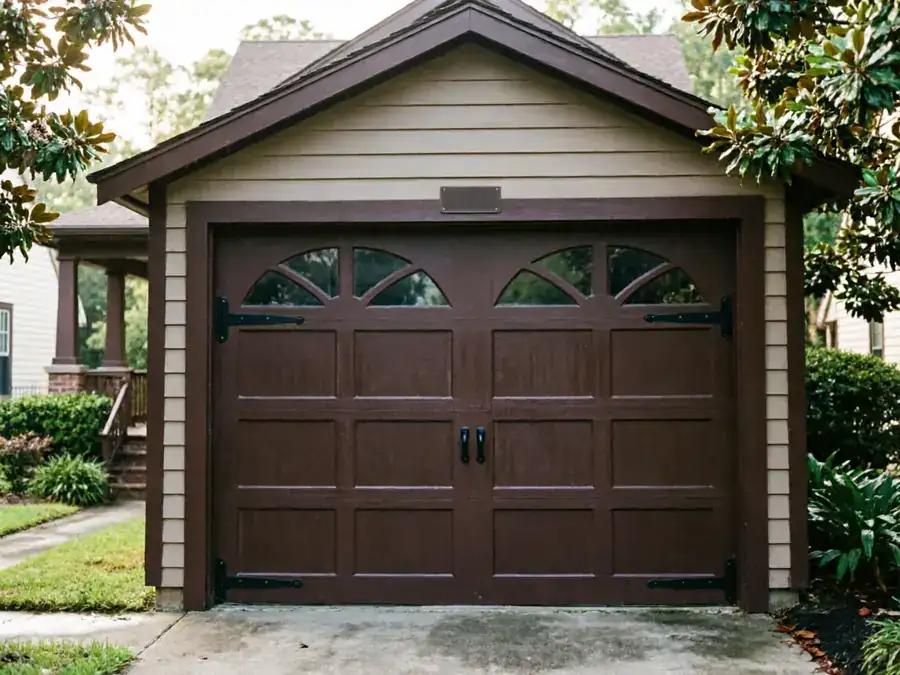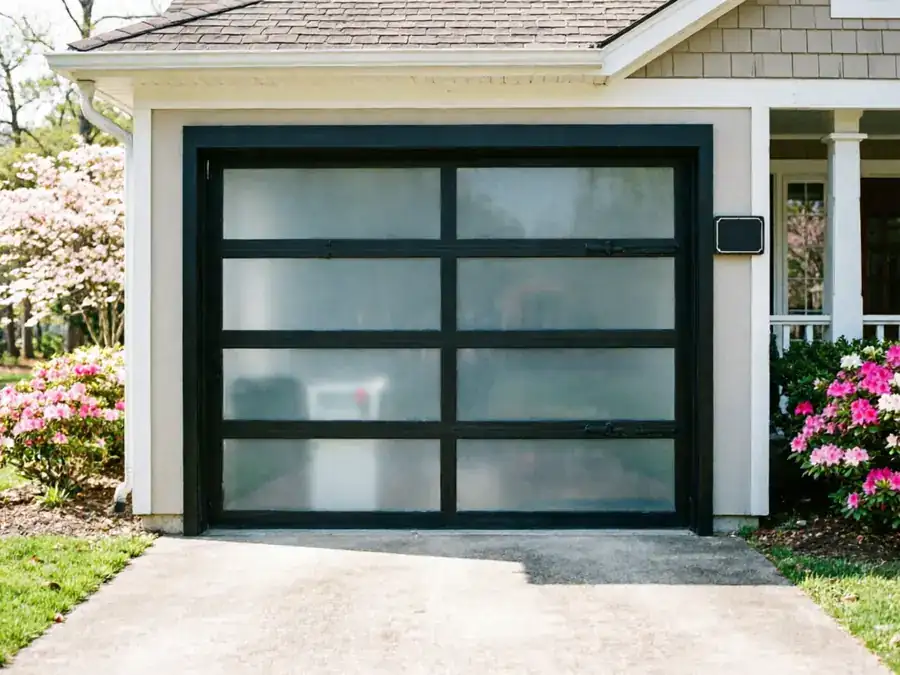
What You Are Seeing
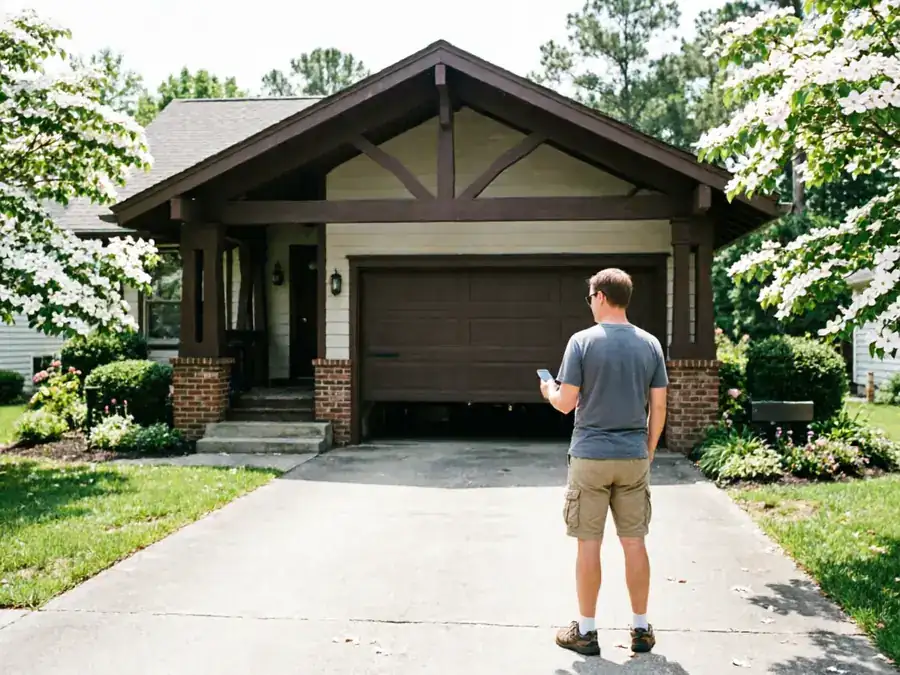
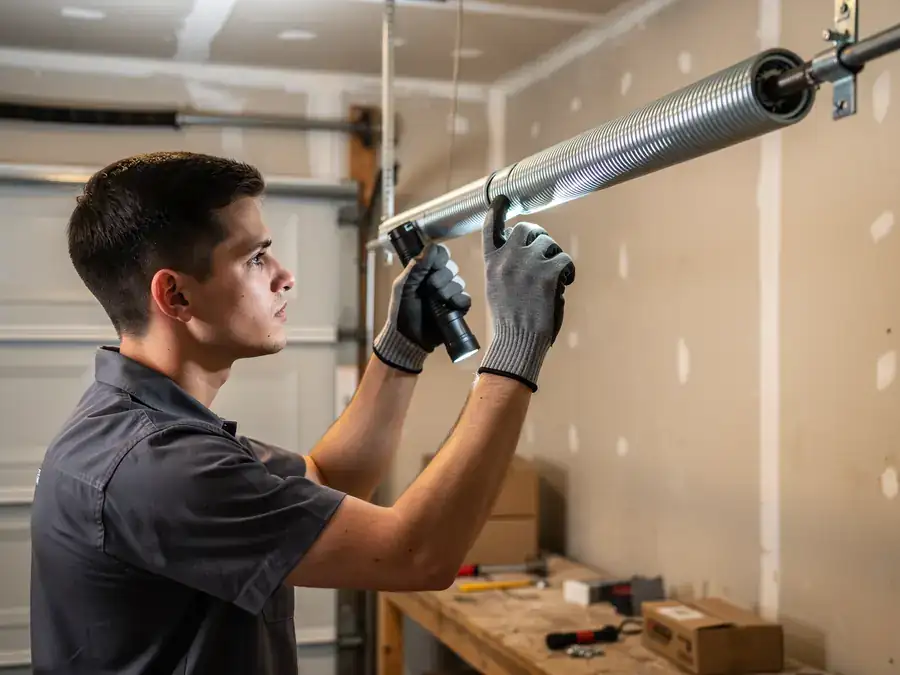
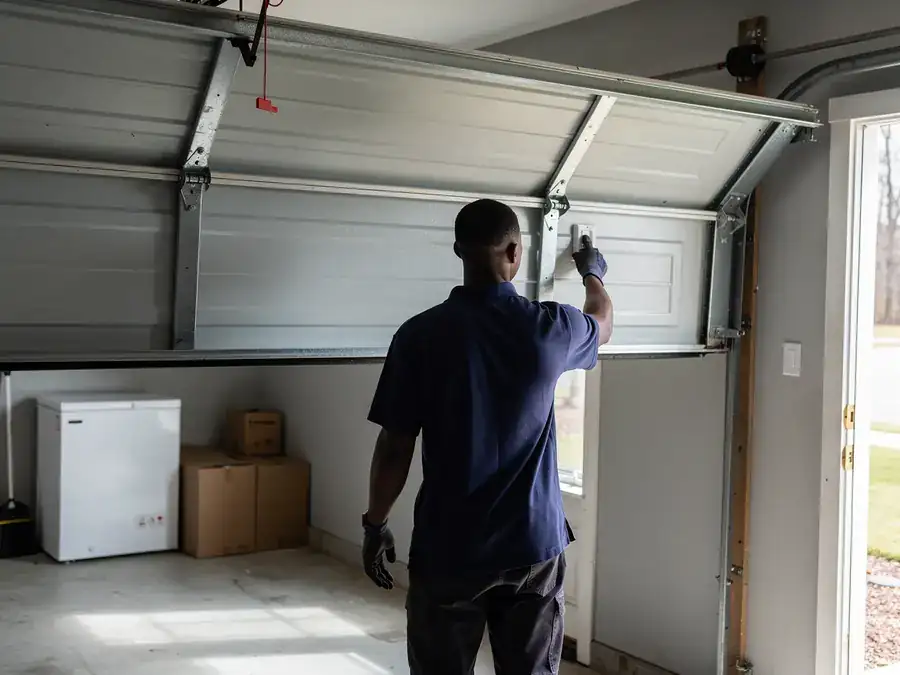
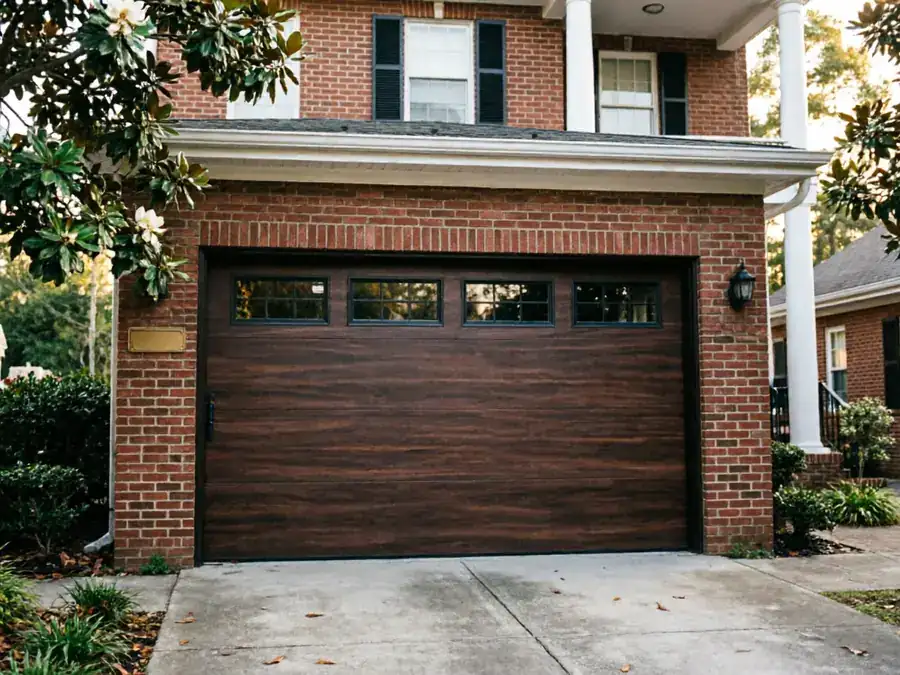
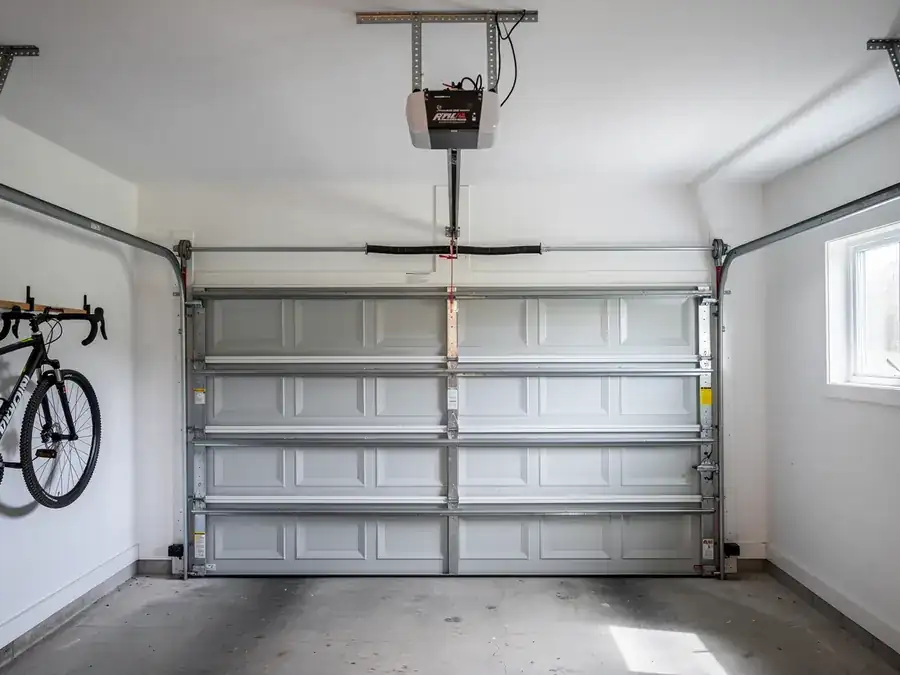
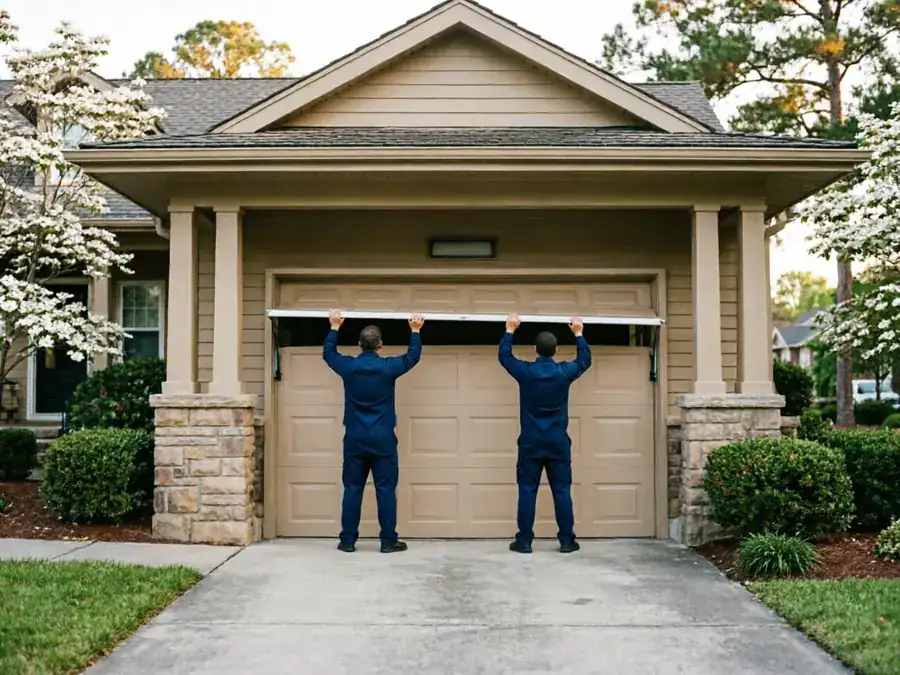
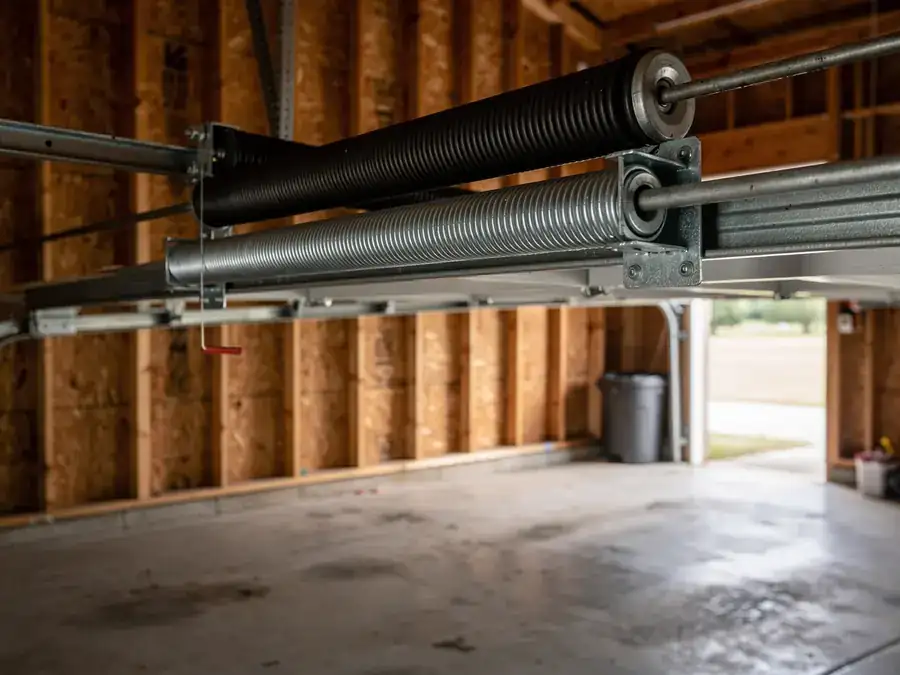
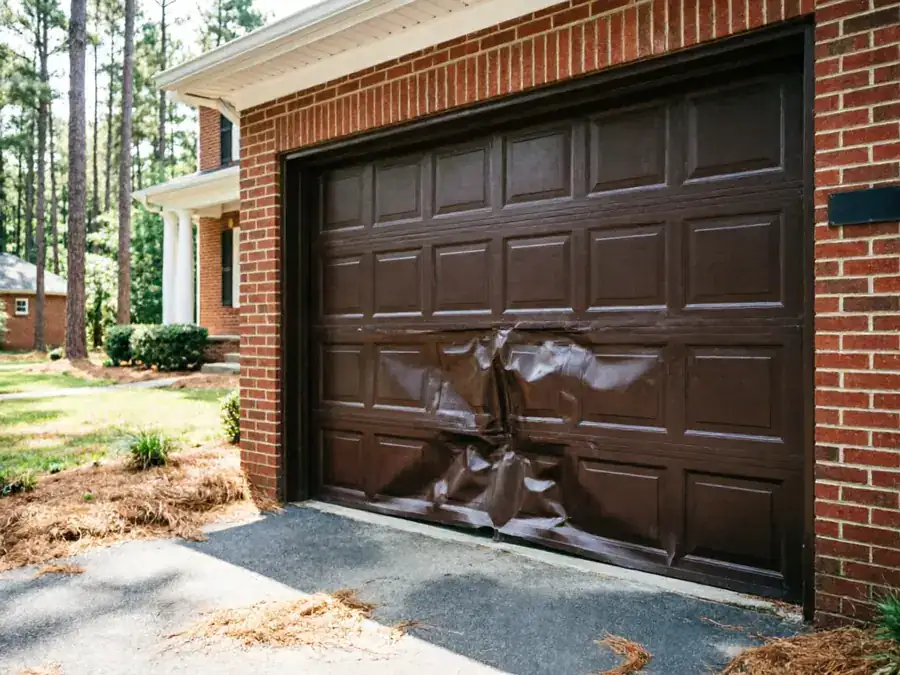
If your door won't open, opens crooked, or makes a bang and then stops halfway, you're probably looking at a broken torsion spring or a cable that's jumped the drum. On a lot of the doors we check in Fort Mill, the symptom shows up the same way: the opener runs, the motor hums, but the door itself doesn't move, or it lifts an inch and drops back down. That's the spring doing none of the lifting anymore, which means the opener is trying to hoist the full weight of the door on its own and usually can't.
Some owners also notice a loud pop from the garage before any of this starts - that's often the spring itself letting go. Others see a cable curled up on the floor near the bottom bracket, which is the cable off the drum rather than a spring break. Either one stops a double door cold. A single door with the same failure sometimes still limps along, just loud and off-balance, which is worse in the long run because you keep running the opener against a door that's fighting you.
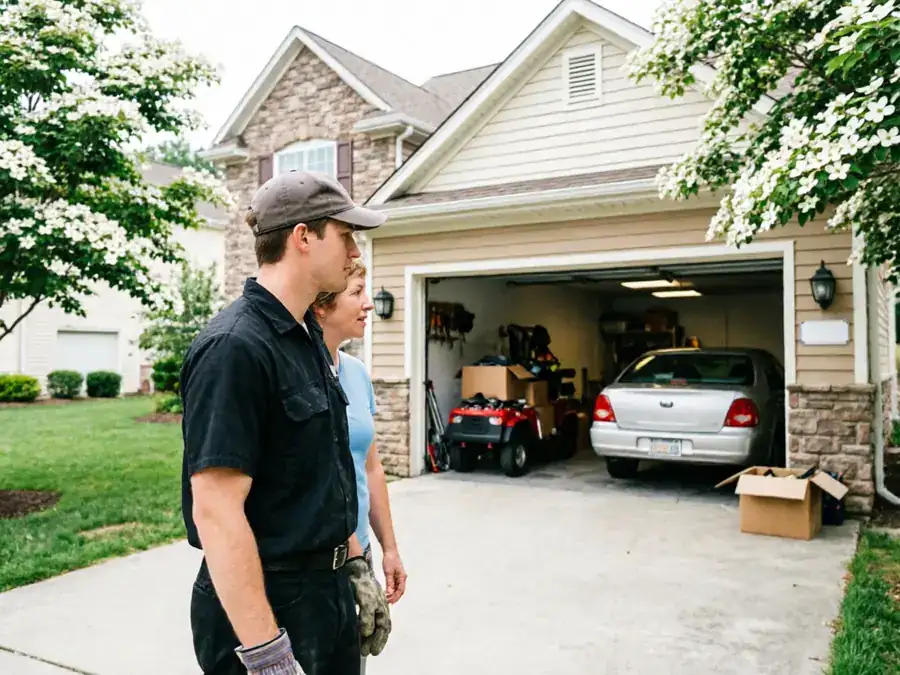
We see this across the owner-occupied houses in the area regularly enough that it's the single most common call we take - not openers failing outright, but the spring system behind the opener giving up first.
Why It Happens Here
Housing in and around Fort Mill was mostly built between 1979 and 2006, with the heaviest concentration going up through the 1980s and 90s across the nine areas we track. A torsion spring is rated for a number of open-close cycles, not a number of years, but in practice most springs on houses from that era are now 20 to 40 years old and have been cycled tens of thousands of times. That's well past the point where the steel starts to fatigue, and fatigue failure doesn't warn you - it just lets go.
Fort Mill sits in a cold-moderate climate band, which matters more than people expect. Steel contracts in winter cold, and the grease in an old spring or on an old roller track stiffens along with it. A spring that's already near the end of its cycle life under stress from a cold start is more likely to snap than the same spring on a mild afternoon. We don't get the extreme freeze-thaw cycling of a true northern climate, so the failure mode here is slower and more fatigue-driven than ice-driven, but it still adds up.
Put those two things together - original-era hardware reaching end of life, plus a climate that stresses metal every winter - and you get the pattern we actually see on service calls: springs and cables failing on houses old enough to have never had them replaced.
Parts We Carry
We stock torsion springs sized for the single and double doors common on 1980s and 90s construction, along with the lift cables, drums, and end bearing plates that usually go with a spring failure rather than on their own
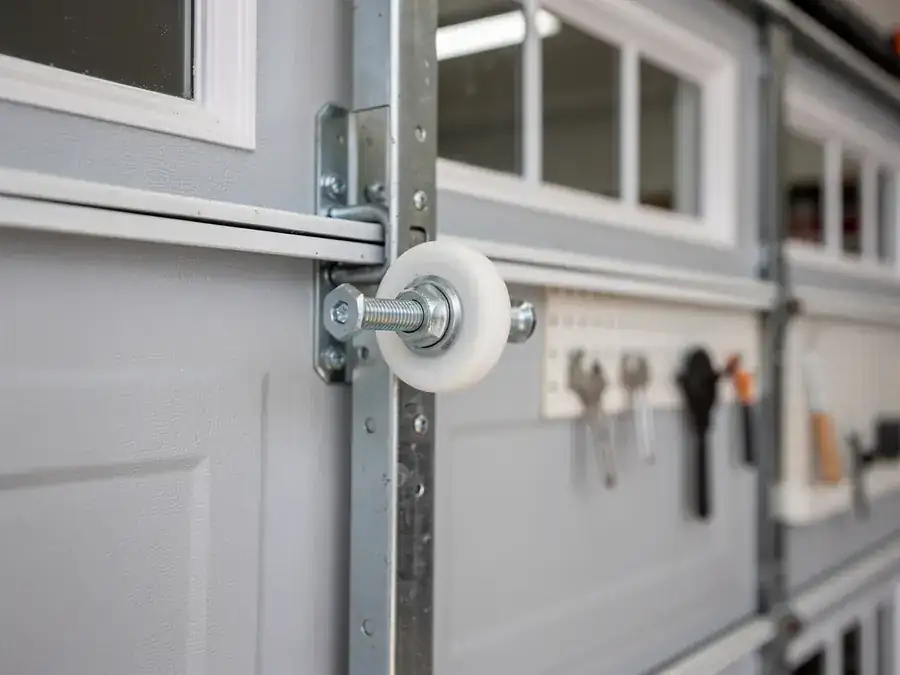
Rollers and hinges we carry in both standard and nylon, since a lot of original builders put in the cheaper steel rollers that are loud by year fifteen.
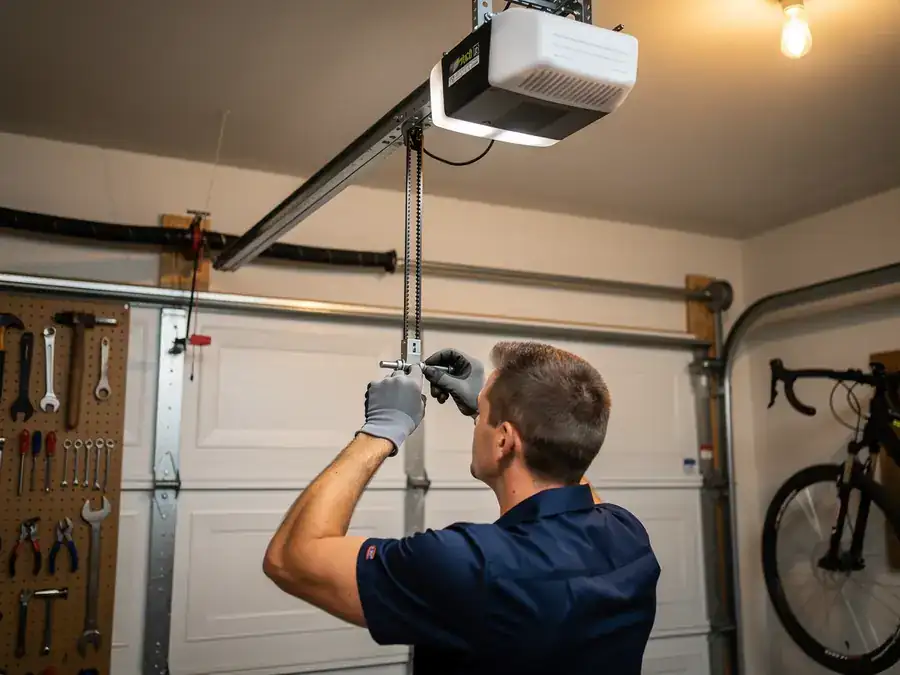
For openers, we carry chain-drive and belt-drive units that bolt into the same header bracket as the original units from that construction period, so we're not improvising a mount on an older house
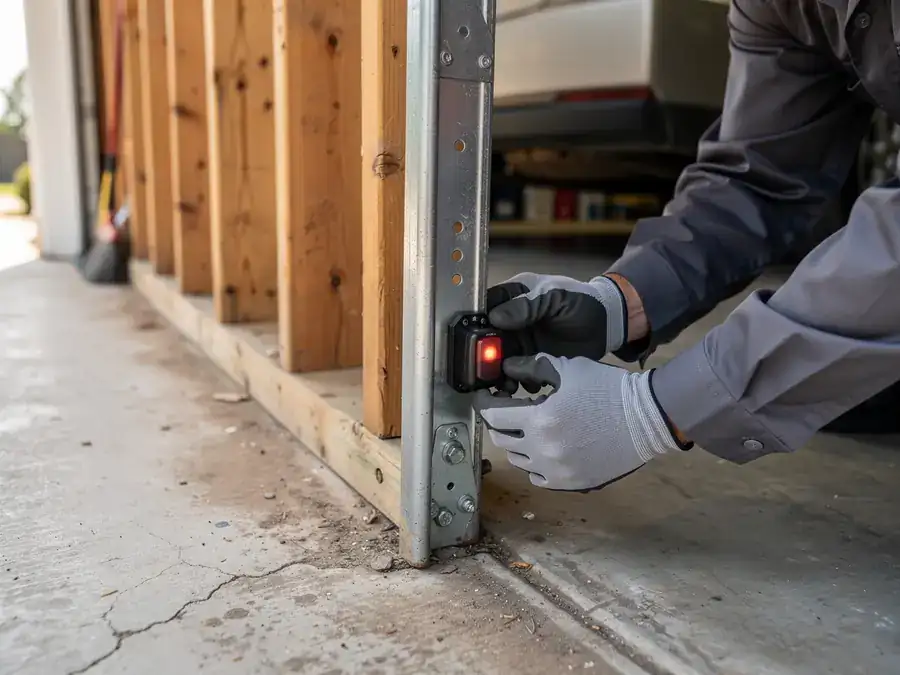
We also carry the photo-eye safety sensors that a lot of these same-era openers were installed without, or with sensors that have since failed - that's a code item now, not optional.
One honest limit: if your door is a non-standard size or an older custom wood panel door, we may not have the exact replacement panel on the truck, and that part can take longer to source than a spring or cable does
We'll tell you that on the spot rather than guess.
What the Repair Takes
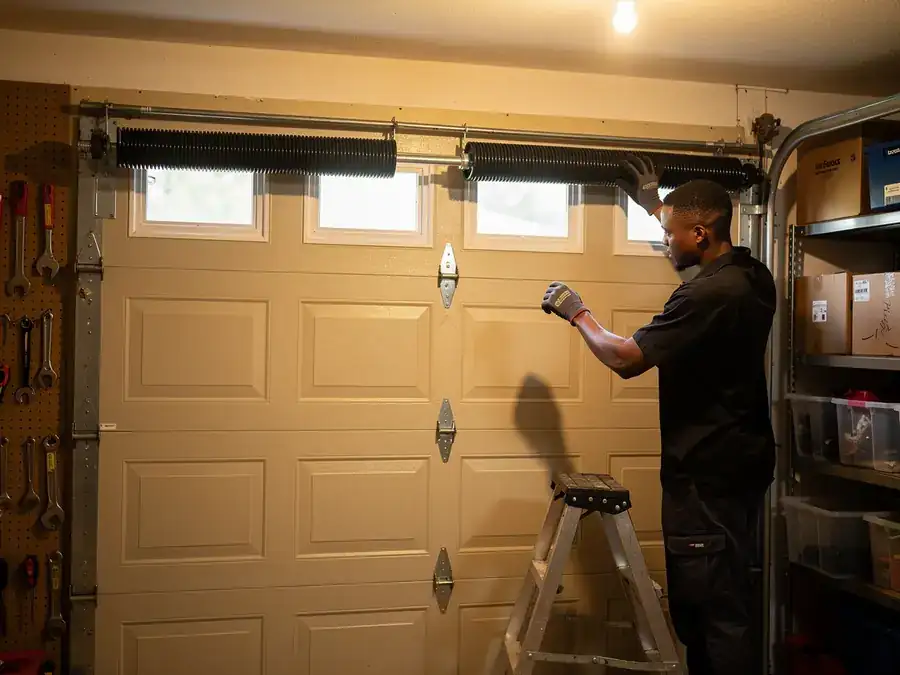
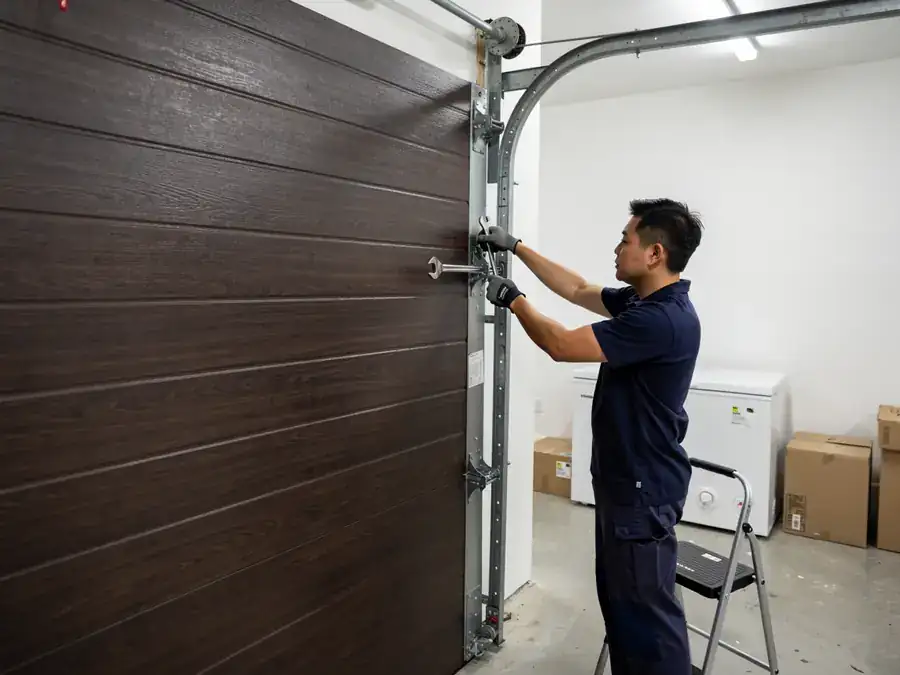
A straightforward torsion spring replacement on a standard double door is usually a same-visit job - we bring matched springs in common sizes because that's the call we get most across the roughly 11,863 owner-occupied houses in this area. A cable replacement is similar: quick once we're on site, longer if the drum or bottom bracket also needs replacing because the cable chewed into it before it broke.
We always check both springs and both cables on a double door even if only one side failed, because the other side is usually close behind it if the house is the same age. Replacing one and leaving a tired second spring in place just means a second visit in a few months.
Opener swaps take longer, mostly because of wiring the new sensors and setting travel limits correctly rather than the physical install. If your house falls into the $94,505 median income range for the area and you're deciding between a third repair on an old opener or replacing it, we'll give you the real comparison on site rather than push one or the other before we've looked at what's actually failing.