What Is Going On
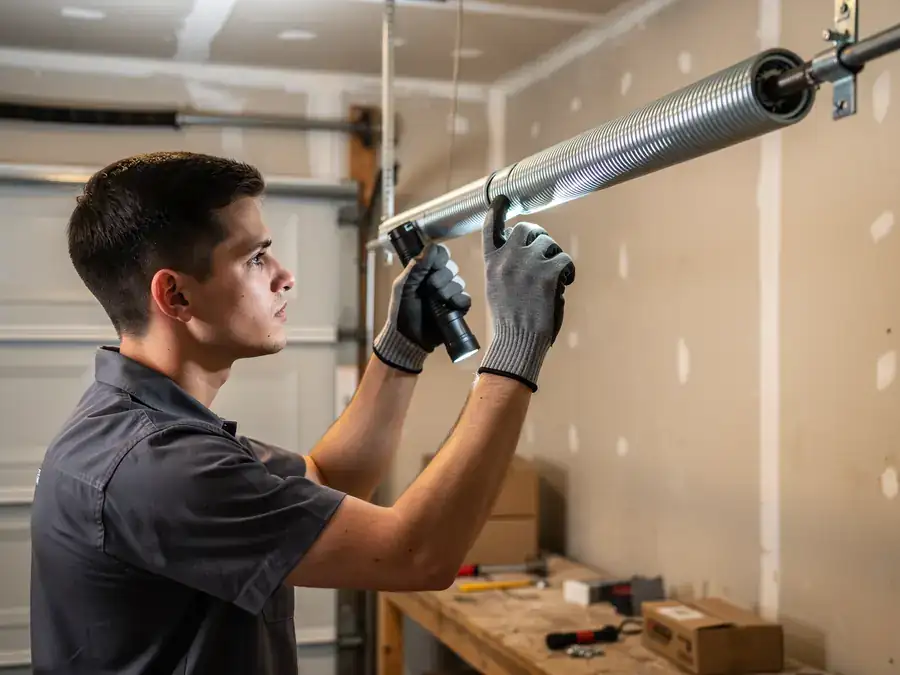
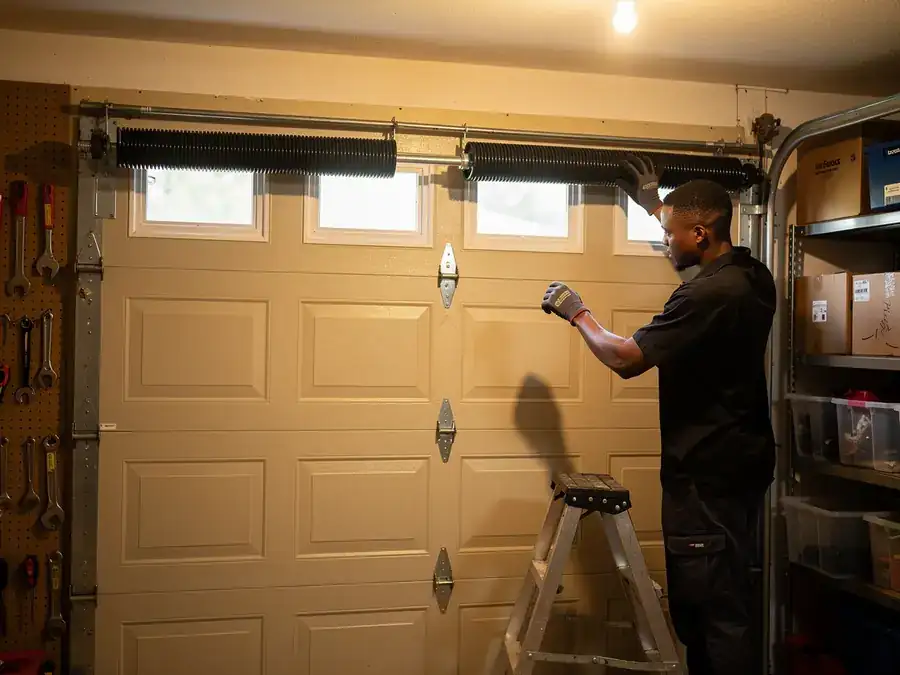
Most of the garage doors we get called out on in this area went in with houses built somewhere between 1979 and 2006, with a heavy concentration from the 1980s and 90s across neighborhoods like Baxter Village, Riverview, and the areas closer to Tega Cay and India Hook. That means a lot of original torsion springs and rollers are now two, three decades past their rated cycle count, and they don't fail quietly. A spring nearing the end of its life makes a distinct metallic creak on the way up, different from the rattle of a loose roller or the thud of a panel hitting a bent track. If your house falls in that build window, the hardware behind the noise is probably original or close to it, not something swapped out in the last ten years. That's the starting point for figuring out what a sound actually means instead of guessing.
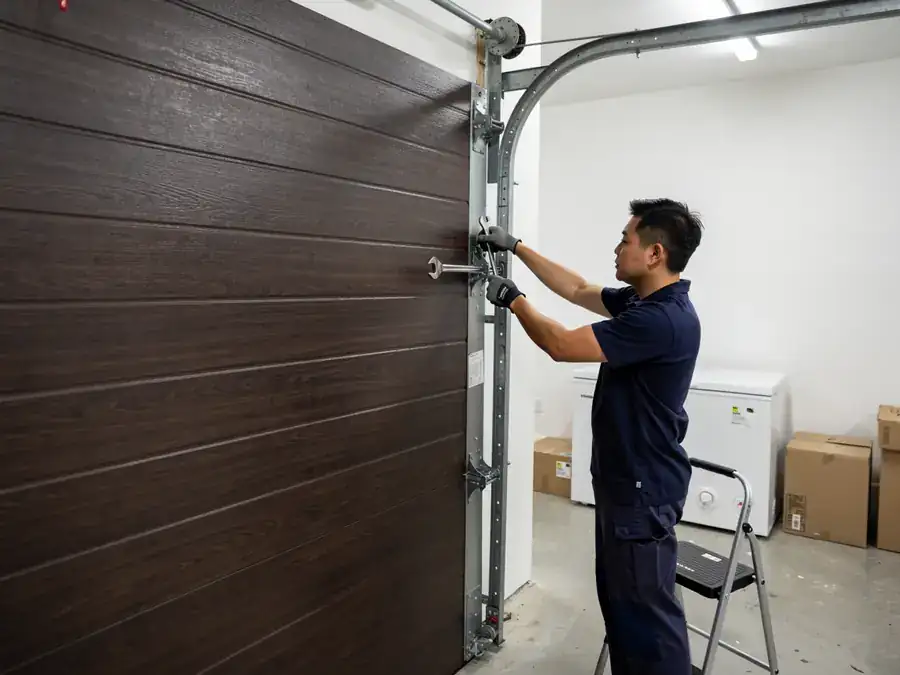
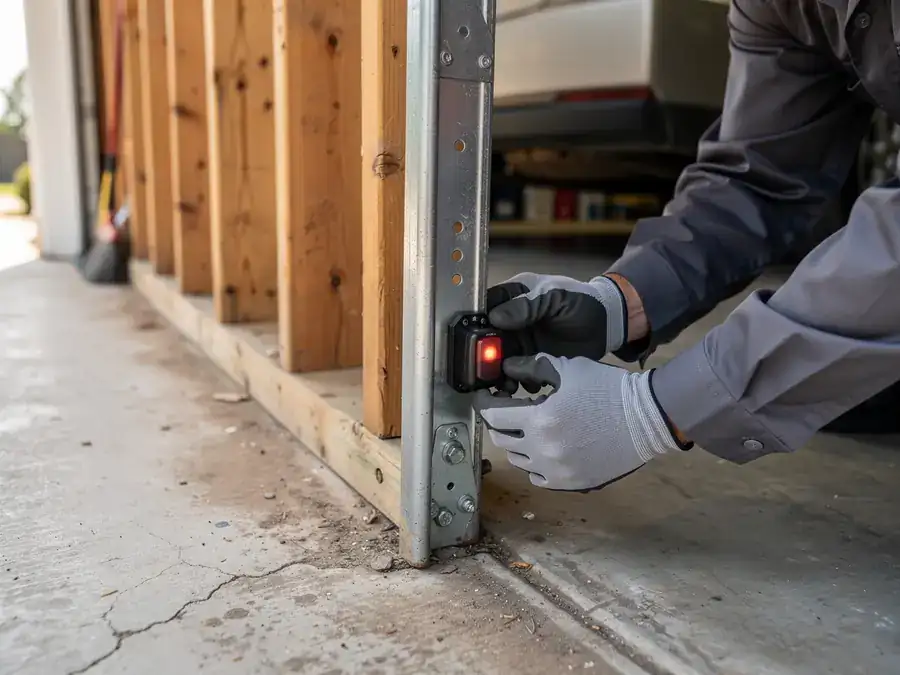
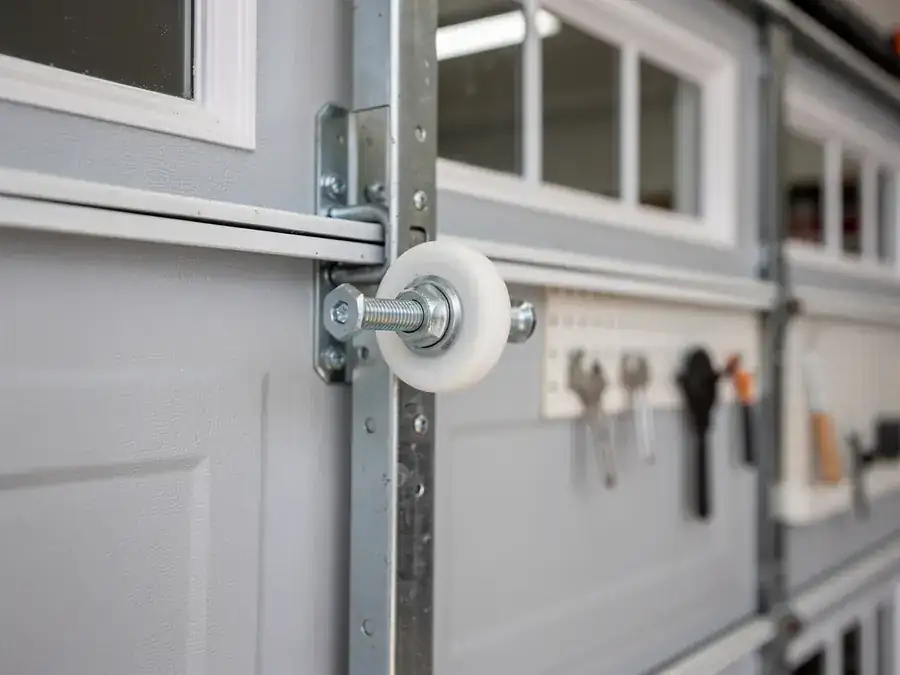
A chirp on the way down usually means a roller bearing is drying out. A hard bang partway through the cycle is often a spring that's lost tension unevenly and is about to let go. A grinding sound that gets worse as the door moves is almost always a track that's out of alignment, which on a door this old is more common than people expect because the lag screws holding the track brackets loosen slowly over twenty-plus years, not all at once.
What the Weather Here Does to It
This area sits in a cold-moderate climate band, which means the garage sees real temperature swings across the year without the deep freezes you'd get farther north. That swing matters more than people think. Steel contracts in cold mornings and expands again by afternoon, and on a door with 80s or 90s hardware, that daily flex works against joints and bearings that have already lost some lubrication. You'll often hear the loudest noises on the first cold snap of the season, not because anything just broke, but because the cold made slack and wear that was already there suddenly audible.
Humidity plays a role too. Moderate winters here still bring damp mornings, and condensation on an unheated garage ceiling drips onto track hardware over years, encouraging the kind of surface rust that turns a smooth roller into one that squeals. None of this means the door is failing fast. It means the noise is often weather timing on top of age, not a new problem on its own.
What Changes With the Season
As the weather cools, grease that's been fine all summer starts to stiffen
And a door that ran quiet in July can start groaning in November. That's usually the opener motor working harder against resistance it didn't have before, not a motor problem. On older torsion springs, cold also makes metal fatigue more noticeable: a spring that was already weak will often choose the first cold week to finally go, because the contraction adds just enough extra load.
Spring and summer bring the opposite issue less often talked about
Swollen wood jambs on older homes can bind the door at the top of travel, and that shows up as a scrape or a catch rather than a squeal. If your house is in that 1979-2006 range, both of these are worth listening for as the seasons turn, since the hardware age means less margin either way.
Where People Go Wrong
The most common mistake we see is spraying WD-40 on a noisy spring or track and calling it fixed. It quiets things down for a week or two, then the noise comes back louder, because WD-40 is a solvent, not a lubricant, and it strips what grease is left on hardware that's already old. The right move on a door from this era is usually a proper silicone-based lubricant on rollers and hinges, and leaving the spring alone entirely, since a torsion spring under tension is not something to service yourself.
The other mistake is waiting too long on a grinding or banging noise because the door still opens. On hardware this age, a noise that means something structural doesn't go away, it gets worse until the spring breaks or the track separates, usually without much warning. We won't pretend every noise needs a truck roll, honestly a lot of squeaks are a ten-minute fix with the right lubricant, but a hard bang or a grinding that's new in the last month is worth a real look rather than another can of spray.