What Is Going On
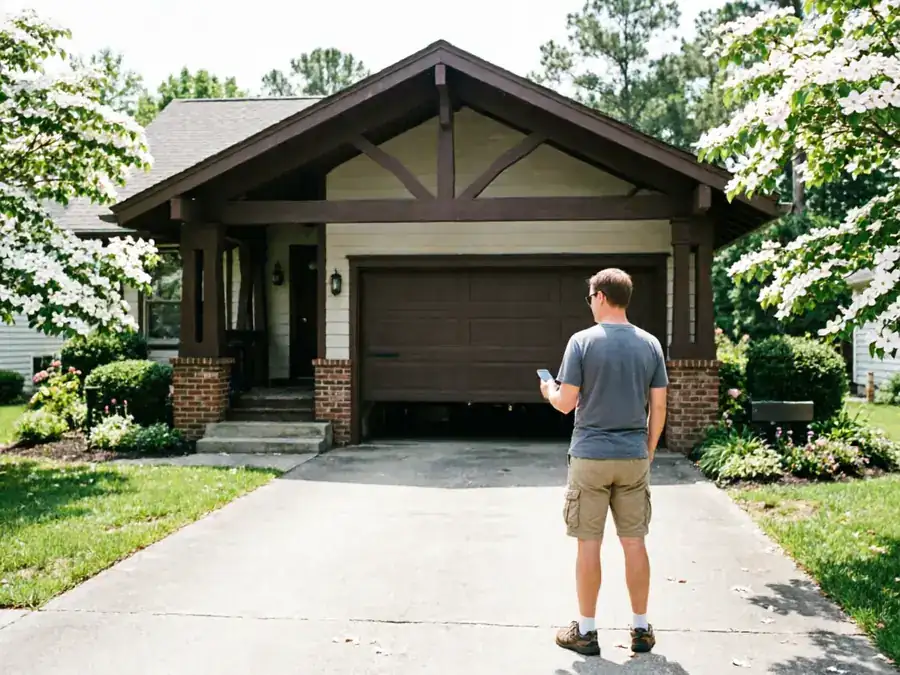
Most houses in this part of Fort Mill went up between 1979 and 2006, with the median landing right around 1997. That's the number that matters more than anything else on this page, because it tells you what's hanging on the hinges when you pull into your own driveway. A door from that window is a door on houses built before insulation rules tightened up in the following decade - thinner steel skins, no polystyrene core in a lot of cases, and hardware sized for a lighter panel than what gets sold today.
The nine communities we work across - Baxter Village, Riverview, Tega Cay, India Hook, Newport, Lesslie, York, Clover, and McConnells - are mostly 1980s and 90s construction, so this isn't a problem limited to one subdivision. It's the baseline. Baxter Village sits three miles out and Tega Cay five, but York and Clover run seventeen miles, and the door age doesn't change much across that stretch - it's all the same late-80s-to-2006 build window.
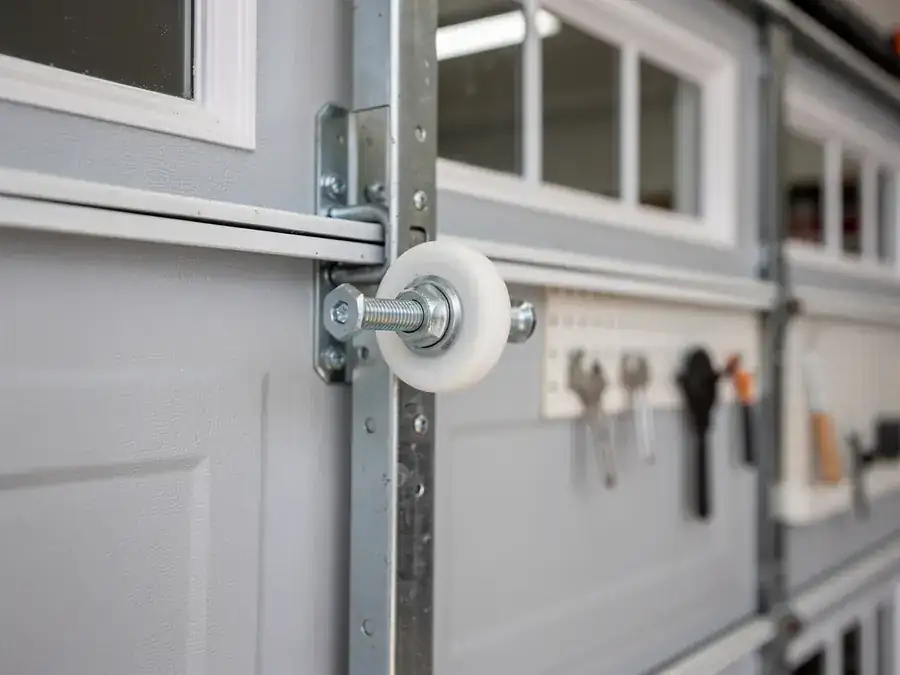
What that means day to day: original springs are past their rated cycle count, original rollers are steel-on-steel instead of nylon, and original weatherstrip has usually hardened and cracked. None of that is dramatic. It's just old.
What the Weather Here Does to It
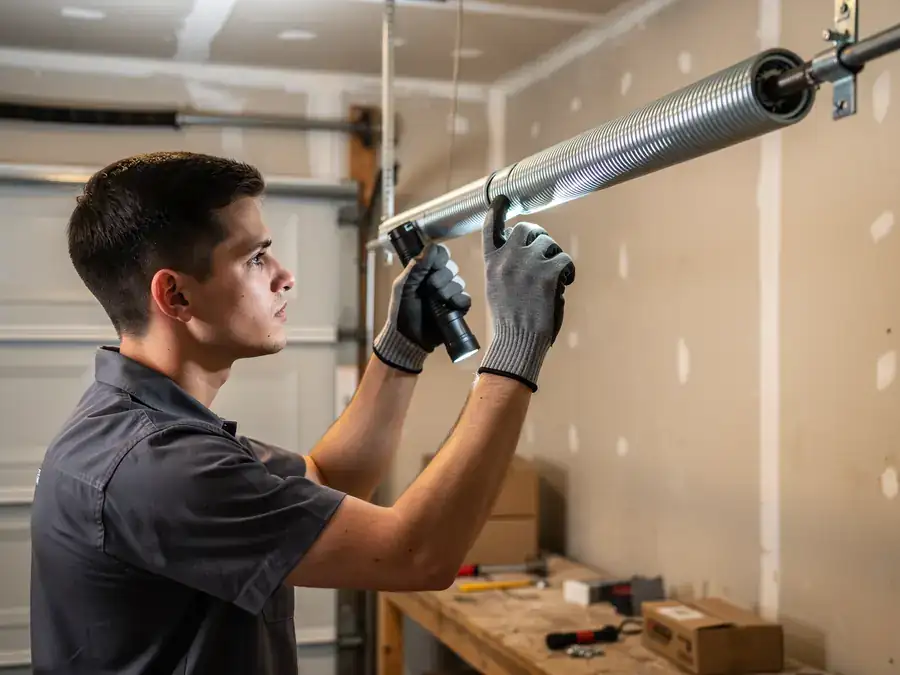
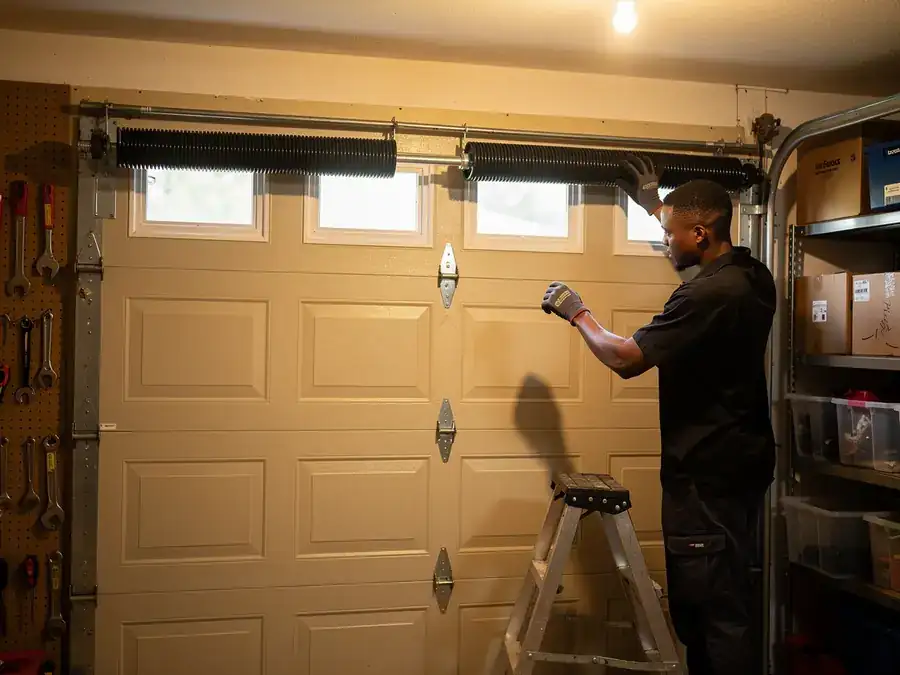
Fort Mill sits in a climate band that's cold-moderate - not the deep freezes you'd get further north, but enough cold snaps each winter to matter for steel and lubricant. A torsion spring wound for a 1997-era door was sized for the steel gauge of that era, and cold steel loses a bit of flex. On the coldest mornings, a spring that's already near the end of its life is the one that lets go, usually while the door is halfway up.
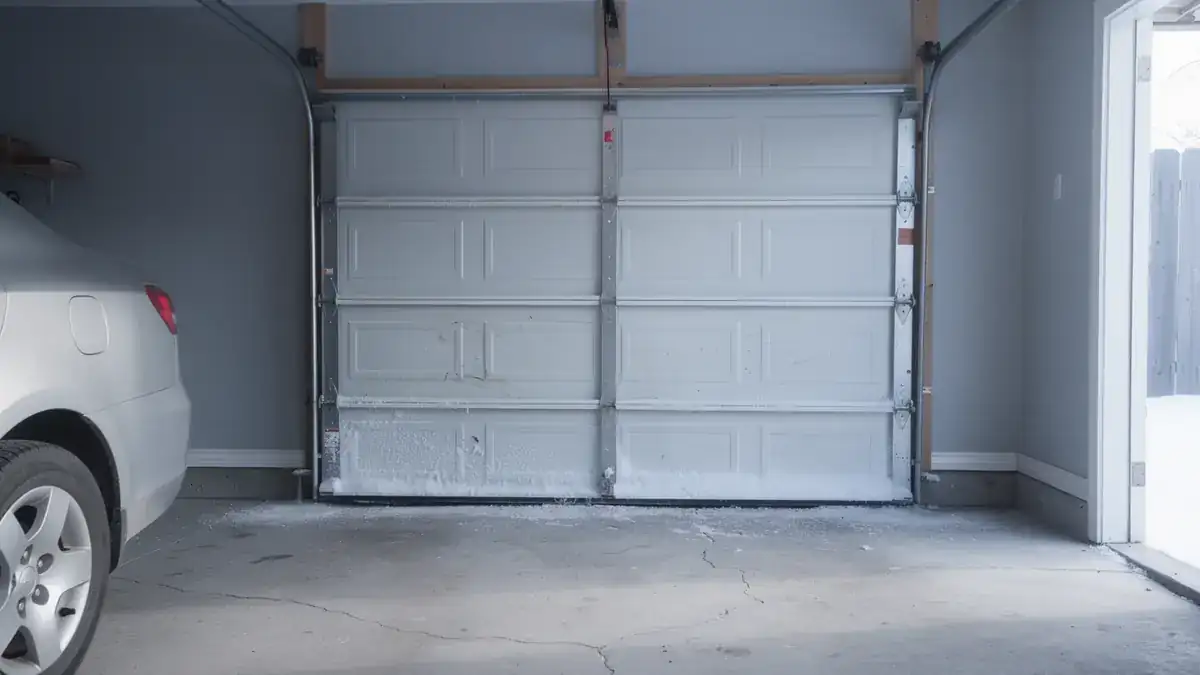
Moisture matters too. A door without a foam core - common in this housing stock - doesn't buffer temperature swings the way an insulated panel does. On a cold night, condensation forms on the inside face, and over enough winters that moisture works into the bottom panel seams and the track hardware starts to show surface rust at the mounting brackets.
This isn't a once-a-decade event. It's a slow wear pattern tied directly to how old the door is and how many cold-to-warm swings it's been through since 1997 or thereabouts. A door built to a later insulation standard handles that cycling better, which is part of why age and climate band together, not separately, decide how a door ages here.
What Changes With the Season
Spring is when the calls come in for doors that worked fine all winter and then won't close right once it warms up
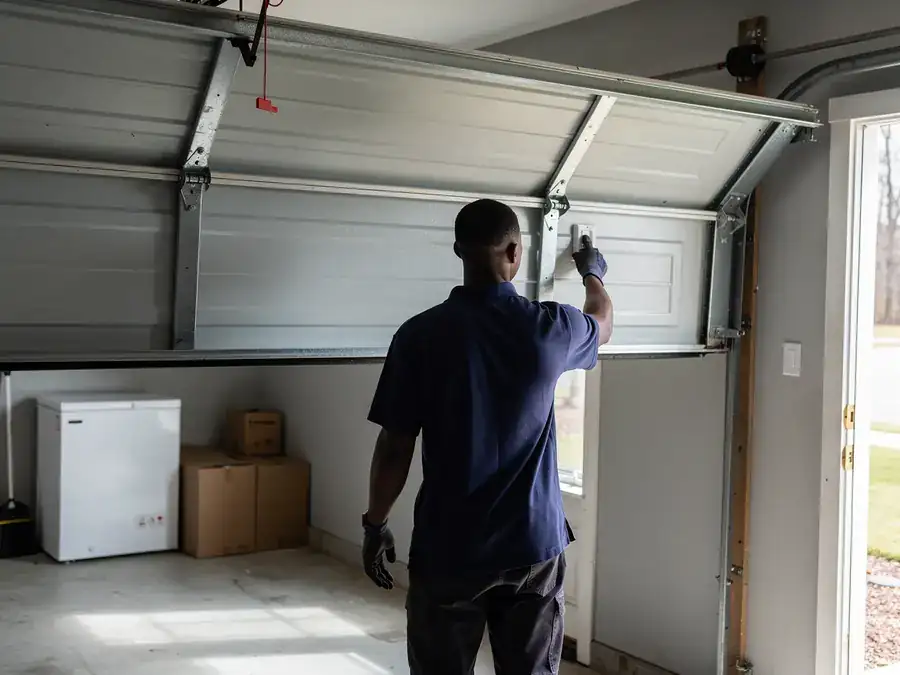
Steel expands slightly, track alignment that was marginal in the cold becomes a bind in the heat, and openers that were straining all winter finally trip their force settings. If your door is original to a house built in the 1979-2006 window, this is often the first season you notice anything at all - the hardware has been degrading quietly for years and the temperature swing just exposes it.
Fall is different
That's when we see springs actually break, because the hardware has spent a summer loosening up and then gets hit with the first real cold stretch. A spring that was one or two cycles from failure in August usually doesn't make it to November.
Neither of these is really about the season on its own
It's about what thirty-plus-year-old steel does when it's pushed from one temperature extreme to another, twice a year, on hardware that was never built with a polystyrene core to buffer the swing. Newer doors in the area - the ones going up in current construction - don't show this pattern nearly as much, because they're built to a different standard.
Where People Go Wrong
The most common mistake we see is someone replacing a broken spring on a 1990s door and stopping there, when the rollers, cables, and bottom seal are the same age and in the same condition. You fix the part that failed and leave three more parts at the same point in their life. That's not a sales pitch - it's just the math of a door that's been cycling since the Clinton administration.
The other mistake is waiting. With 11,863 owner-occupied houses out of 17,630 households across this area, most of what we see is a homeowner's own door, not a rental a landlord is ignoring. People who own the house tend to want it fixed right, but they also tend to let a slow problem - a door that's a little noisy, a little slow - run for a year or two before calling. On original-era hardware, that's exactly the stretch where a minor issue turns into a cable snapping under load.
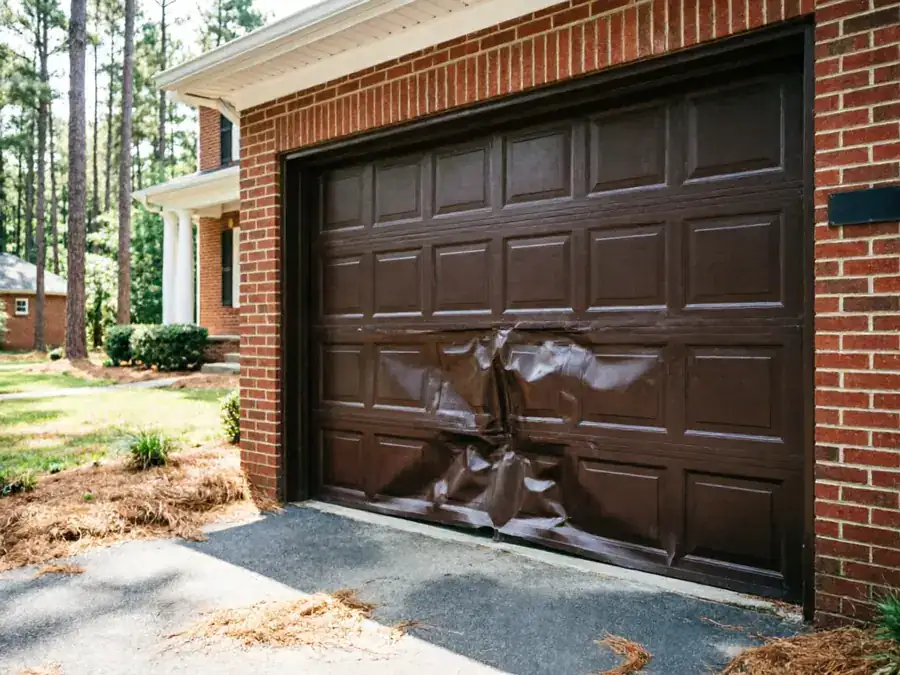
Here's the honest limit: if the door is original to a 1980s or 90s build and the bottom panel has already rusted through or the track is bent from an impact, we're not going to recommend patching it. At that point, a full replacement with a proper insulated panel costs less over five years than repeated repair calls on a door that's fighting its own age.