Where This Job Goes Sideways
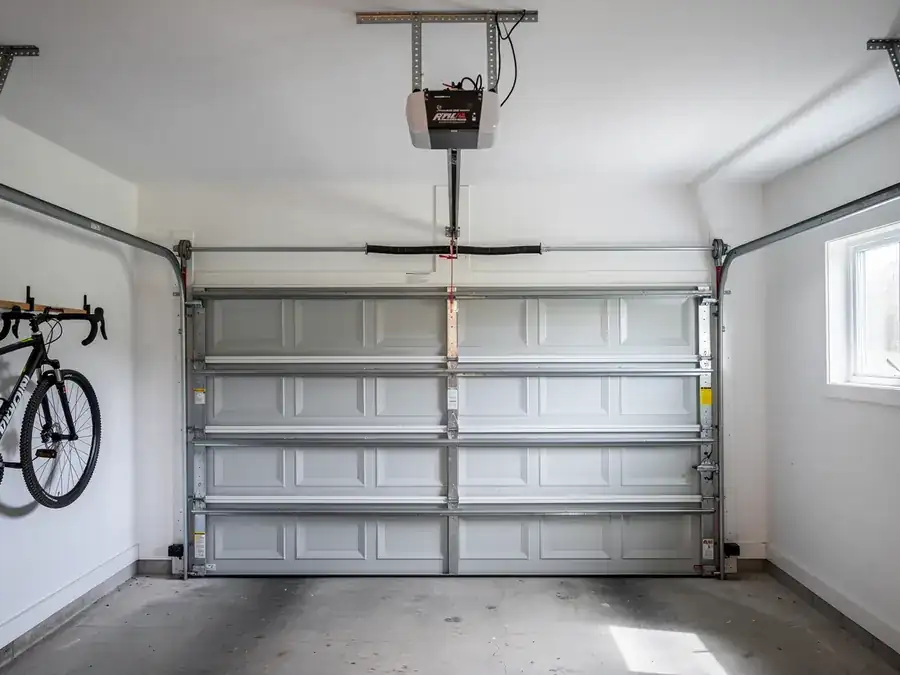
Clover's housing stock centers on 1997, which puts most openers in this town right at the tail end of the chain-drive era, before belt-drive units became common and before logic boards got better capacitors. That's the hardware we expect to find when we pull into a Clover driveway, and it's also where the trouble starts. Homeowners here call us thinking the opener motor died, when what actually failed is a $30 circuit board or a worn sprocket on a chain unit that's been running since the house was framed.
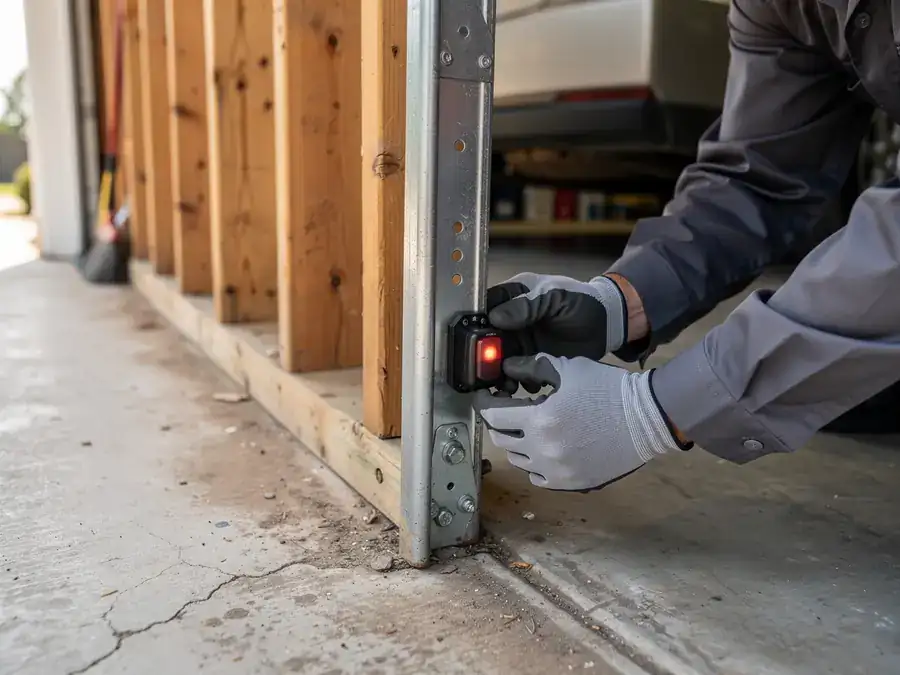
The other issue specific to a build year like this: safety sensor wiring. Openers from the mid-to-late '90s meet the 1993 federal photo-eye requirement, but the sensor brackets on original units were often cheap stamped metal that's since rusted or bent out of alignment, especially with our humid winters. A door that reverses for no reason, or won't close at all, is usually a sensor alignment problem before it's anything else.
We cover Clover from our Fort Mill shop, about 17 miles out. That distance doesn't change what's wrong with the opener, but it does mean we're not sitting in Clover waiting on a call - we schedule the drive, so same-day isn't something we promise here.
What You Are Seeing
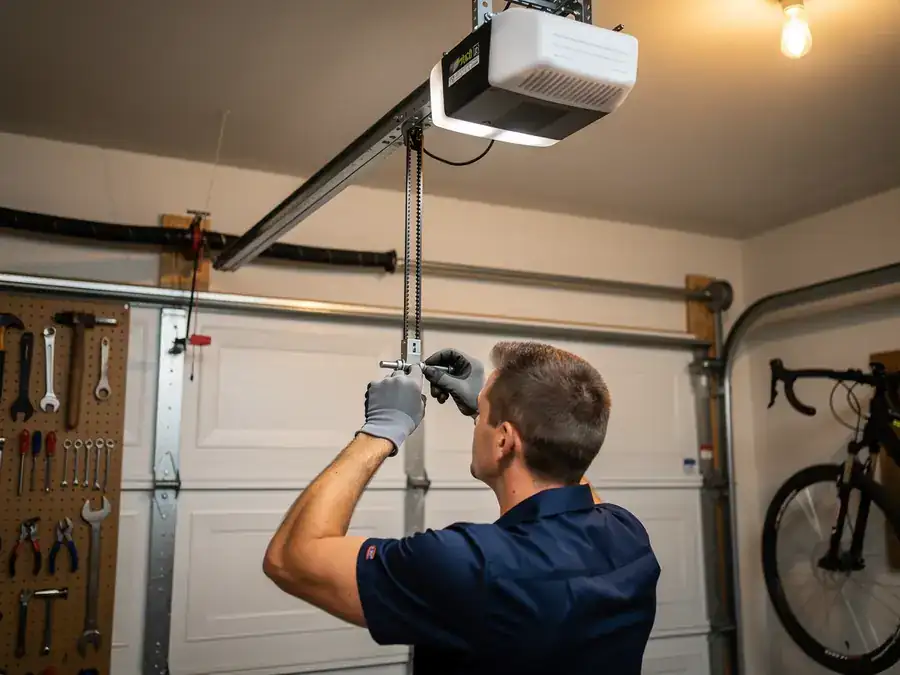
If your opener is from the original 1997-era build, the symptoms tend to run in a pattern. The motor hums but the door doesn't move - that's usually a stripped drive gear, a known failure point on units this age. The remote works from the driveway but not from inside the car - that's a wall-mounted antenna wire that's degraded over two and a half decades. The light blinks and the door reverses immediately - nine times out of ten that's the photo-eye sensors, either knocked out of alignment or corroded at the lens.
For houses in Clover that were part of a later wave of construction - anything built into the early 2000s per the area's 1979-2006 range - you'll sometimes find screw-drive openers instead of chain, which fail differently: usually at the drive screw lubrication or the traveler nut, not the gear.
A genuinely dead circuit board looks like nothing at all - no lights, no hum, no response to remote or wall button. That's the one case where we check the breaker and the wall outlet before we touch the opener itself, because a tripped GFCI gets blamed on the opener more often than it should.
Parts We Carry
We stock logic boards, photo-eye sensor pairs, drive gears and chains, and remotes compatible with the openers common to houses built in the 1980s through 2000s - which covers the bulk of what's installed in Clover
We also carry belt and screw-drive replacement kits for when a repair isn't worth it and the better move is a new opener.
What we don't carry on the truck is obsolete boards for openers that predate the 1993 safety sensor law
Those units are rare in a town built mostly after that date, but if a house in Clover has an older carryover opener, we may need to order a part rather than fix it on the spot. We'll tell you that up front rather than make you wait in the driveway while we guess.
What the Repair Takes
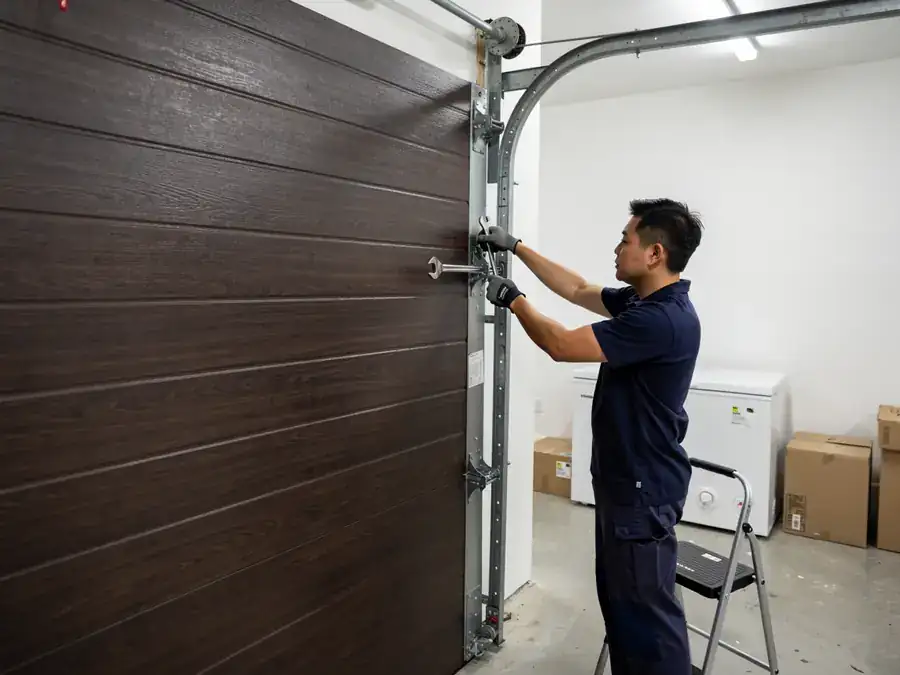
A sensor alignment or a worn gear replacement is a straightforward call - we diagnose, we fix, we test the auto-reverse before we leave. A dead logic board usually means a same-visit swap if we're carrying the right model, which we usually are given how consistent Clover's opener age range is.
What takes longer is anything tied to the original wiring from a 1997-era install - if the house still has the original low-voltage wire run to the wall button and sensors, replacing a board sometimes means re-terminating connections that have corroded at the splice. That's an extra half hour, not a second visit, but it's worth knowing before we start.
We travel the 17 miles from Fort Mill for these calls, so we ask for a clear description of what the opener's doing - lights, sounds, remote range - before we load the truck. It saves a second trip if the first diagnosis from your description points us at the wrong part.