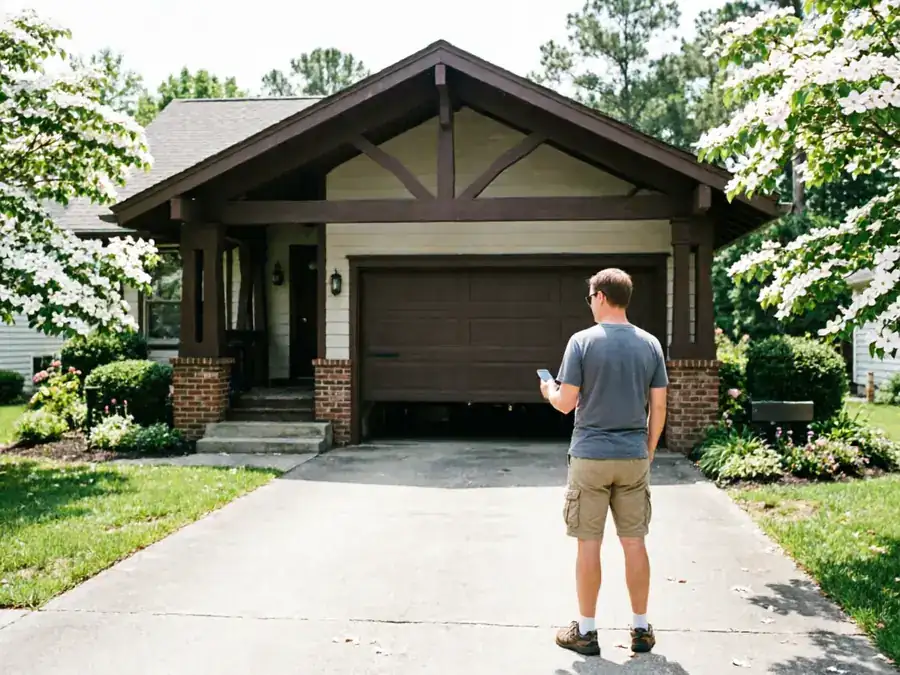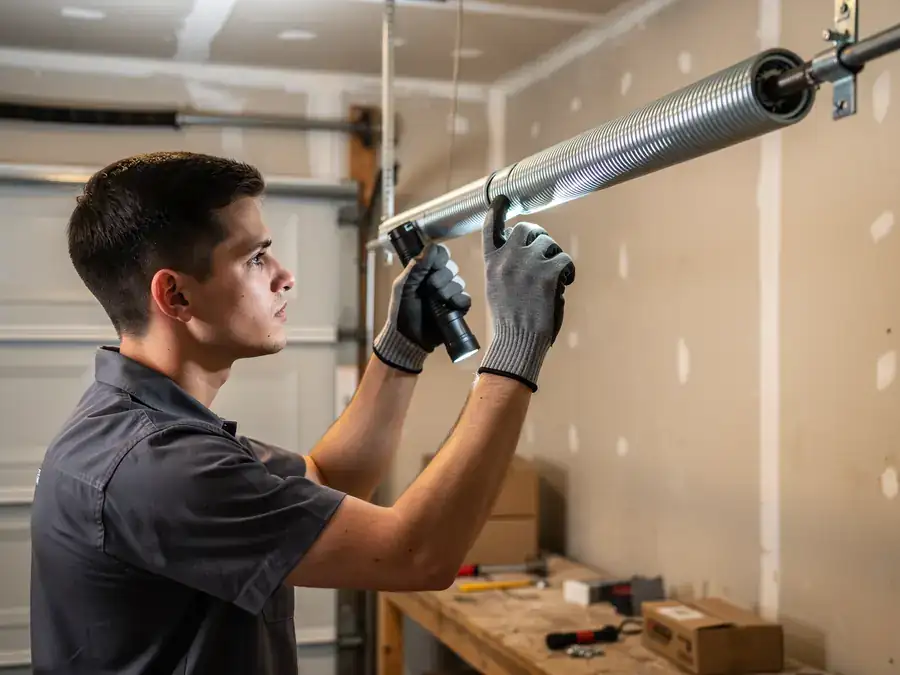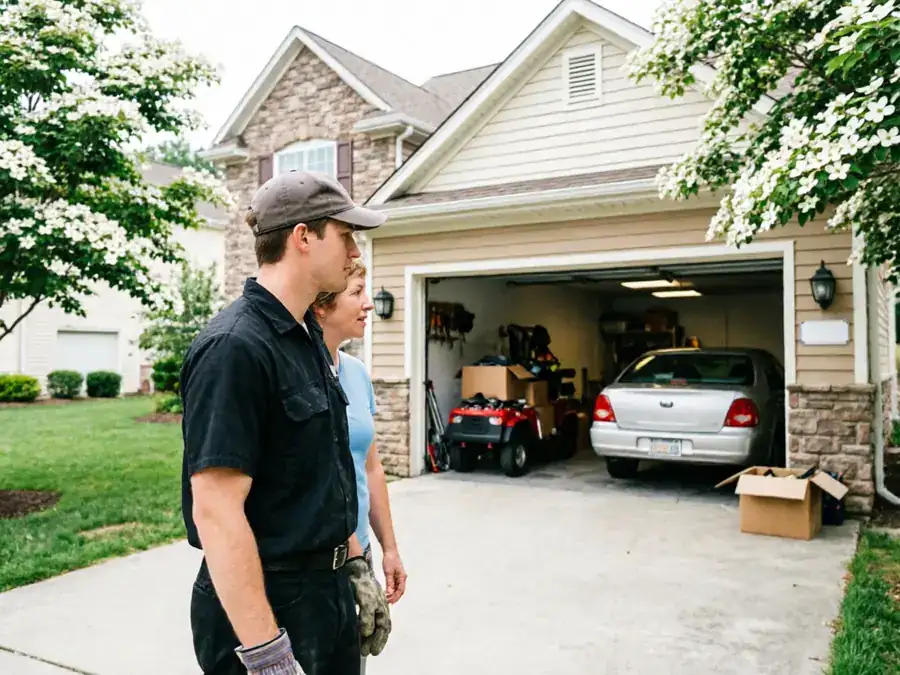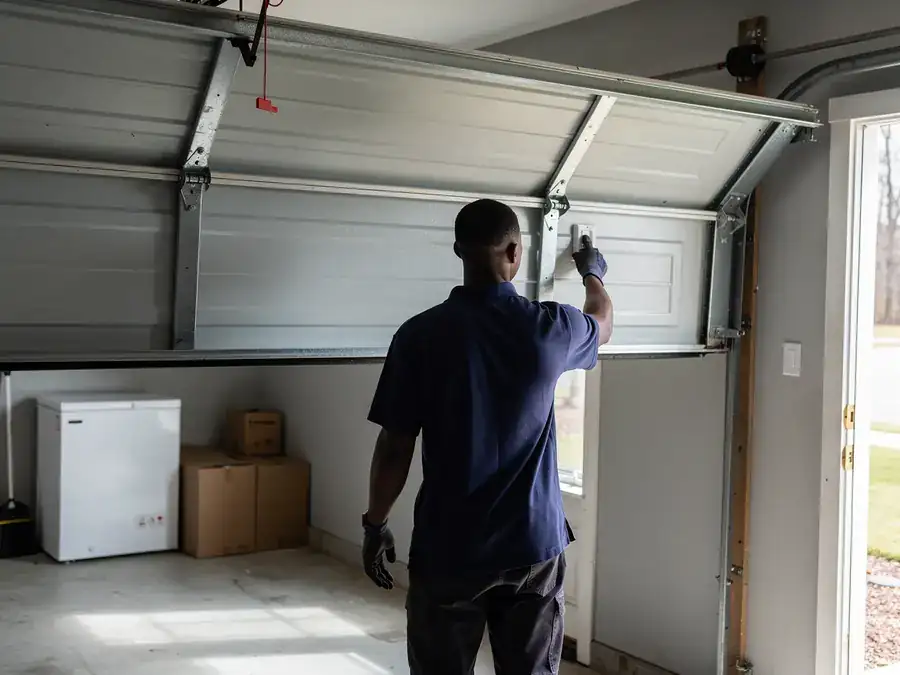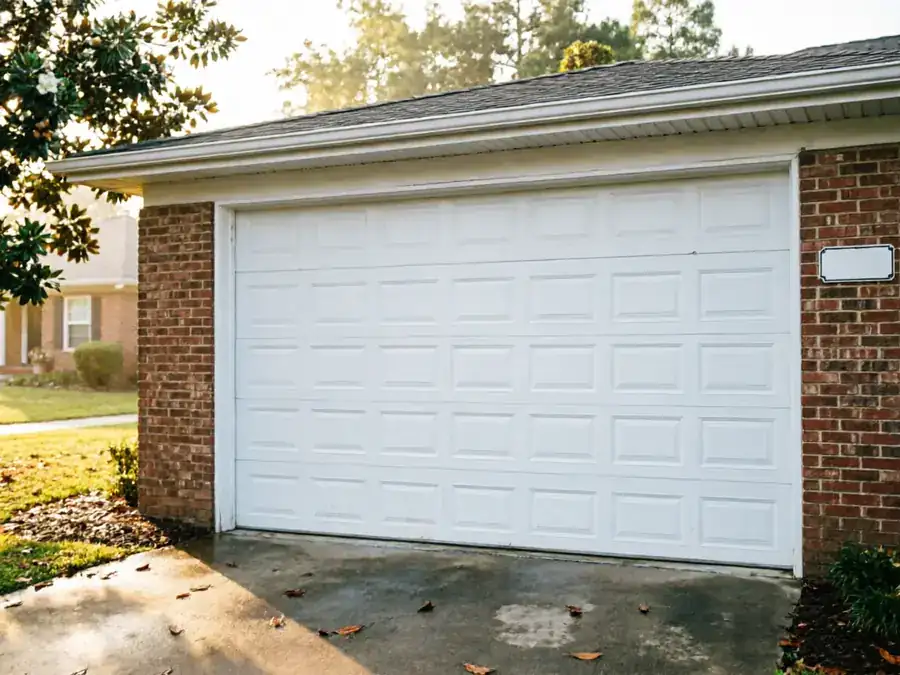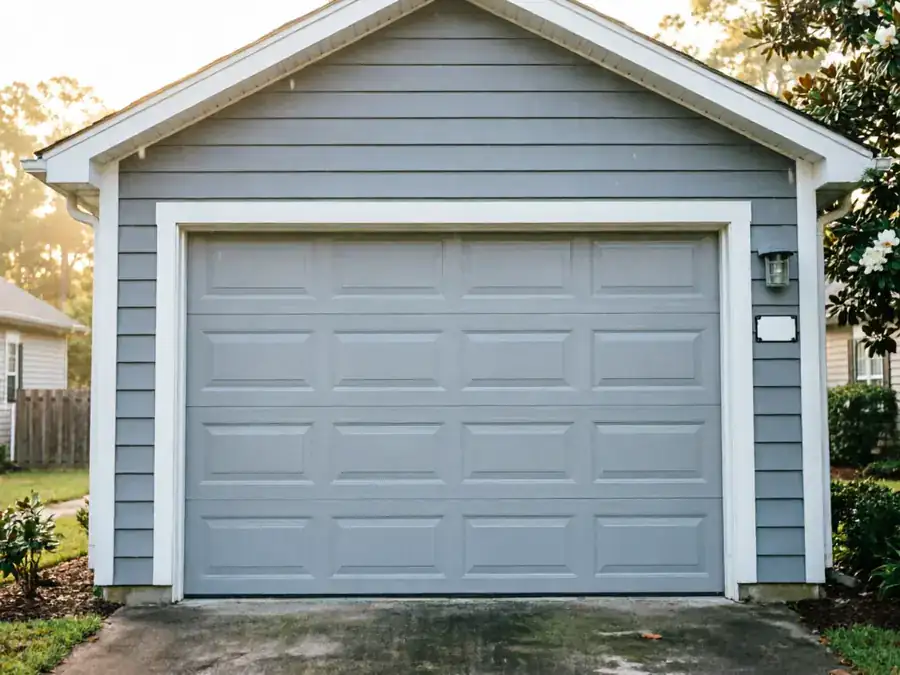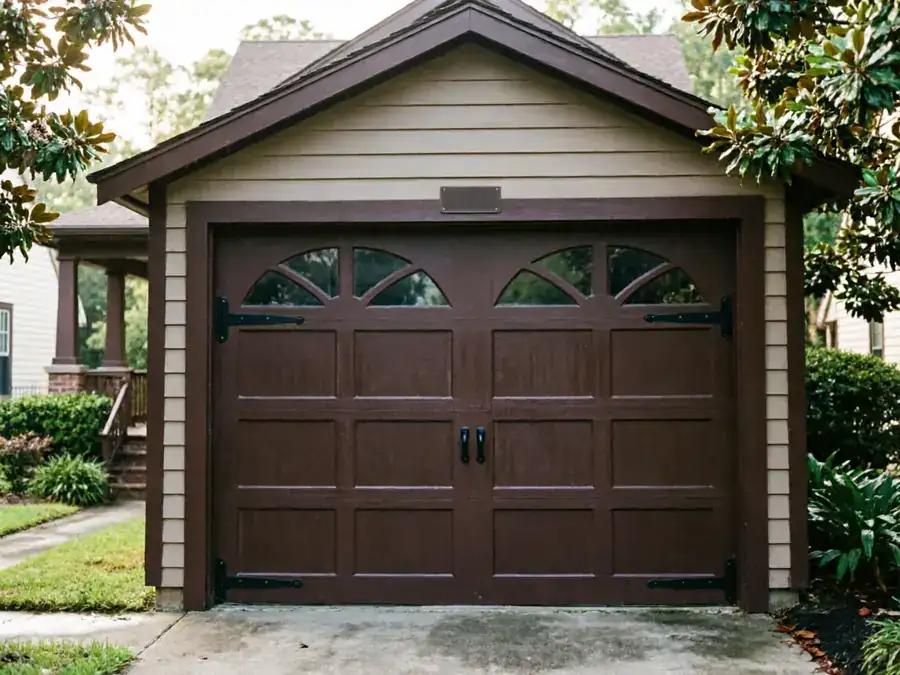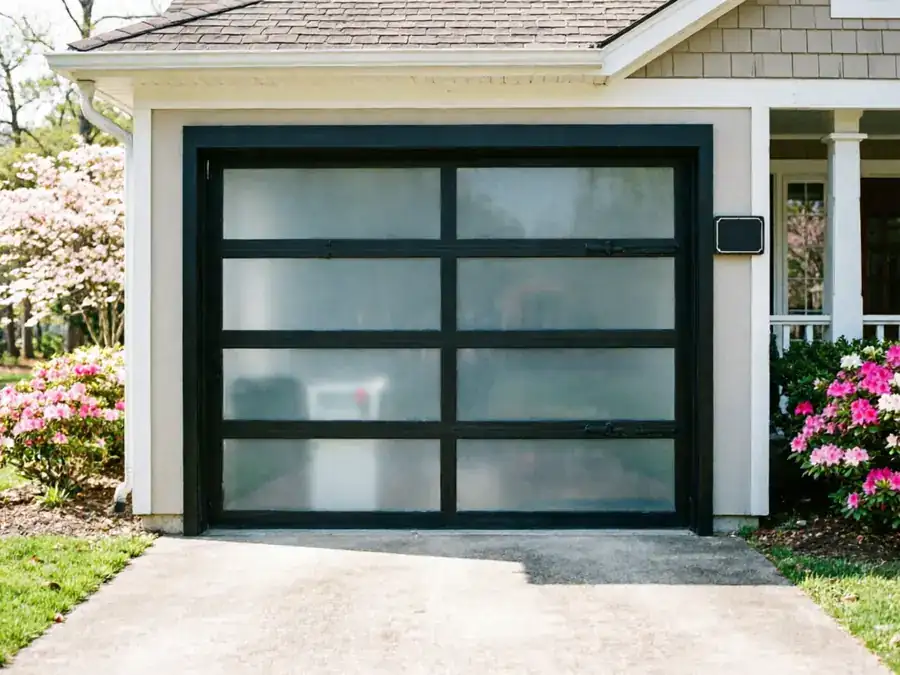
What You Are Seeing
York's housing stock centers on 1979, which puts it close to two decades ahead of a lot of what we see closer to Fort Mill, where the median build year across the service area runs to 1997. That gap matters on a panel call. A door installed in 1979 was likely matched to a different standard set of section heights and steel gauges than what ships today, and the track and hinge spacing on older sectional doors doesn't always line up with a panel pulled off a current shelf.
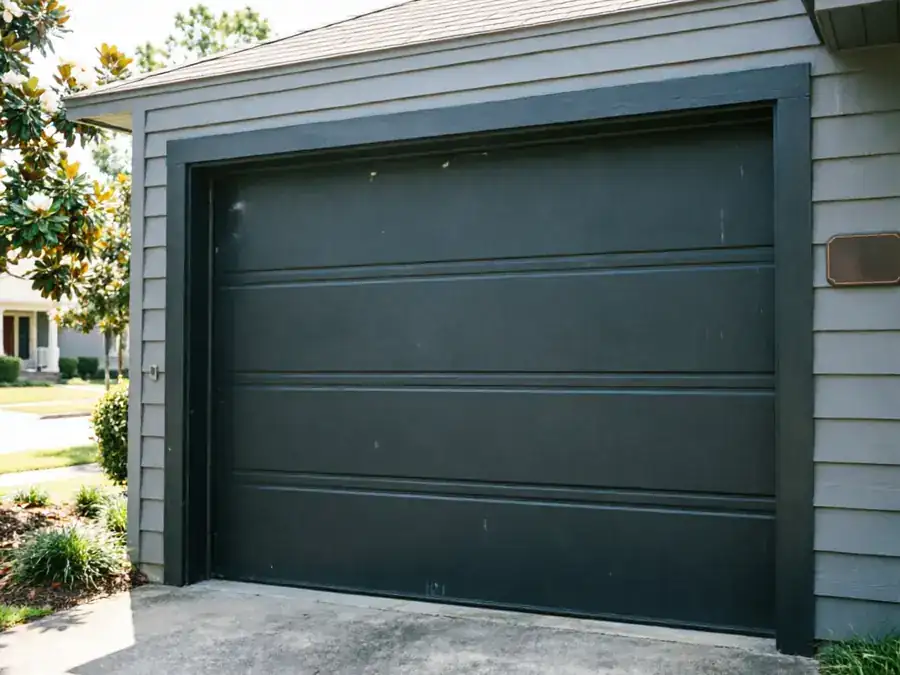
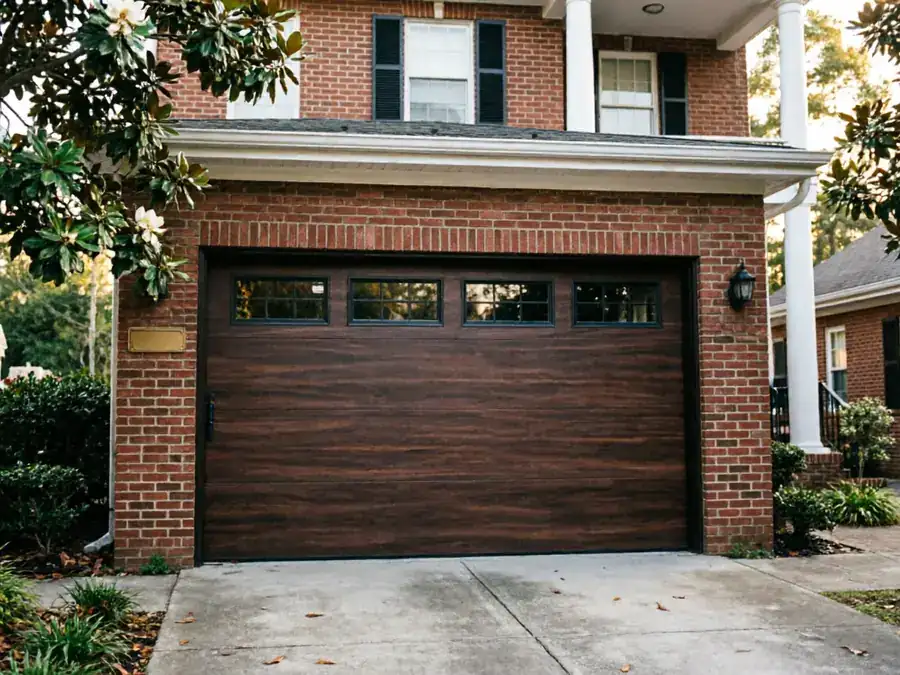
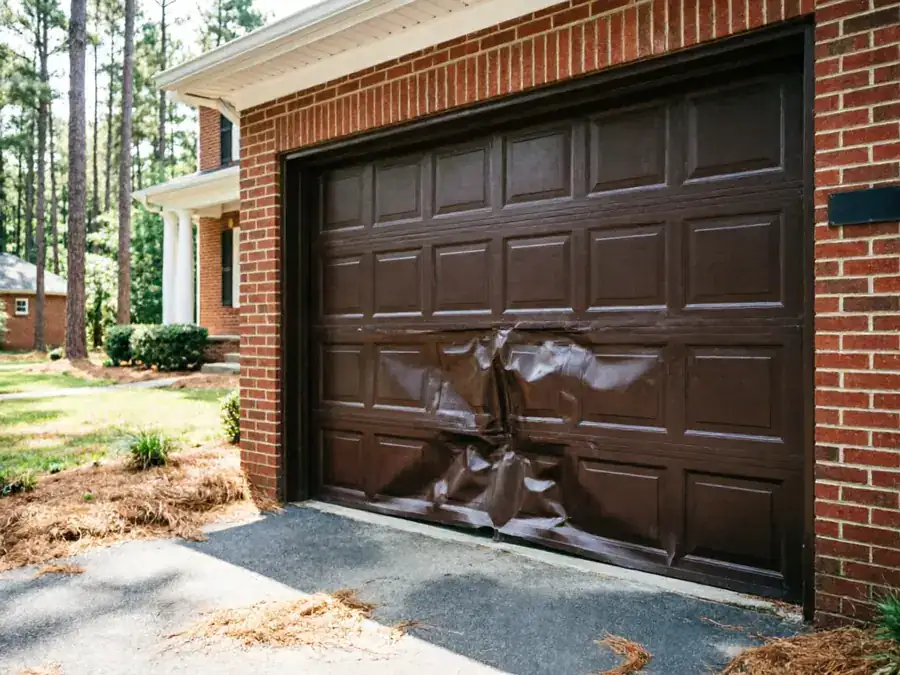
What you're usually looking at when a panel's dented, bowed, or rusted through on a York door built in that window is a crease along a hinge line, rust starting at the bottom section where water sits, or a bow from a car bumper or a basketball that's thrown the whole door out of square. On a door this old, we're also checking whether the rest of the sections have the same finish and rib pattern, because if they don't, a single new panel is going to look like a patch, not a repair. York sits about 17 miles out from our shop, which is the longest run of the named areas we cover, so we try to get the panel specifics nailed down before the truck leaves.
Parts We Carry
We stock common panel sizes and the steel most sectional doors use, but a door from York's 1979 era can call for a section profile that isn't a current catalog item. When that happens, we order it rather than guess, and we'll tell you straight if the lead time pushes the job out. Matching an existing door is about more than width and height - the rib spacing, the window cutouts if there are any, and the finish all have to line up or the new section reads as a mismatch from the driveway.
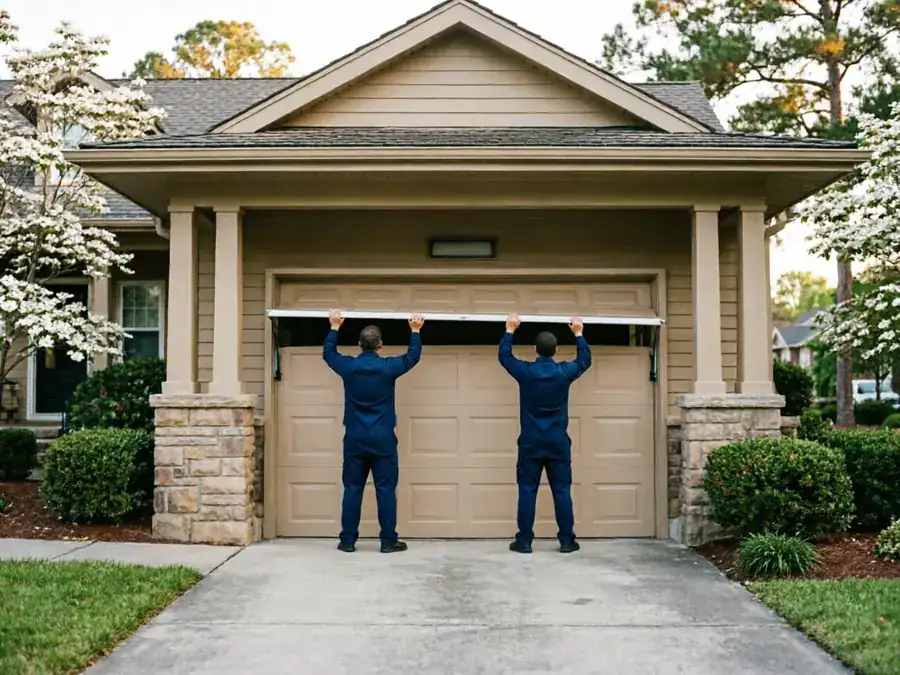
Climate here runs cold-moderate, which is mild compared to harsher northern winters but still cold enough that insulation and seal condition matter on a full-panel swap, not just the look of the steel. If one section is cracked or rusted through and the rest of the door's hardware - hinges, rollers, the end stiles - is still sound, we replace the one section and leave the rest of the door alone. If the damage is spread across multiple sections or the door's out of square from age, a single panel isn't worth chasing and we'll say so before we order anything.
What It Costs
York's median household income runs $47,315, well under the $94,505 median for the wider service area we cover out of Fort Mill
That gap is part of why we try to steer panel jobs toward the cheapest fix that actually holds, rather than defaulting to a full door swap. A single matched section, when we can source it, almost always costs less than replacing the whole door, and for a lot of York homes that's the right call.
We don't post flat prices here because panel cost depends on whether the section is a stock size or a special order, how the door's hardware is holding up, and whether paint or finish matching is part of the job
What we can tell you is that a 1979-era door with sound hinges and rollers is usually a better repair candidate than one where the track's bent or the opener's original to the house. We'll walk the door with you and give you the real number before anything gets ordered, not a guess over the phone.
Can You Do This Yourself
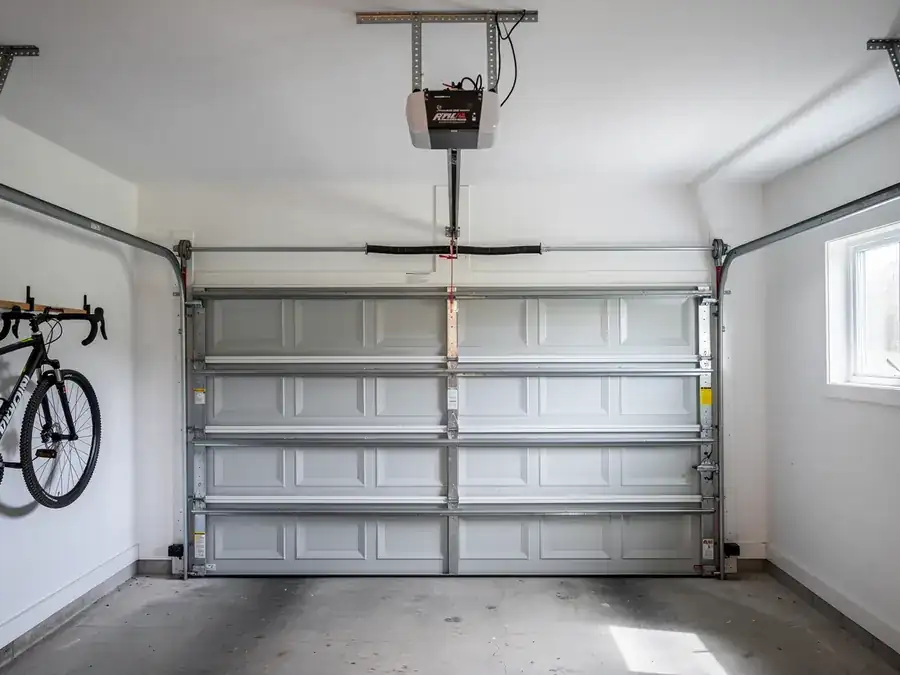
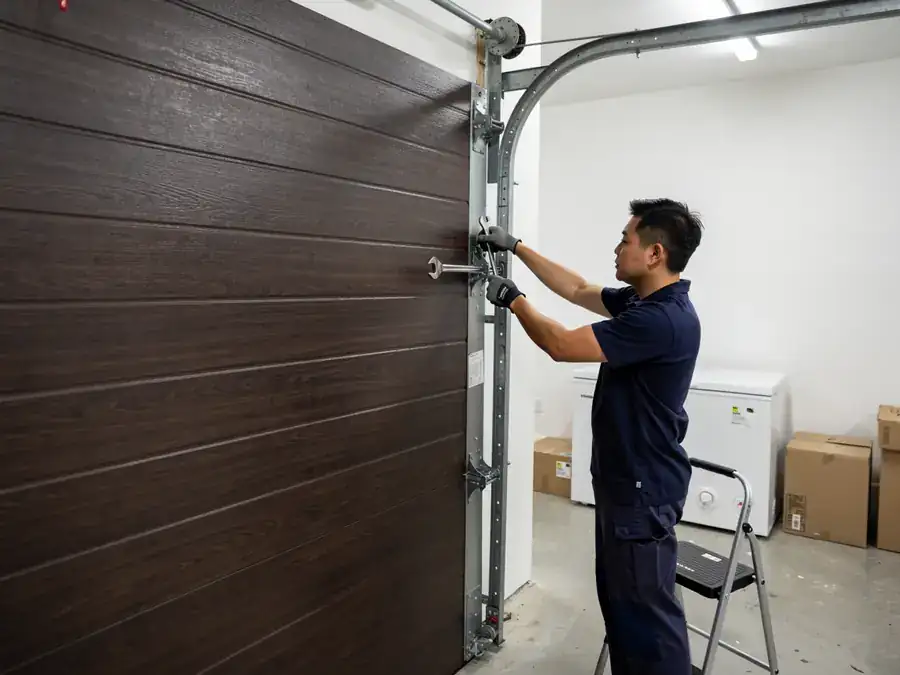
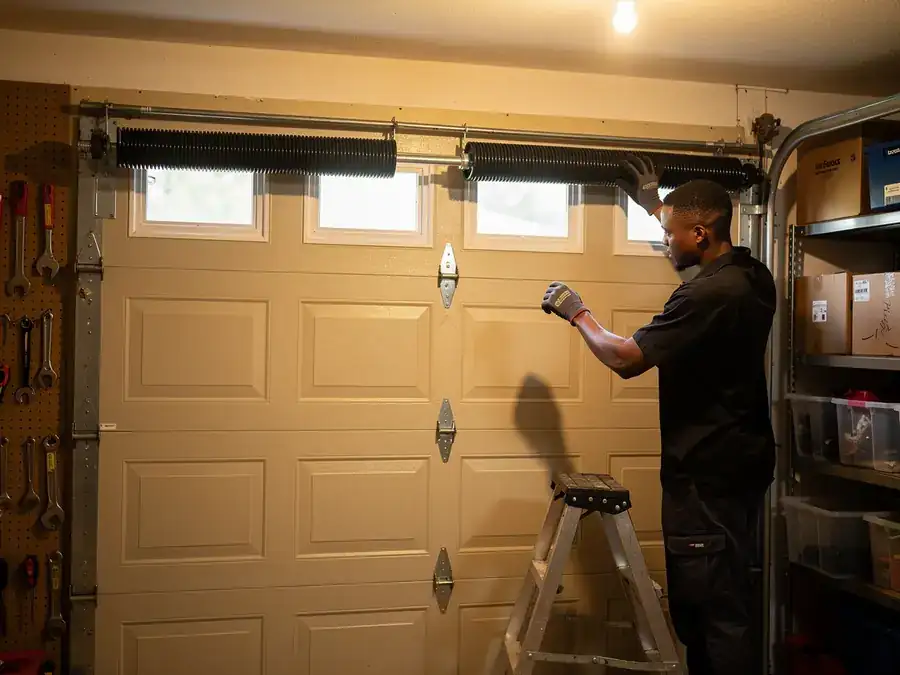
A single panel on a sectional door is bolted to the stiles and hinged to the sections above and below it, and on paper that's a job a handy homeowner can do alone. In practice, the sections have to come apart in the right order, the door has to stay square while you're working, and if it's under spring tension on either side, that tension doesn't care how careful you are. We've seen DIY panel swaps in older neighborhoods like this one go sideways when a section that looked like a straight bolt-off turned out to be held with hardware nobody makes anymore.
If you've got the tools, the door's unplugged from any opener, and you're only swapping a section with no window cutout or added hardware, it's a reasonable weekend project. If the door's out of square, the track's bent, or you're not sure the replacement section actually matches what's on the house, that's where a mismatched panel becomes a second job instead of a fix. We're honest that not every call needs a truck - sometimes a bolt and a straight edge is all it takes.