What It Costs
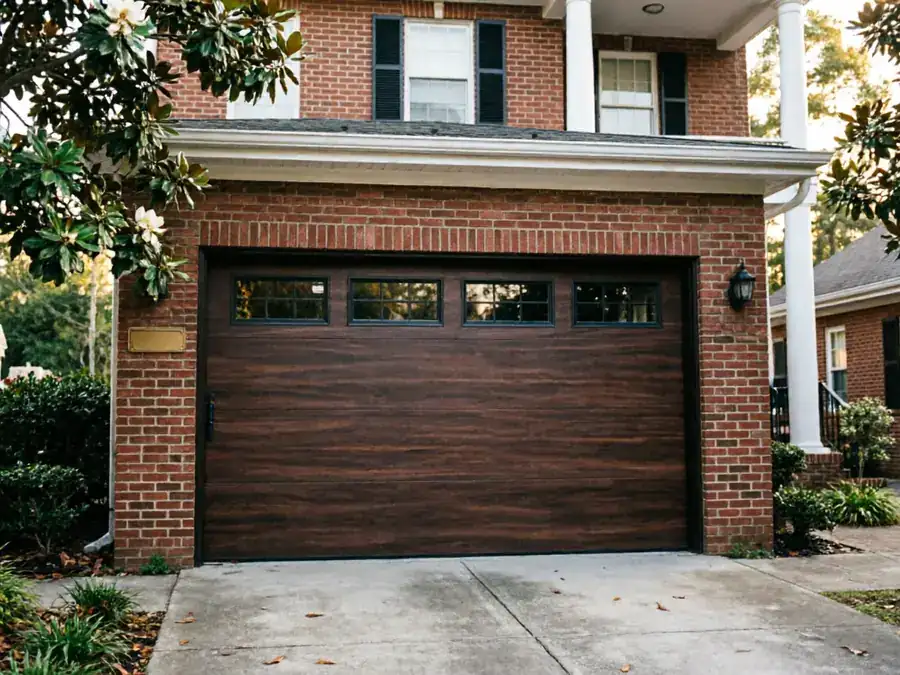
Tega Cay's housing stock sits at the newer end of the broader Fort Mill area's 1979-2006 build range, with a median year built around 2006. That matters for pricing because newer construction here leans toward wider garages - two-car, 16-foot doors instead of the narrower single-bay doors common in older sections of the service area. A 16-foot double door carries more weight, which means a thicker torsion spring and often two springs instead of one. Two-spring jobs cost more in parts than a single-spring repair on an older, narrower door.
We don't post a flat number here because spring diameter, wind length, and drum size vary even within homes built the same year - cable gauge and track type both shift the quote. What we can tell you is the direction: homes in this part of the service area, with a median household income of $141,037, tend to have doors matched to heavier insulated steel panels rather than the lighter single-layer doors common on older, lower-cost builds. Heavier panels need springs rated to lift that weight, and that's reflected in the parts cost, not the labor.
One honest limit: if your spring size isn't one we stock on the truck that day, we order it and come back. We'd rather tell you that up front than guess at a spring rating over the phone.
Can You Do This Yourself
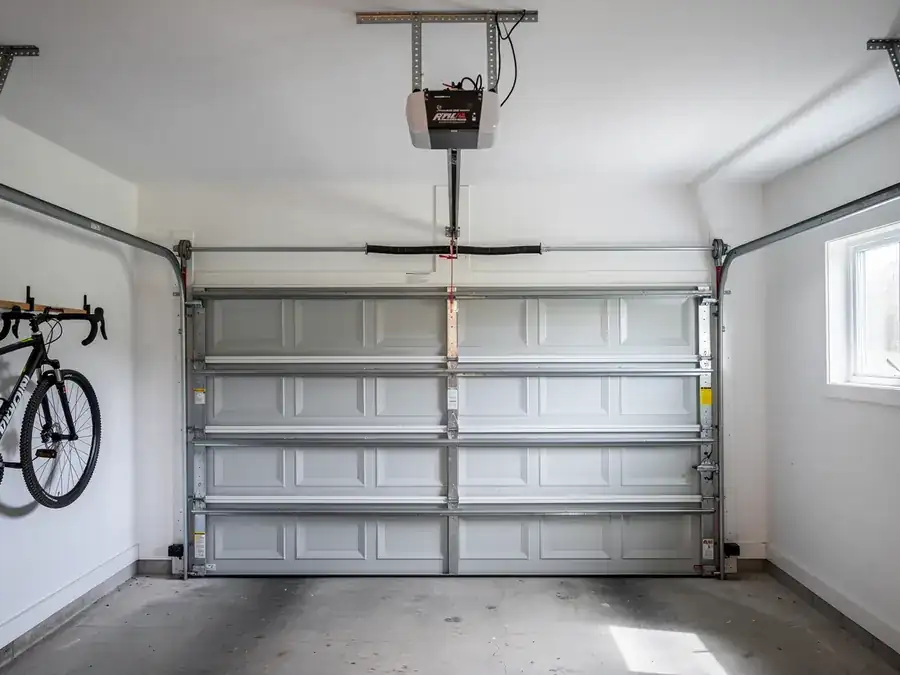
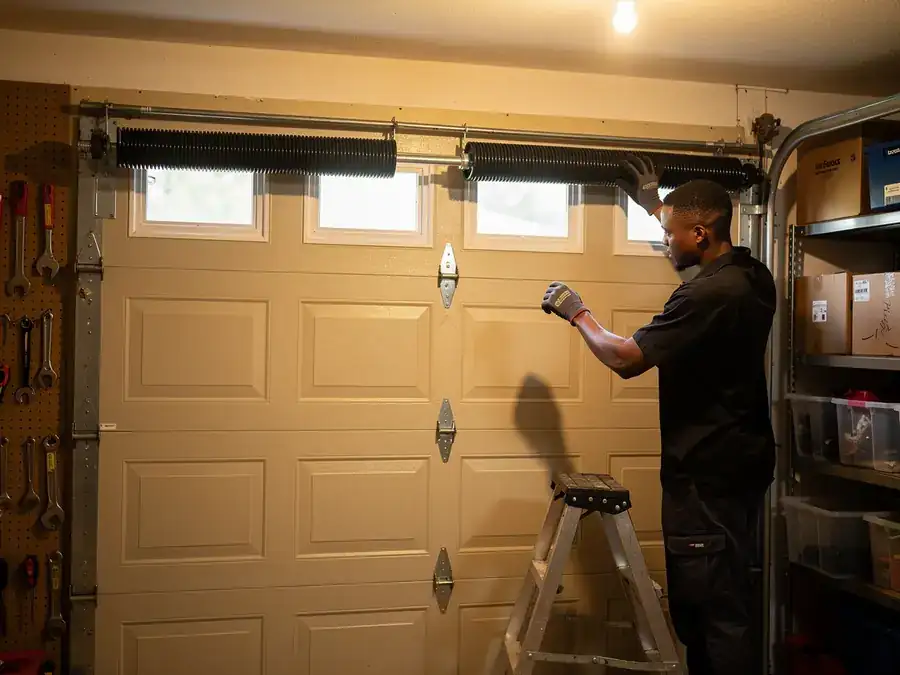
A torsion spring under tension can put you in the hospital, and on a 16-foot double door - the kind common on Tega Cay's newer builds - that spring is wound tighter than what you'd find on an older single-car door elsewhere in the area. The winding bars, the force needed, and the way the shaft can whip if a bar slips are not forgiving on this size of door.
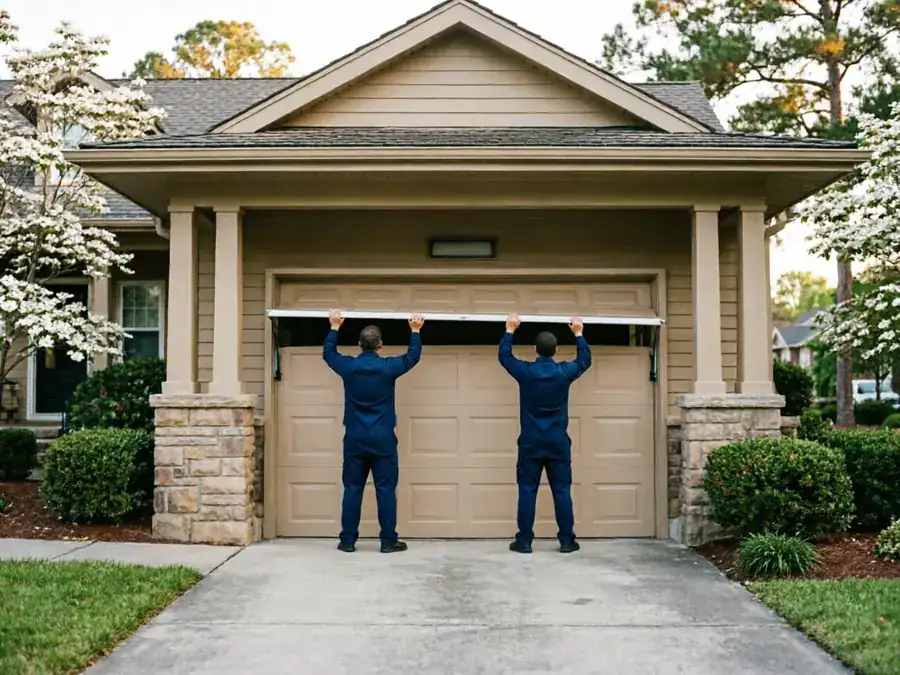
What you can safely check yourself: whether the door is binding on the track, whether a cable has frayed, or whether the opener is straining before it fails (listen for a grinding or a stall on the way up). None of that requires touching the spring. If the door won't open by hand with the opener disconnected, or it slams down fast when you pull the release, that's a spring problem - leave the winding bars alone.
Extension springs (less common on doors this size) are less dangerous to handle but still not something to learn on. Given the weight these particular doors carry, we'd rather you call than improvise.
How Long You Are Without the Door
We travel from Fort Mill, about 5 miles out to Tega Cay
So the drive isn't the long part of the job - the spring swap itself is. On a standard single-spring repair, the door is back in service the same visit. On the double-torsion-spring setups more common on Tega Cay's newer, wider garages, the job takes longer because both springs get replaced as a pair, even if only one failed, to keep the door balanced.
- 5 miles
If the spring size on your door isn't one we're carrying that day, we're honest about it
We come back with the right part rather than force a mismatch that throws the door out of balance again in a year. That's rare, but it happens more with less common spring diameters, which can show up on some of the custom or upgraded doors in this area.
Where This Job Goes Sideways
The spring is almost never the only thing wrong. On a door built around the median year here, 2006, the other original hardware - rollers, cables, the bottom bracket - is also around two decades old. Replace the spring alone and leave a worn cable next to it, and you're back out within the year for a cable snap.
The other way this goes sideways: mismatched springs on a two-spring door. If only one spring breaks and we swap just that one, the door lifts unevenly, which strains the opener and wears the new spring faster than it should. We replace both as a pair on double-spring doors for that reason, even though it costs more than fixing just the broken one.
The third failure point is drum and cable wear on wider doors. A 16-foot door puts more pull on the cable drums than a narrower one, and if those drums are scored or the cable is fraying where it wraps, a fresh spring on old drums just moves the next failure down the road a few months.
Parts We Carry
We stock common torsion spring sizes for both single and double-door setups, which covers most of what we see on homes in this part of the service area given the newer, wider-garage construction typical of a 2006 median build year. That includes the heavier-wind springs that pair with insulated steel double doors.
What we don't always have on the truck: less common spring diameters, springs for custom or oversized doors, and some older extension-spring parts that are harder to source now. If your door needs one of those, we tell you at the inspection, not after we've already pulled the old spring off.
What the Repair Takes
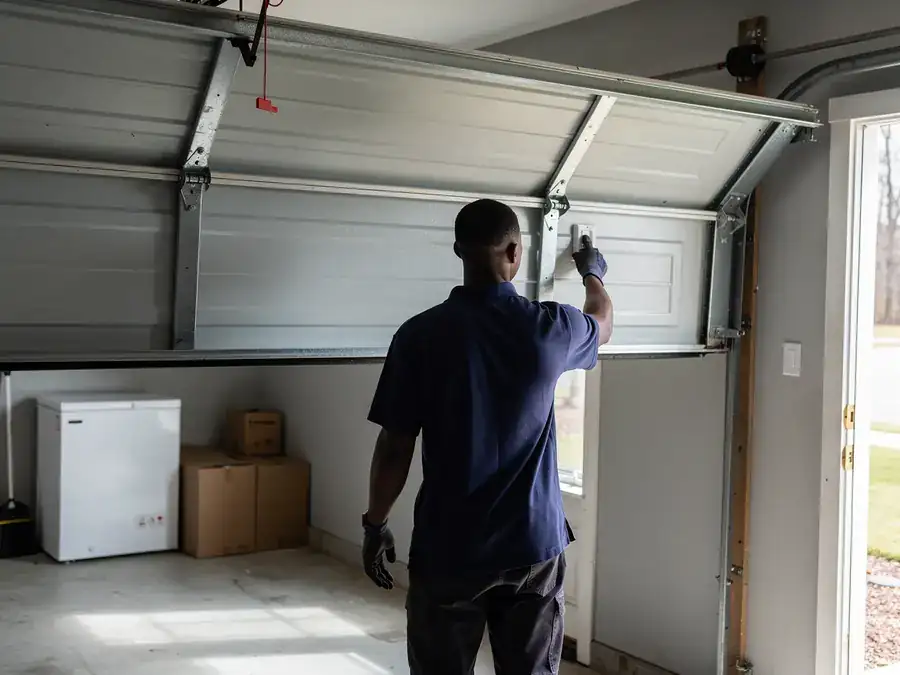
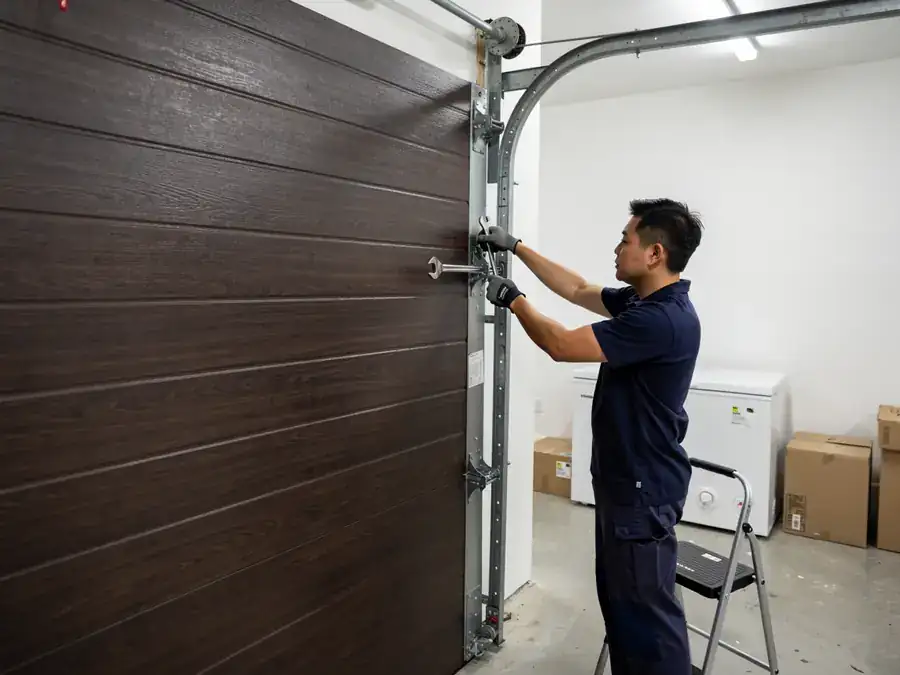
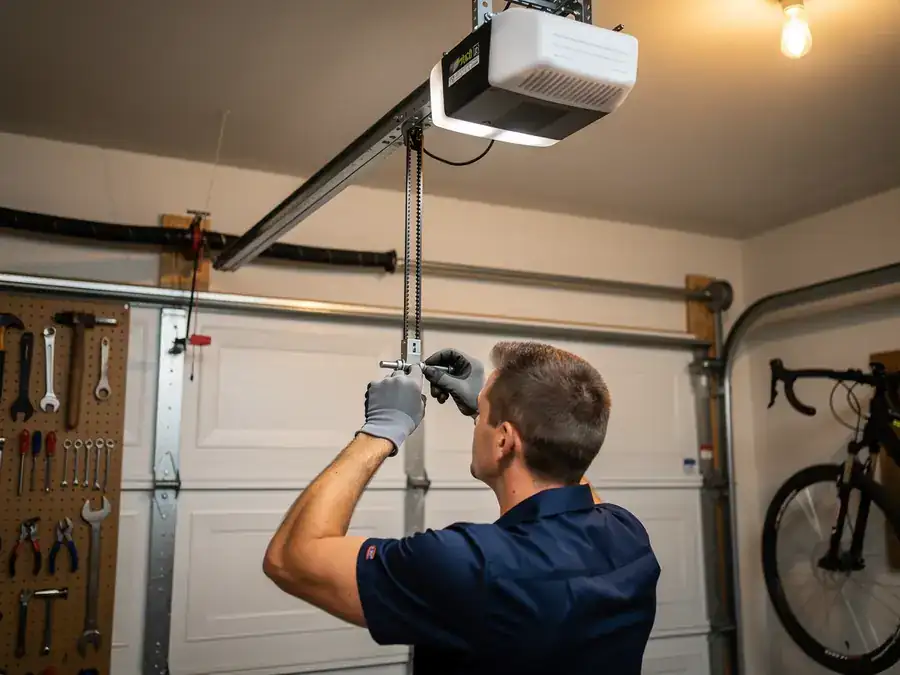
We disconnect the opener first - never work a spring with power still running to the door
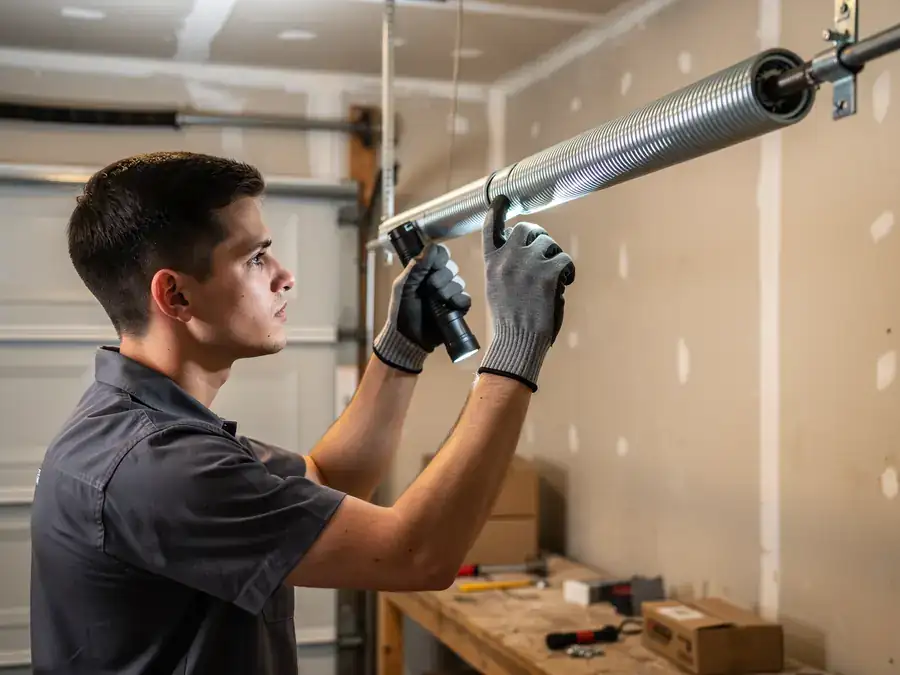
Then we measure the old spring (wind, wire gauge, inside diameter) rather than assume it matches what's typical for the home's age, because upgrades and prior repairs do happen. On a double-spring door we replace both sides together and balance the door by hand before reconnecting the opener, checking that it holds position roughly chest-height with the opener disengaged.
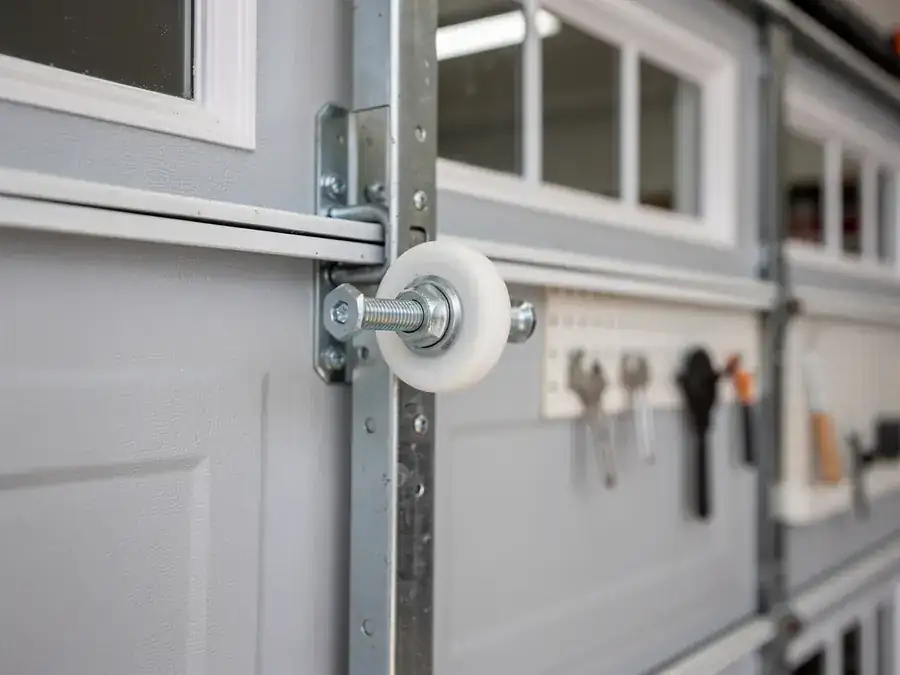
Last step is checking the cables and rollers while we're in there
Since on doors of this size a spring failure often means those parts were close behind. We'll tell you what we see, even the parts that aren't failing yet.