What It Costs
What you pay for a panel job in Newport comes down to one question we ask on the phone: can we match the panel, or do we have to replace the whole door. Houses here went up mostly around 1991, which puts most garage doors into a narrower window of steel panel profiles than you'd find on a street with a 1979 build next to a 2004 build. That narrower window helps us, because it means a higher chance the section we need still has a current equivalent, rather than a long-discontinued run.
We don't have a posted price list for this page, and we're not going to make one up. A single-section swap on a double door runs differently than a single door, and a dented bottom panel with a bent track runs differently again. What we can tell you: if the panel is cracked but the door still travels straight on the track, that's usually a smaller job than if the impact bent the stile or knocked the hinge out of square. We price it after we see it, not before.
What the Repair Takes
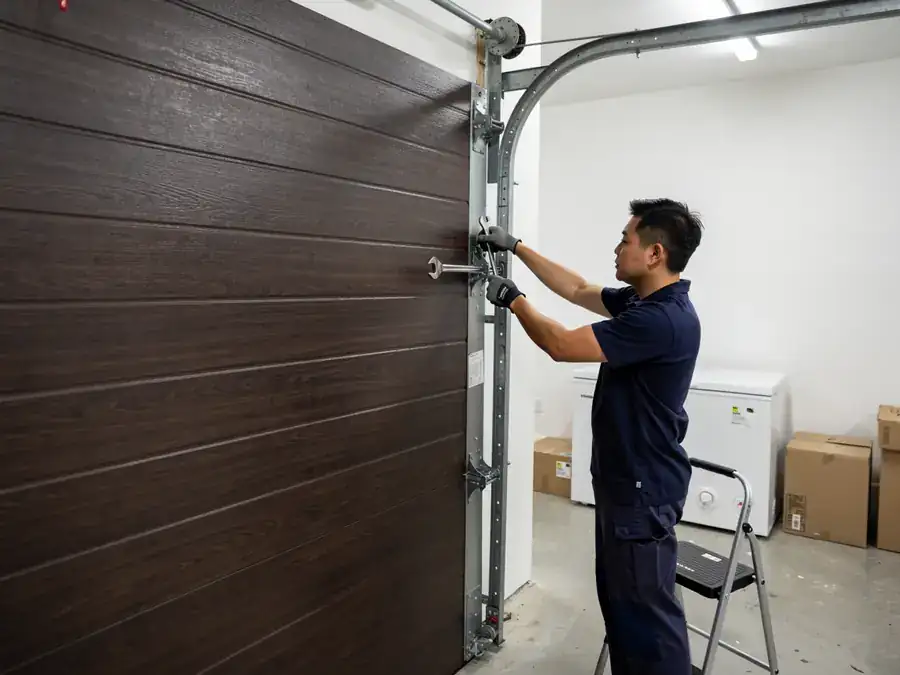
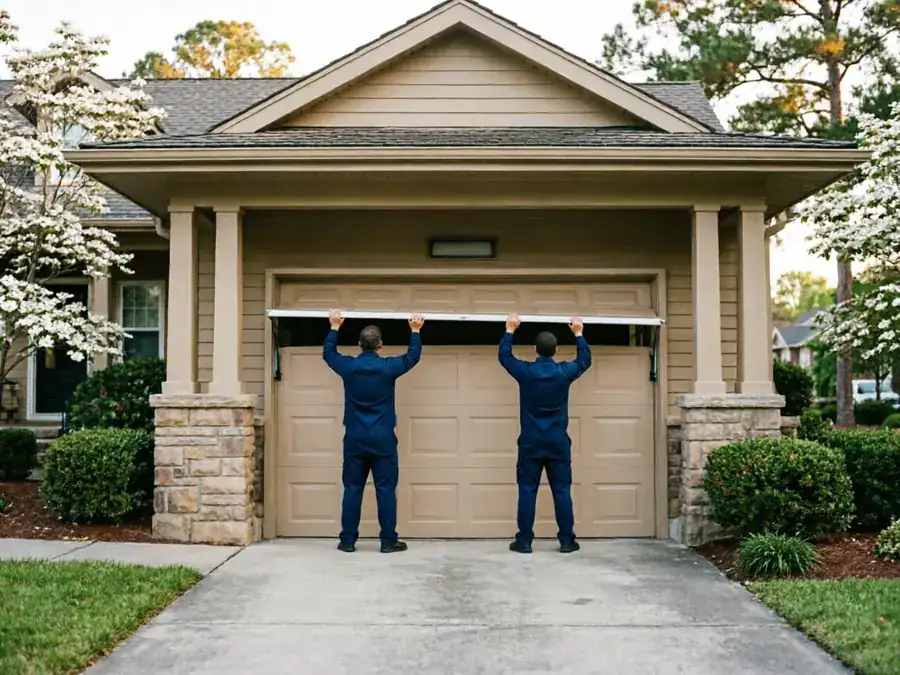
A straight panel swap - section comes out, new section goes in, hardware transfers over - is mechanical work: unbolt the hinges, pull the rollers, swap the section, reset the hardware, check the door balances on the springs. On a 1991-era door that's held up well, that's usually all it is.
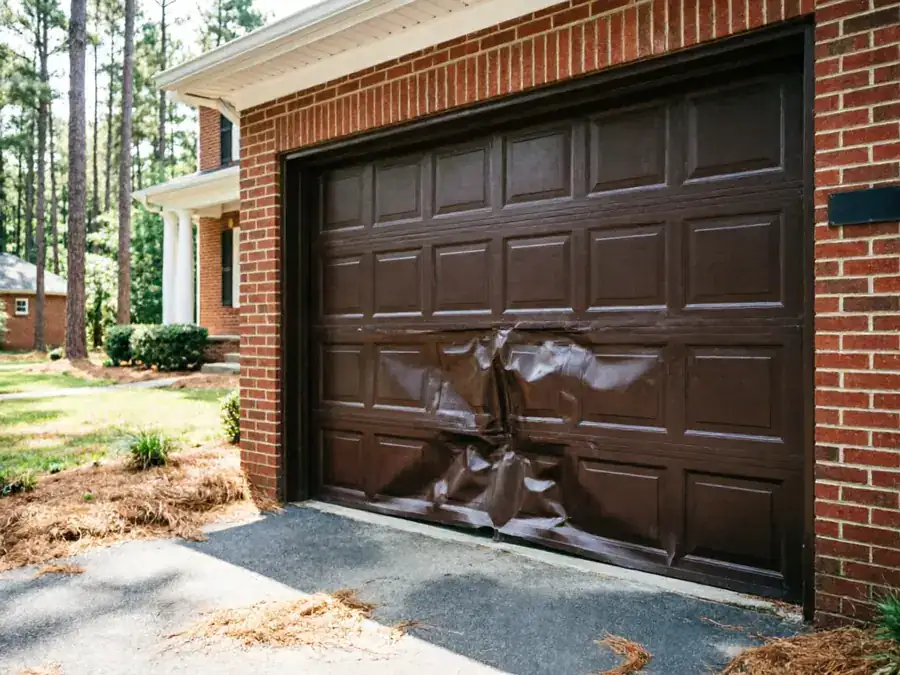
Where it takes longer is when the impact that cracked or dented the panel also tweaked the track or bent a hinge plate. That's common on these builds because the steel gauge from that era runs lighter than what's sold today, so a hard knock - a bumper, a ladder, a basketball backboard mount gone wrong - deforms the panel instead of just scuffing it. We check the track alignment and the hinge angles before we call the job done, not just whether the new panel looks right from the driveway.
How Long You Are Without the Door
If we're swapping a matched panel we have in stock or can get same-week, the door is back in service the day we're on site
The wait shows up when the original panel profile from a 1991 build isn't a current catalog item anymore and has to be special-ordered or substituted with a closest match that we fit and finish on site.
We're honest about that tradeoff when we quote it
A special-order match keeps the rest of your door - the sections that aren't damaged - looking original, but it adds lead time you don't control. A substitute panel gets you moving faster but may not match color or ribbing exactly on an older door. We'll tell you which situation you're in before we book the job, not after.
Why It Happens Here
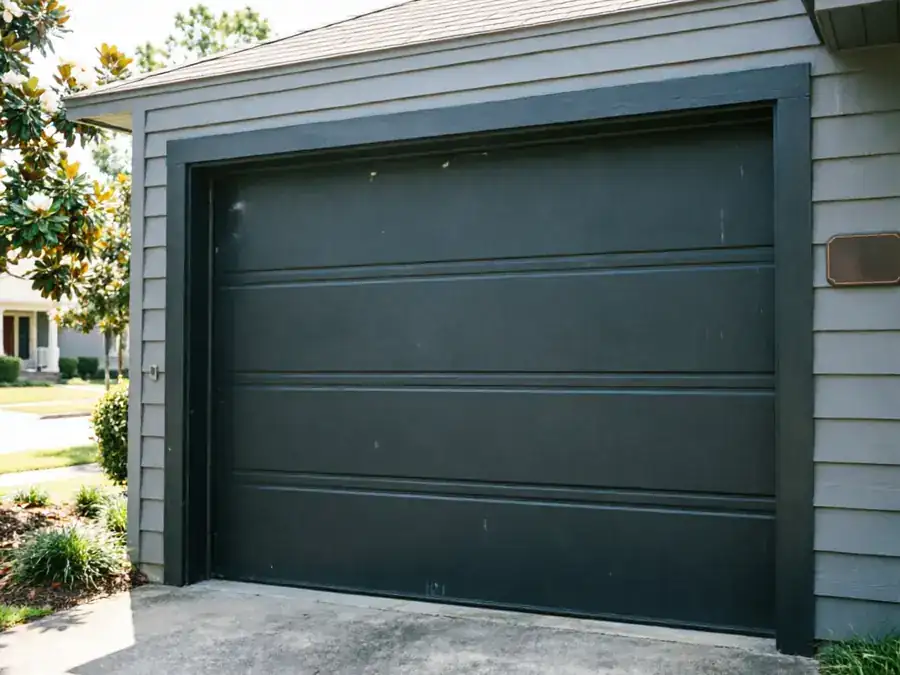
Newport's housing stock centers on 1991, which puts it inside the broader 1979-2006 range across the service area but on the earlier side of it. Doors from that era are almost always steel, often uninsulated or lightly insulated compared to what gets installed now, and the panel gauge is thinner. Thinner steel dents and cracks more readily on direct impact than the heavier insulated panels common in builds from the 2000s.
The cold-moderate climate here doesn't crack panels on its own, but it does affect the galvanized coating over three decades, and a panel that's already thinned by rust at the bottom edge fails faster under an impact that a newer, better-coated panel would shrug off. So the fault pattern in Newport tends to be: bottom panel, corner impact, coating already compromised by age before the dent or crack ever happened.
Getting It Booked In
We cover Newport from Fort Mill, about 8 miles out, so there's no local branch to swing by - everything's booked by phone or through the coverage page, and we bring the panel stock and matching hardware with us on the truck. Tell us the door's approximate age, whether it's a single or double, and roughly how many sections wide the damage runs, and we can usually tell you over the phone whether we're looking at a stock match or a special order.
Newport sits among a cluster of similar-era suburbs - Baxter Village and Riverview are each about 3 miles out, Tega Cay and India Hook about 5 - so if your panel profile matches what we've sourced recently for a nearby job, that can shorten the lead time. We won't promise that before we've actually looked at your door, but it's worth mentioning when you call.
What You Are Seeing
The signs that point to a panel job rather than a full door replacement
A dent or crack confined to one or two sections, the door still rolls smoothly on the track, and the springs still hold the weight properly when you test it by hand with the opener disconnected. If the whole door is bowing out of square, or two or three sections show separate impact damage, that's usually past the point where panel swaps make financial sense against a new door.
Rust bleeding through the paint at the bottom panel's lower lip, especially on a door that's been through three decades of this climate band, is worth flagging even if there's no dent yet - it's often the spot that fails first under the next impact
If you're not sure which you're looking at, a photo on the phone before we drive out saves everyone time.