Serving Fort Mill, SC & nearby
(803) 450-4053
Fort Mill, SC

Garage Door Repair in Newport, SC

Garage door repair for Newport, SC homes built around 1991, 8 miles from Fort Mill. Torsion springs, openers, and track fixes for 1990s-era steel doors.

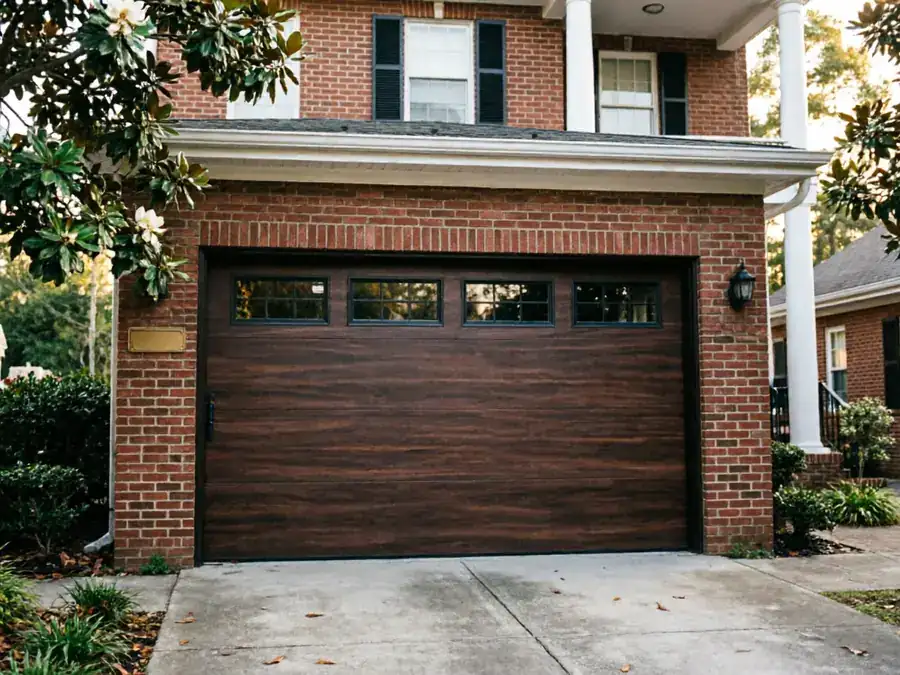
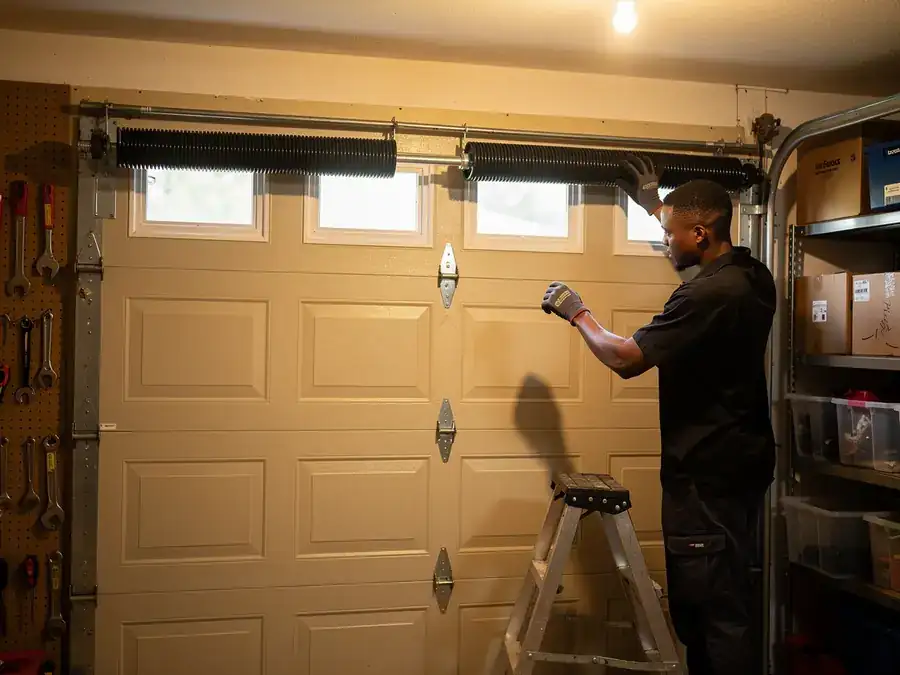
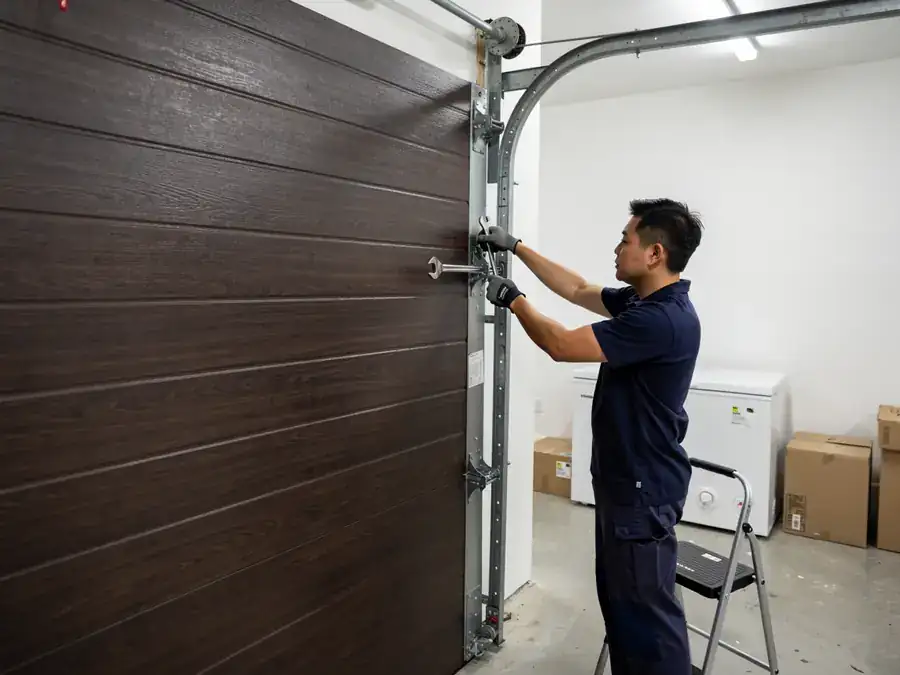
A technician adjusts the brown garage door with a wrench.
Fort Mill, SC
8 services
7 service areas
Diagnosis first, then the fix

What It Costs

Newport's garage doors mostly went up starting in 1991, which puts this suburb on the newer edge of the stock we see across the Fort Mill area. That matters for cost because a 1991-era door usually came as a steel sectional panel on a torsion spring system sized for that lighter steel, not the heavier wood-panel doors on extension springs you find in older pockets elsewhere in the service area. A torsion spring job on a steel door is a different part number and a different labor time than an extension-spring repair, so pricing follows the parts, not a flat rate, and we don't post a price list here for that reason. Newport's median household income runs higher than the broader Fort Mill service area's $94,505, at $107,143, which does change the repair-versus-replace math for some owners here - a thirty-year-old steel door with a cracked panel and a tired opener is often closer to a replacement decision than a repair ticket once you add up the parts. Be honest with yourself about the door's age: if the opener and the springs are both original to 1991, fixing one part now often means the other follows within a year or two, and we'll tell you that up front rather than bill it as two separate calls later.

What the Repair Takes

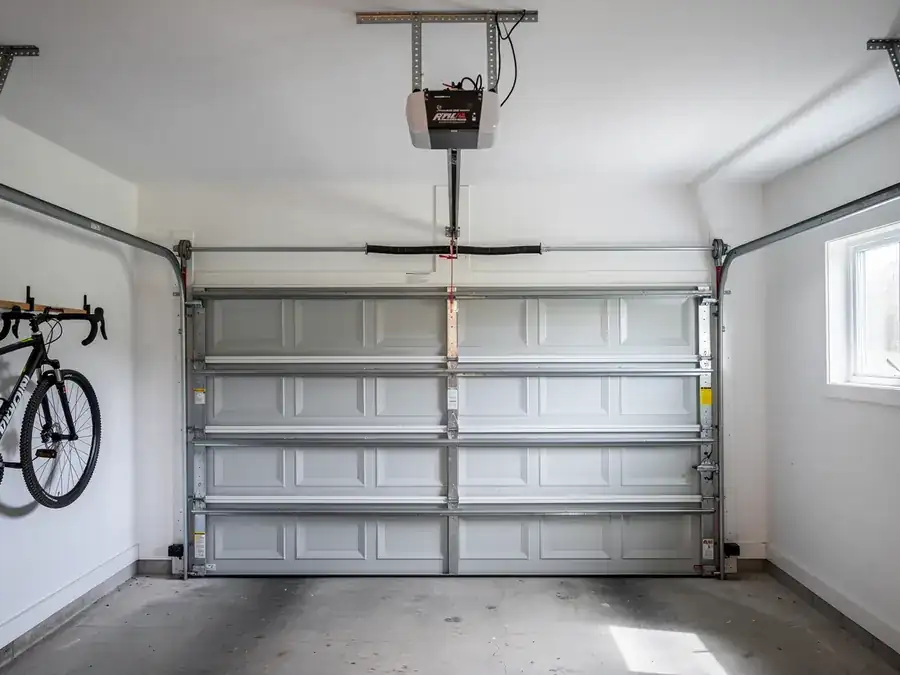
Most Newport doors we'd expect to work on are steel sectional panels, which means torsion springs mounted on a shaft above the door rather than side-mounted extension springs. On a door like that, a spring job means removing the old spring under tension, matching the wire size and wind to the door's weight, and resetting the torsion. Cables, rollers, and the bottom bracket wear on their own schedule and don't always fail together, so we check all three rather than assume one part explains the whole complaint. Openers from the early 1990s were mostly chain-drive, and if the unit is still original, the logic board is usually the thing that fails first, not the motor - that's a board swap or a full opener swap, not a repair in the strict sense. One limitation worth saying plainly: some hardware specific to that build era is no longer stocked by the manufacturers, so matching an exact bracket or a discontinued panel color sometimes means a longer wait on the part, not a longer wait on us. We'd rather tell you that before the job than have you find out when the part doesn't show.

How Long You Are Without the Door

We run the 8 miles from Fort Mill to Newport ourselves, which means no local branch stocks parts in town - every job is loaded onto the truck before we leave Fort Mill. For common failures like a snapped torsion spring or a frayed cable, that's usually a single trip because those parts are standard stock regardless of the door's age. Where it gets longer is anything tied to the door's specific hardware - a bent track section matched to a steel panel's exact gauge, or an opener logic board for a unit that's been out of production for years. We're not going to promise a same-day fix on those because we don't control how fast the part ships, and a guess dressed up as a promise helps nobody. What we will do is diagnose the actual part on the first visit, tell you honestly whether it's on the truck or needs ordering, and give you a real estimate instead of a vague one. If the door is unsafe to leave as-is - off the track, or a spring under tension that could let go - we'll say so and talk through what to do in the meantime rather than leave you guessing.

Why It Happens Here

With about 1,702 households in Newport, most of the original 1991-era openers and springs are reaching the same age window within a few years of each other, which is part of why failures in this suburb tend to cluster by part rather than spread evenly across every house. A steel sectional door installed in 1991 in Newport is now over thirty years into a torsion spring's rated life, which is why spring failures cluster in this particular build era here rather than being random. The region sits in a cold-moderate climate band, and steel panels expand and contract with that seasonal swing more than the older wood doors do - over three decades that cycling fatigues the spring steel and loosens hinge fasteners faster than a mild, stable climate would. None of this means every door in Newport is about to fail at once. It means the failure pattern - spring snaps, hinge squeal, opener boards going quiet - tends to show up in this neighborhood on roughly the same timeline, because the houses themselves went up on roughly the same timeline.

Getting It Booked In

We cover Newport from Fort Mill, about 8 miles out, so there's no walk-in counter here - calls get scheduled and the truck comes loaded with the parts the diagnosis calls for. If you're not sure whether what you're looking at is a quick fix or something bigger, describe what's happening - a grinding sound, a door that won't budge, a spring that visibly let go - and we can usually tell from that whether it's a same-visit part or something we'll need to order first. You can see the rest of our coverage area on the coverage page for Newport, and if you're looking into other door services beyond repair - openers, full replacements - that's covered separately on the Fort Mill garage door page. We don't carry every part for every door built since 1991 on the truck at all times, so the first conversation is mostly about narrowing down what's actually broken before anyone drives out.
What You Are Seeing

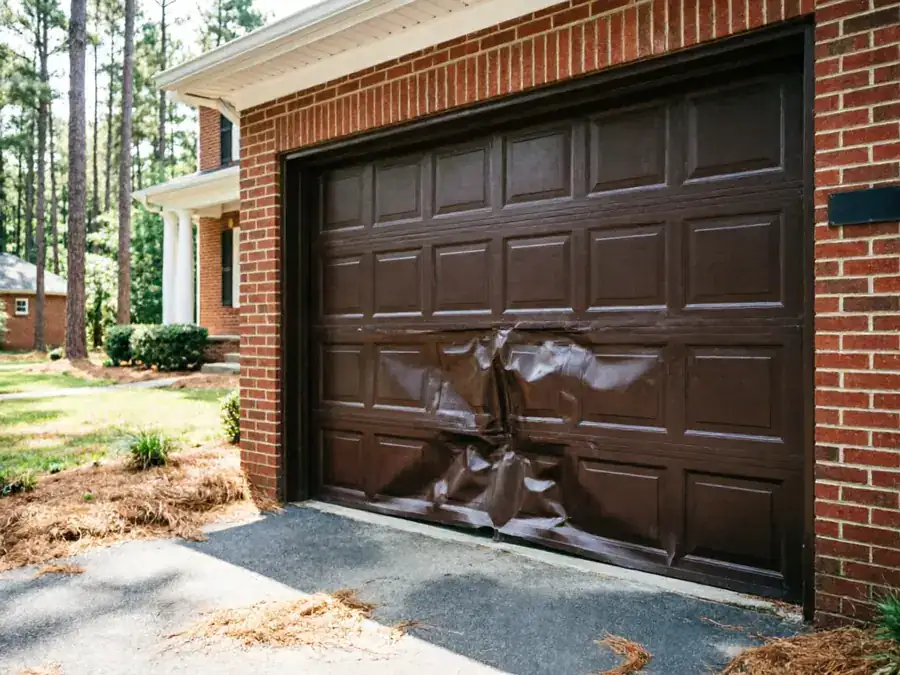
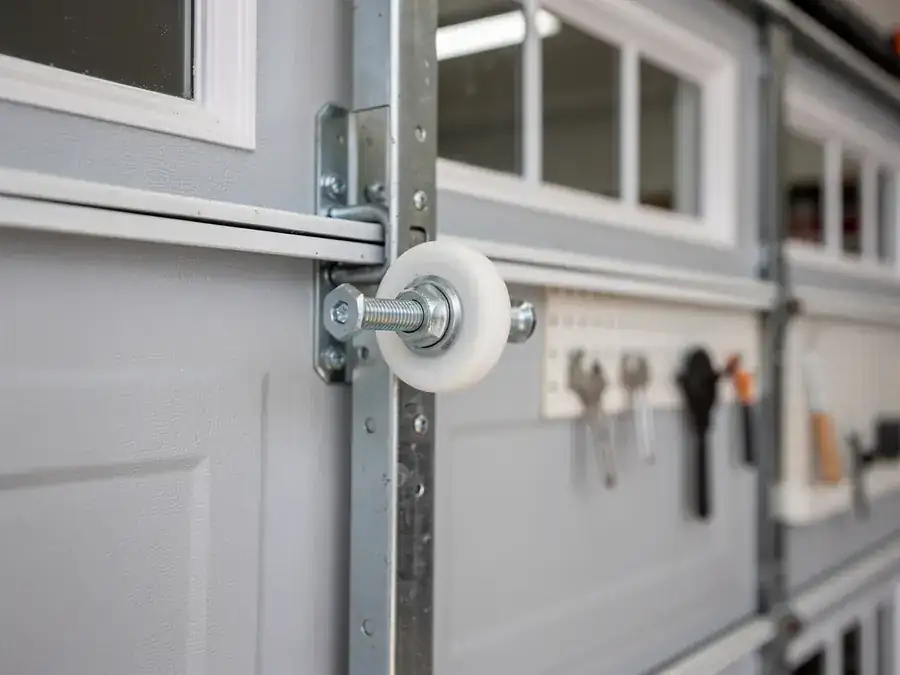
On a door that's been doing its job since 1991 without much attention, the symptoms tend to show up in a predictable order. A spring that snaps usually announces itself - a loud bang, then a door that's suddenly too heavy to lift by hand or won't move at all under the opener's motor. A frayed cable shows up as a door that drops unevenly on one side, or jerks partway through its travel. Rollers wearing out sound like a grinding or squealing that gets worse as the door opens rather than staying constant. An opener logic board going bad on an original unit often looks like the motor running but the door not moving, or the remote working some days and not others. A bottom panel that's taken thirty years of humidity and cold cycling can start to bow or crack along the seam, which is more a steel fatigue problem than anything that happened overnight. None of these are emergencies you need to diagnose yourself - just note what you're seeing and when it started, and that's usually enough to point us at the right part before we ever touch the door.

How it works

From “it’s stuck” to “it’s fixed”

1
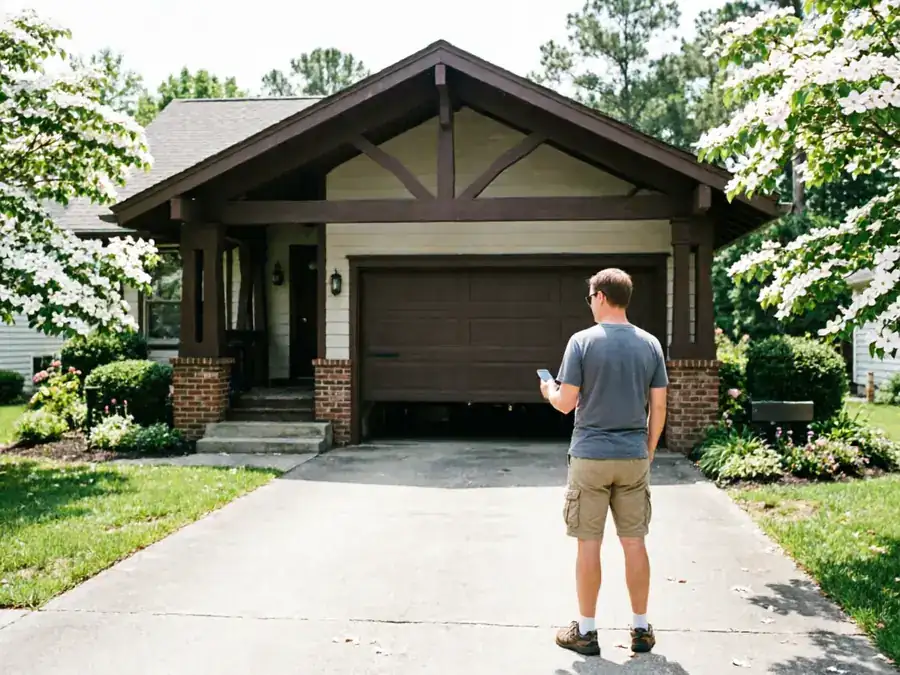
A man stands in a driveway, looking at a partially open brown garage door.

Tell us what’s wrong

Describe the symptom - won’t open, loud bang, opener runs but the door won’t move.

2
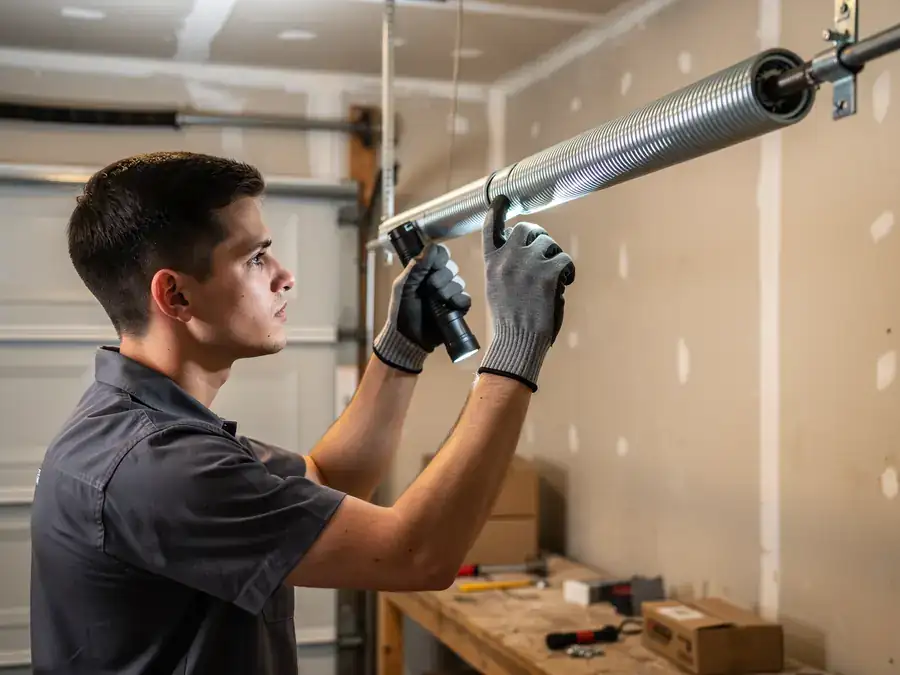
A technician in a gray shirt and gloves inspects a garage door torsion spring with a flashlight.

On-site diagnosis

A technician tests the door under power and by hand and finds what actually failed.

3
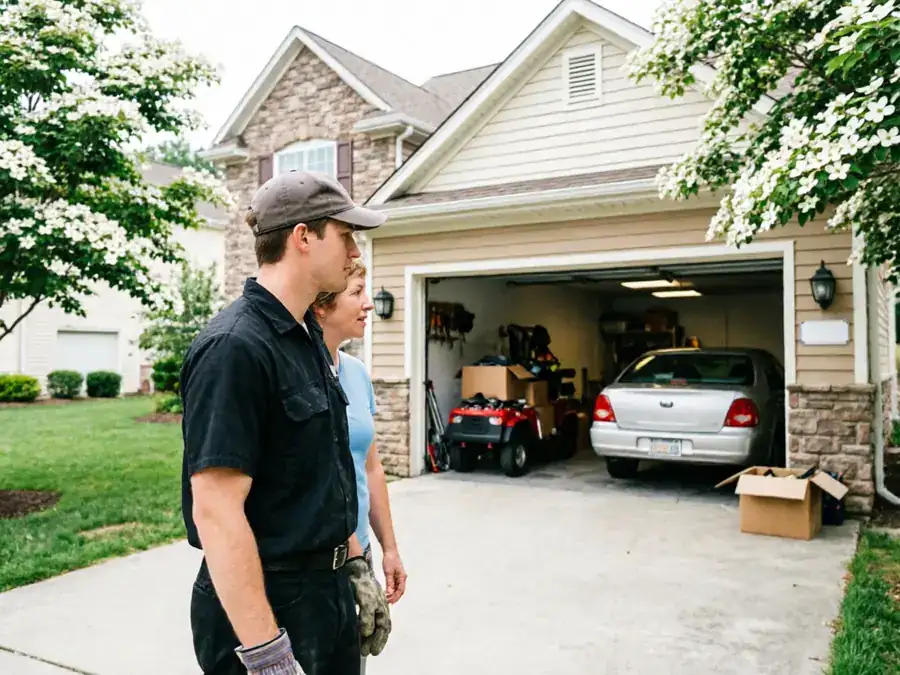
A technician and a woman stand in front of an open garage with a car inside.

Clear, up-front plan

You get the fix that’s needed and what drives the cost - before any work starts.

4
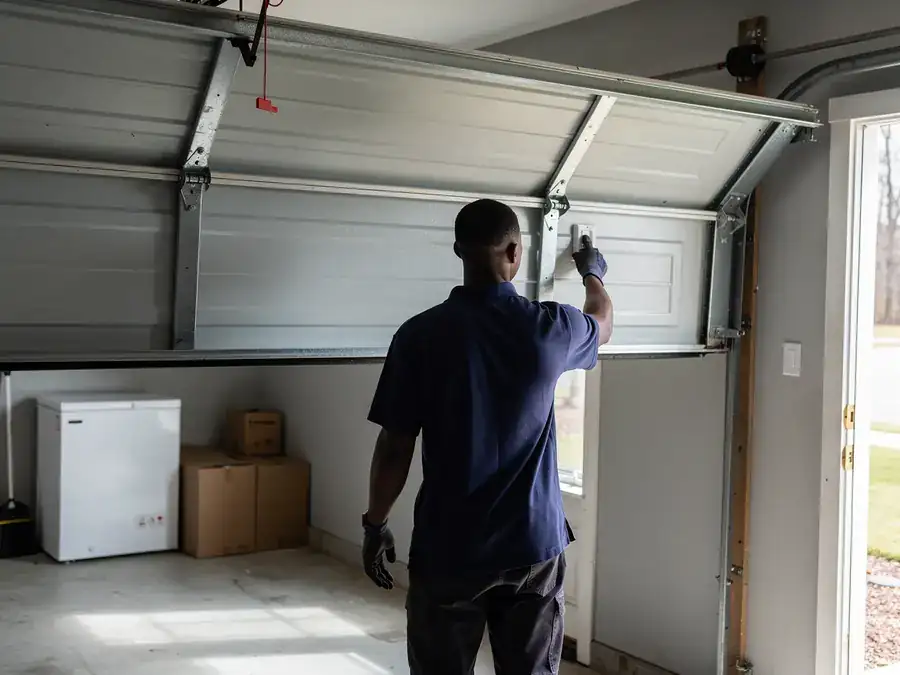
A technician in gloves is working on the inside of a garage door.

Repaired & tested

The repair is done, the door is set true and tested, and the work area left clean.

Not sure which repair your door needs in Fort Mill, SC? Describe what it’s doing - every job starts with a diagnosis.

How we work

What to expect

Diagnosis firstEvery visit starts by finding what actually failed - not a pre-written parts list.
The right part for the doorSprings and openers matched to the door’s weight and age, so the fix holds up.
Straight answersWhen a repair makes more sense than a replacement - or the reverse - you hear it plainly.
Clean, careful workTension released safely, hardware set true, the door tested under power before we leave.
13,662Residents in Fort Mill
8Garage door services
7Neighborhoods & suburbs
SCServing Fort Mill, SC
Questions

Frequently asked

Straight answers about garage door repair in Fort Mill. Still unsure? Ask us directly.

How old are most garage doors in Newport, SC

The housing in Newport mostly dates to around 1991, so most original garage doors here are steel sectional panels on torsion springs rather than the older wood-and-extension-spring doors found in some other parts of the Fort Mill service area. That age means springs and opener boards from that era are now past or near the end of their rated life.

Do you have a local office in Newport

No. We work out of Fort Mill, about 8 miles from Newport, and every job is loaded onto the truck before we drive out. For common repairs like a spring or cable that's usually no issue, but it means we're not able to promise a same-day fix on parts that need ordering.

Why did my garage door spring snap with no warning

Torsion springs are rated for a certain number of open-close cycles, and that number shrinks with age and temperature swings. A door installed around 1991 in a cold-moderate climate like this one is well past thirty years of seasonal expansion and contraction, which fatigues the spring steel until it lets go, often without much warning.

Is it worth repairing an original 1991 opener or should I replace it

It depends on what failed. A dead logic board on an opener that old is often not worth repairing on its own, since the motor and gearing are the same age and tend to follow soon after. We'll tell you honestly which repairs make sense and which ones are really just delaying a replacement.

Ready to get your garage door sorted?

Tell us what it’s doing and where you are in Fort Mill - we’ll take it from there.

Request a QuoteCall