What It Costs
We can't quote a number here without seeing the unit, and we won't pretend otherwise. What we can tell you is what drives the cost in a neighborhood like Newport: most of the openers here are original to houses built right around 1991, which means you're often looking at a logic board, a capacitor, or a motor winding that's thirty-plus years old. Parts for units that age aren't always on the shelf at the big box store, and if the board itself is dead, replacement usually makes more financial sense than chasing a part nobody stocks anymore. A newer belt-drive opener with a working safety reversal system costs more upfront but it's not fighting age on top of the actual fault. We'll tell you straight if your unit is a repair or a replace before we touch anything, and we won't run up a bill chasing a fix on a motor that's circling the drain anyway. Newport's household incomes run higher than the regional median, which sometimes means owners choose the newer unit over patching the old one - that's a call we'll lay out for you, not make for you.
What the Repair Takes
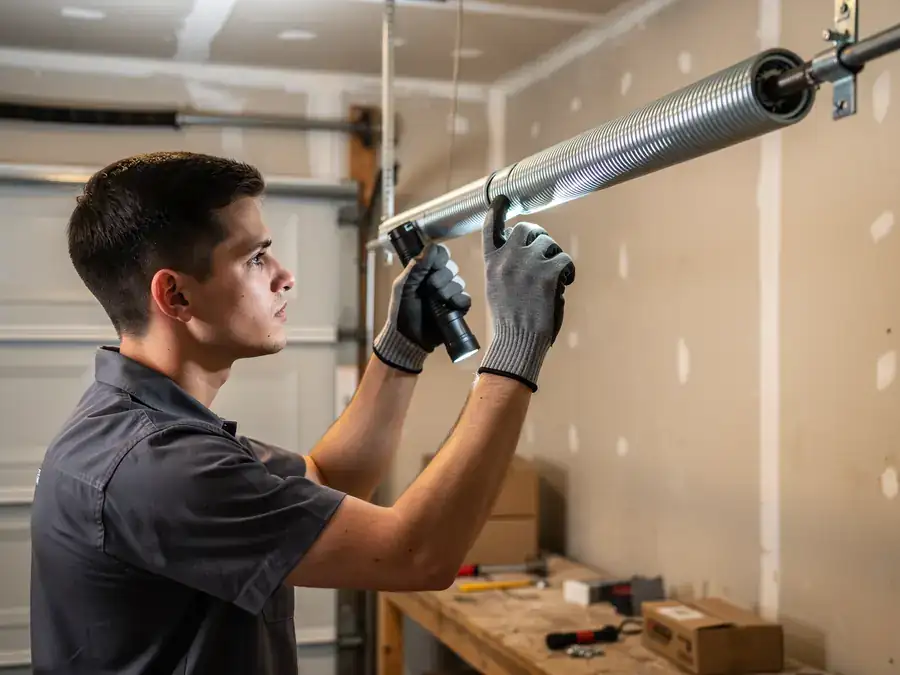
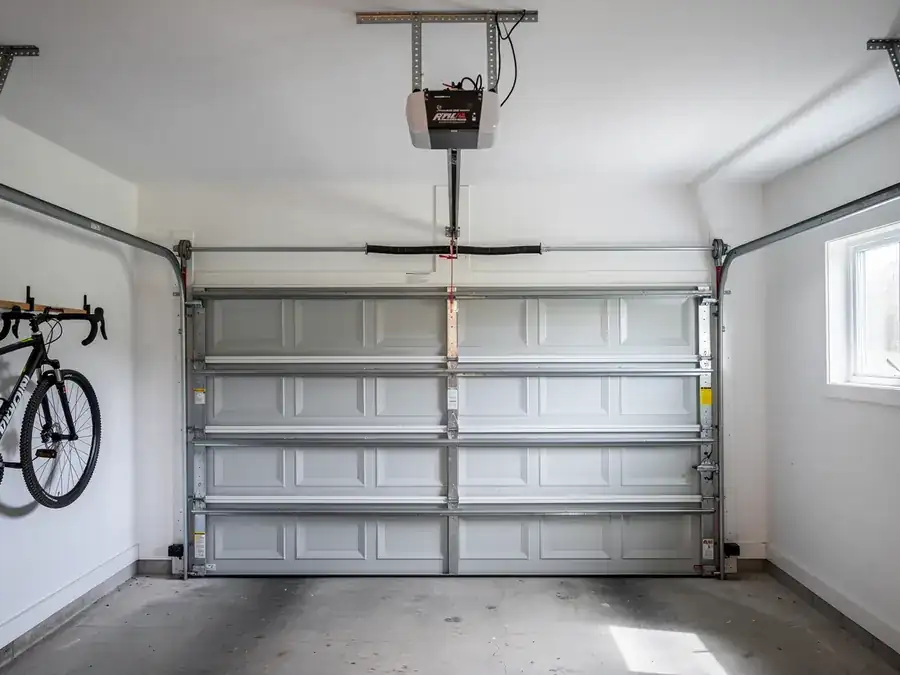
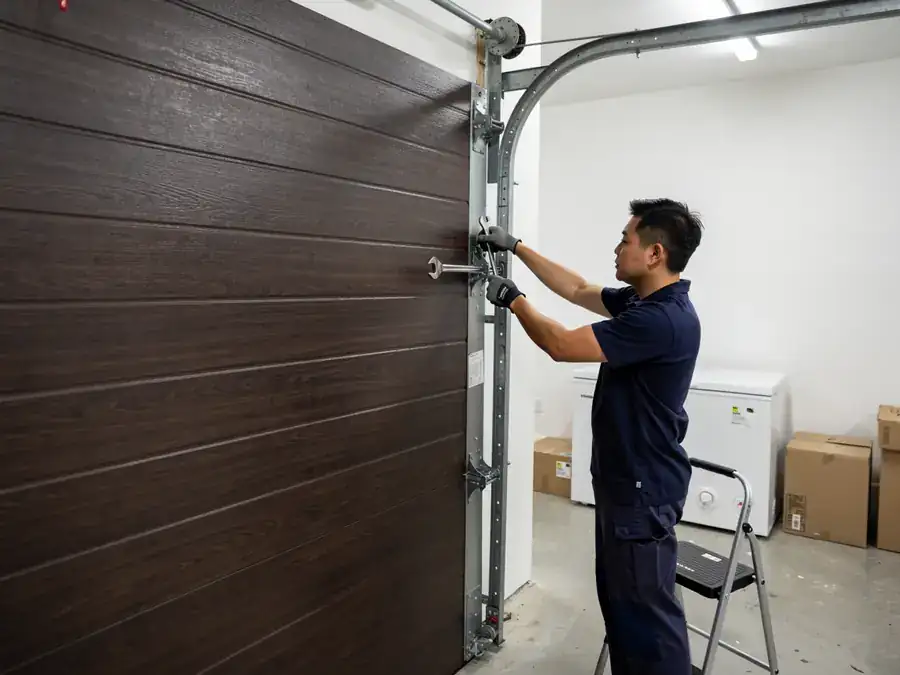
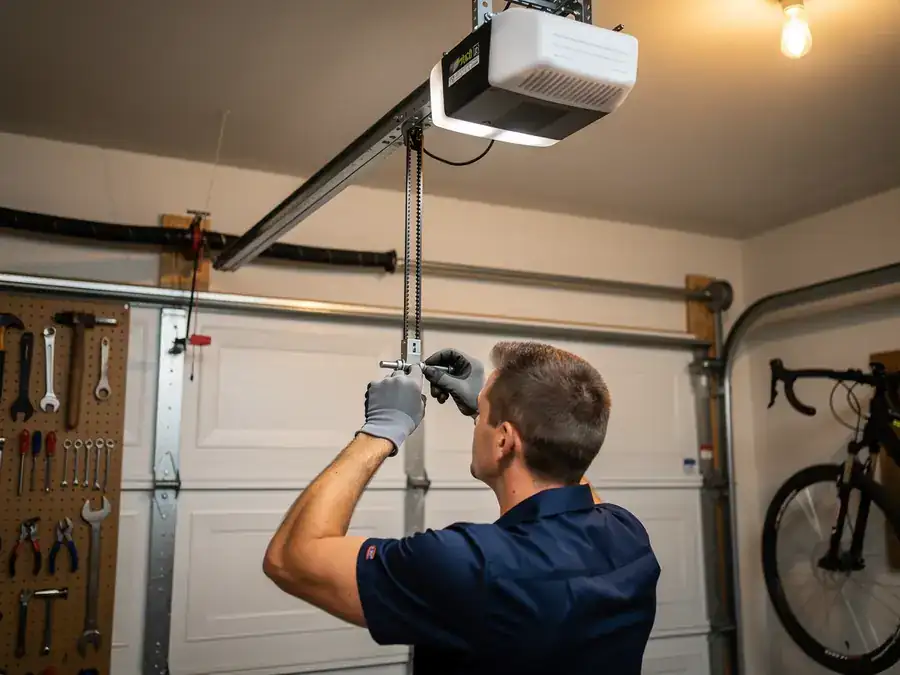
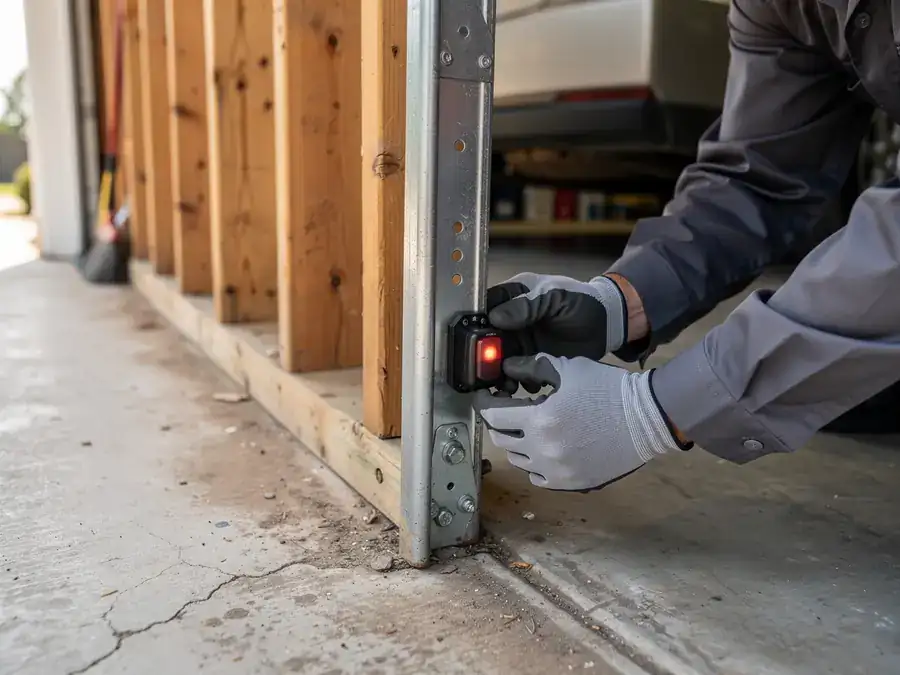
On a house built close to 1991, the opener itself is usually the original chain-drive, and by now the capacitor has often swelled, the drive gear has worn down to plastic dust, or the logic board has a cracked solder joint from decades of temperature swings. We pull the cover, test the circuit board output, check the drive gear and sprocket, and look at the travel limit switches before we touch the motor. If the board's gone, we replace the opener rather than source a thirty-year-old part that may not exist anymore. If it's mechanical - gear, sprocket, chain tension - that's usually a same-visit fix. We also check the wall control and the safety sensors while we're in there, since on hardware this old those are often the original pair and worth testing even if they're not the reported problem.
Why It Happens Here
Fort Mill's wider service area covers houses built anywhere from 1979 to 2006, but Newport's stock clusters a lot tighter than that spread - most of it went up within a few years of 1991. That matters for openers specifically: a chain or belt drive unit has a working life measured in motor-hours and gear wear, and a house built in 1991 puts that opener well past the point where failure is a surprise. With 1,702 households in Newport, a lot of them are hitting that same age wall around the same stretch of years, which is why we see clusters of the same failure - cracked board, worn drive gear - across a short run of calls. The cold-moderate winters here don't help either: grease in an original chain drive stiffens up in cold weather, and a motor straining against stiff grease wears out faster than one running free. None of that is unique to any one house - it's the age of the stock, not the address.
Getting It Booked In
We run this call out of Fort Mill, about 8 miles from Newport, so we schedule the trip rather than treat it as a walk-up job. Tell us what the opener is doing - won't engage, reverses on its own, makes noise and stalls - and we'll bring the parts most likely to match hardware from a 1991-era install. You can see our general coverage for the area at our coverage page, and if you're after opener work on the Fort Mill side of things directly, that's covered on our opener repair page for Fort Mill.