How Long You Are Without the Door
India Hook sits about five miles from Fort Mill, and that's the first thing worth saying plainly: there's no branch here, no truck parked around the corner. Every job comes from Fort Mill, so how fast we get to you depends on where that truck already is that day, not on a promise we can print on a page. We won't guess a response time just to fill this section.
What we can tell you is what you're dealing with once we arrive. Housing in India Hook centers around 2003 - newer than the 1979 to 2006 spread (median 1997) across Fort Mill Garage Door Pros's broader coverage area. That six-year gap matters more than it sounds. Openers installed around 2003 are past the chain-drive-only era but before today's smart-home tie-ins, so you're usually looking at a mid-generation logic board, a basic keypad, and rolling-code remotes rather than the older fixed-code units you'd find in the service area's 1980s pockets.
If your opener is original to the house, it's pushing two decades of use. That's old enough for a board to fail outright but not so old that parts are impossible to source - which is its own kind of good news when you're standing in the driveway at night with the door stuck halfway.
Getting It Booked In
Tell us the opener's age if you know it, or just the approximate age of the house - in India Hook that's usually enough to narrow down what we're bringing on the truck before we leave Fort Mill. A 2003-era opener and a 1985-era opener are different repairs with different likely parts, and knowing which one we're driving toward saves a second trip.
If you're not sure what's wrong, describe what the door does: does it stop partway, reverse right after closing, not respond to the remote at all, or run but not lift? Each of those points somewhere different, and it helps us load the right board or sensor before we're on the road rather than guessing once we're there.
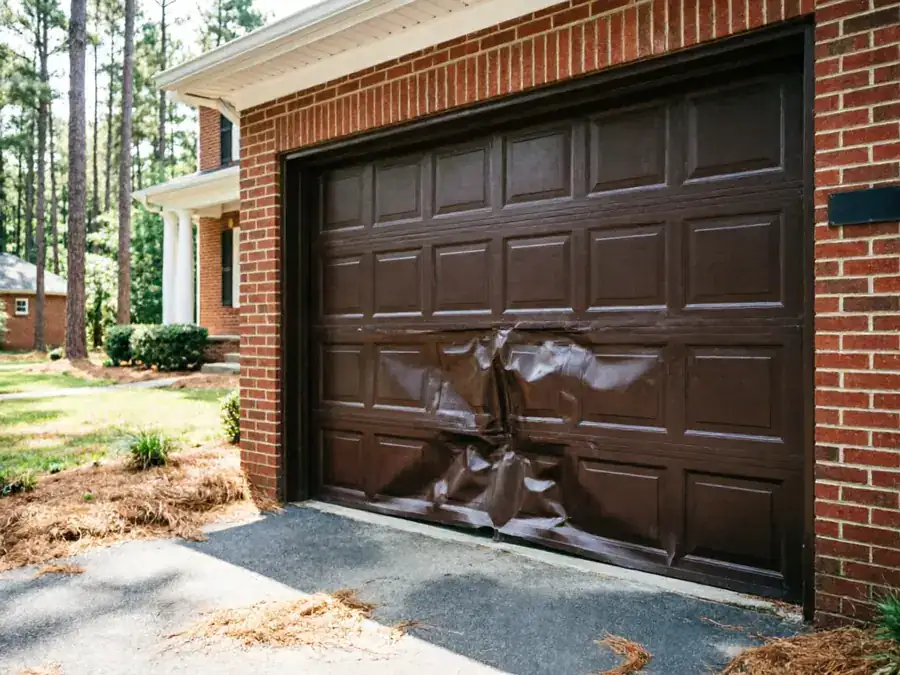
You can check current coverage for India Hook and the surrounding area here. If your actual issue turns out to be bigger than the opener - a cracked panel, a broken spring - that's a separate job and a separate page; this one's about the opener itself.
What You Are Seeing
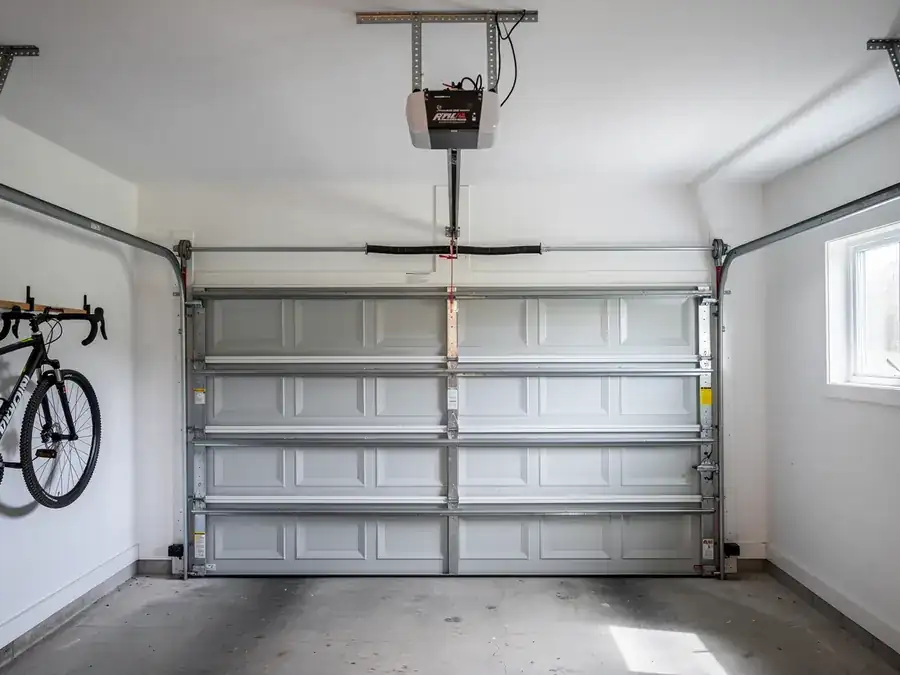
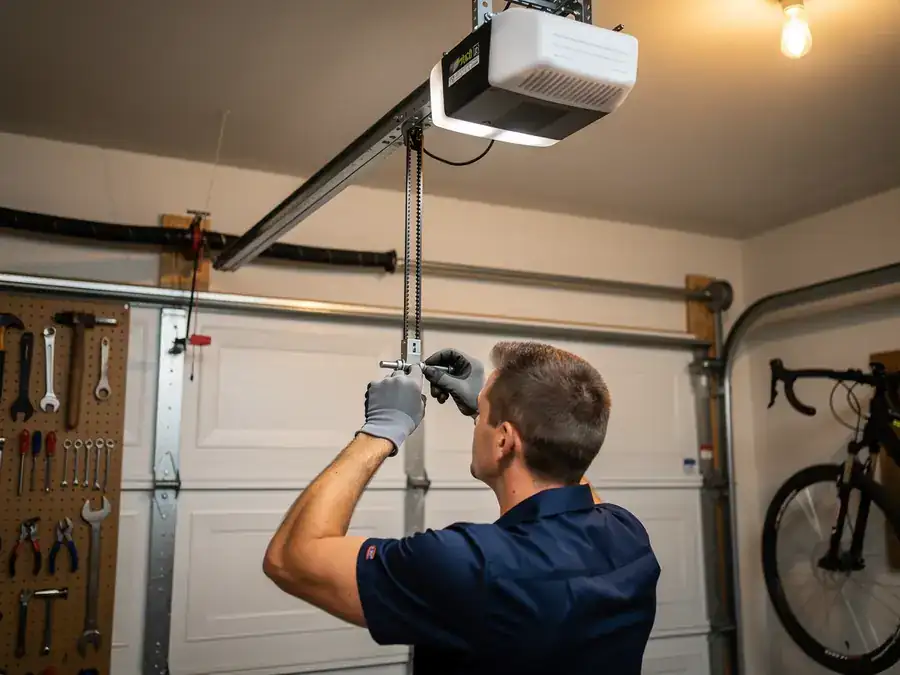
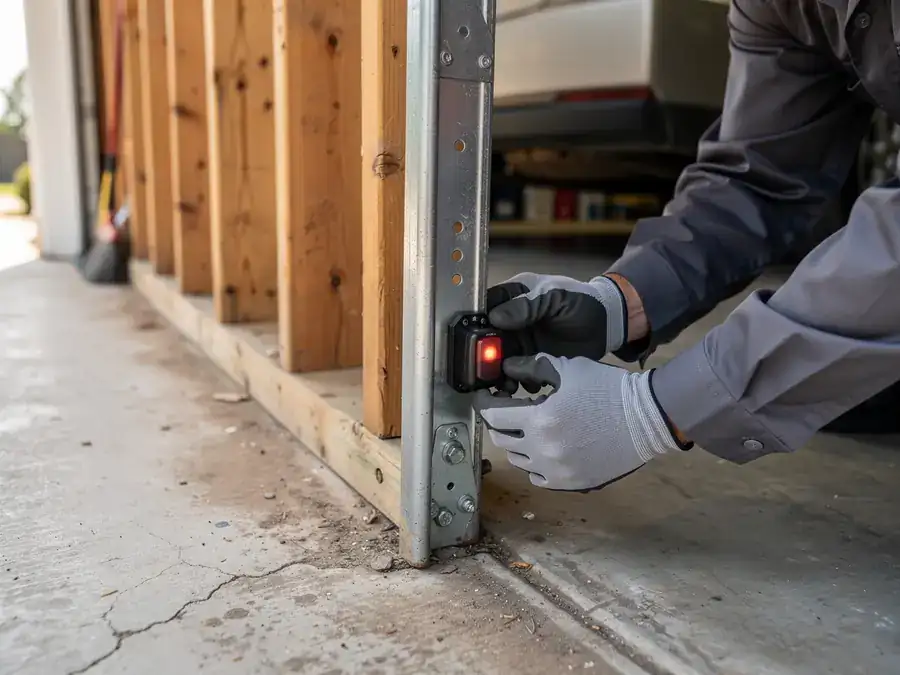
For a house built around 2003, the usual failure points are the circuit board, the travel/limit settings drifting out of calibration, and the safety sensors at the bottom of the track getting knocked out of alignment - a light tap from a bike or a trash can is enough
Federally mandated photo-eye sensors were standard well before 2003, so if your door reverses for no visible reason or won't close at all, start by checking whether those two sensor eyes are lined up and the lenses are clean.
Motor and gear-drive wear shows up too, especially chain-drive units that have run for close to twenty years without the chain ever being adjusted
A grinding or slapping sound usually means the chain's loose or the sprocket's worn, not that the whole unit is dying.
In the service area's older sections
The 1980s and 90s stock that makes up most of the wider coverage area - we see dead capacitors and failed start relays more often, since those units are a decade or more past India Hook's typical install date. Knowing which generation we're dealing with before we open the housing changes what we check first.
What It Costs
We're not going to put a number here that we can't back up - opener repair cost depends on whether it's a sensor realignment, a board swap, a new motor, or a full unit replacement, and we don't know which one it is until we're looking at your unit. What we can say is that a 2003-era board is still generally available, which keeps repair on the table where it might not be for an opener built in the 1980s.
India Hook's 1,660 households are a small slice of the roughly 17,630 across Fort Mill Garage Door Pros's full service area, and the median household income here, $94,505, matches the wider area's figure. That doesn't set the price of a repair, but it does mean we're not quoting one set of parts for India Hook and a cheaper or pricier set elsewhere - the hardware itself is what drives the number, not the zip code.
If a board is discontinued or a motor is too far gone to be worth chasing parts for, we'll tell you that straight rather than running up a repair bill on a unit that's done. Sometimes replacement is the honest answer.