How Long You Are Without the Door
India Hook sits about 5 miles from our shop in Fort Mill, which is close enough that it doesn't change how we run a call here versus one closer to the truck. A broken spring or a stuck opener doesn't wait for a convenient day, and the short drive means we're not padding a quote with travel time the way we might for York or McConnells, both well past the 17-mile mark. That distance also means if you call and we're already out this way on another job, we can often swing by the same trip instead of scheduling a second one.
What we can't do is promise a same-day slot before we've looked at the calendar. We travel from Fort Mill for every call out here, so the day fills the way any route does - first come, first scheduled. If your door won't close and the car's stuck inside, say so when you call. We prioritize a door that won't close over one that's just noisy, and that's true in India Hook the same as everywhere else we go.
Getting It Booked In
Most of what we need to know before we load the truck is the age of the door and what it's doing - or not doing. India Hook's housing mostly went up around 2003, which is newer than the 1979-2006 range and 1997 median you'll see across the rest of the area we cover. That one number tells us a lot before we even arrive: expect a steel sectional door, torsion spring hardware, and an opener that's probably had at least one replacement already if the house hasn't changed hands.
When you call, tell us the door's approximate age if you know it, whether it's one spring or two, and if the opener still has power. That's usually enough for us to bring the right spring weight and not waste a trip. We book by the job, not by the neighborhood, so there's no special India Hook queue - just the same scheduling we use everywhere we drive to from Fort Mill.
What You Are Seeing
A door built around 2003 is now sitting at roughly twenty years old
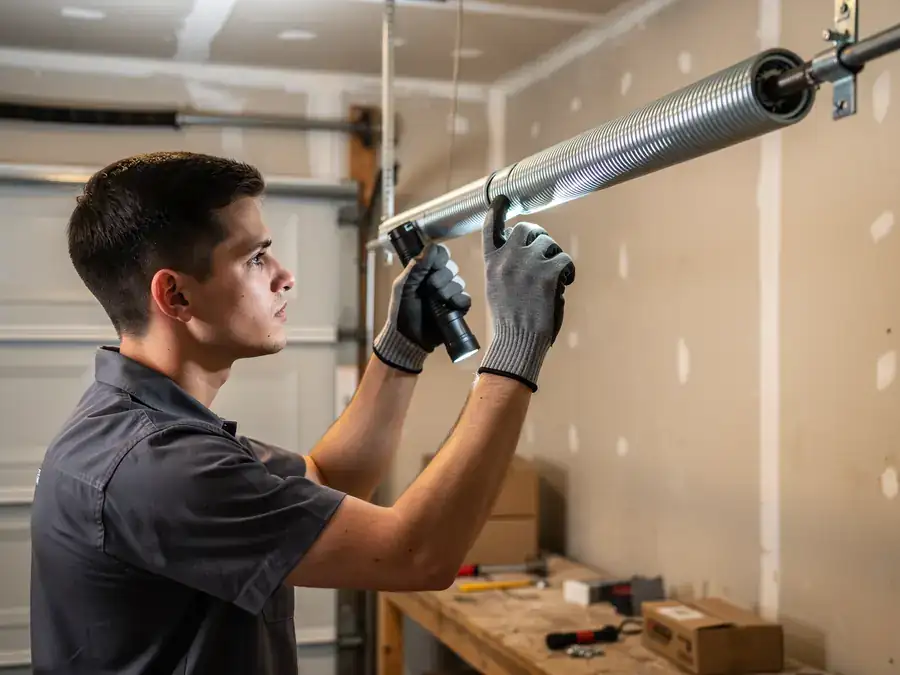
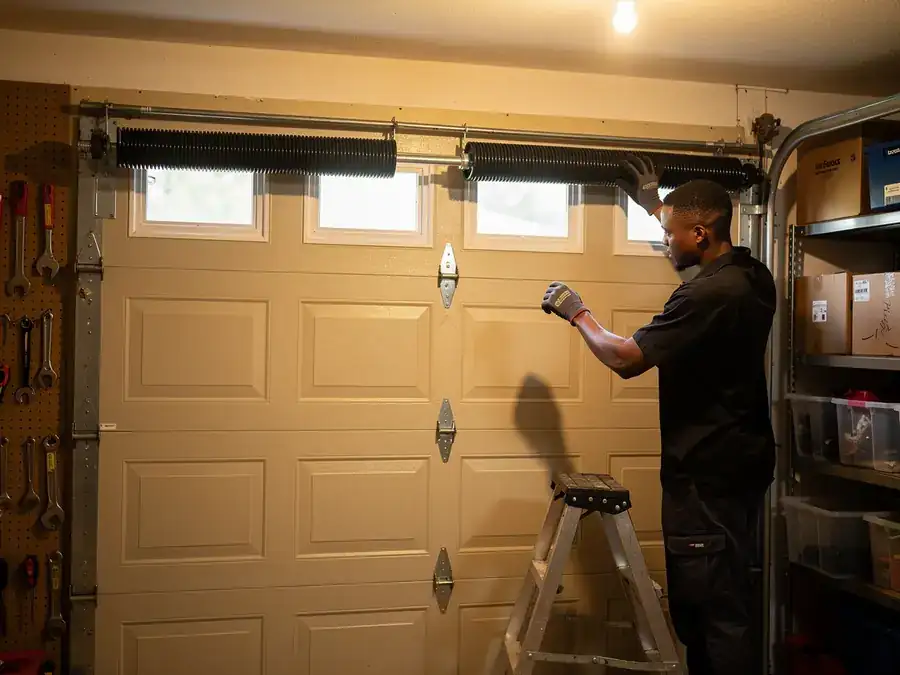
Which is right in the window where torsion springs start to fail - that's the metal fatigue timeline on standard residential springs, not a guess specific to this street or that one. If your door feels heavier than it used to, or the opener strains and reverses partway up, that's usually the spring giving out before it snaps outright.
Because India Hook's stock is newer than the older pockets of the service area, we see less of the original one-piece, side-mounted hardware that shows up in houses from the 1980s
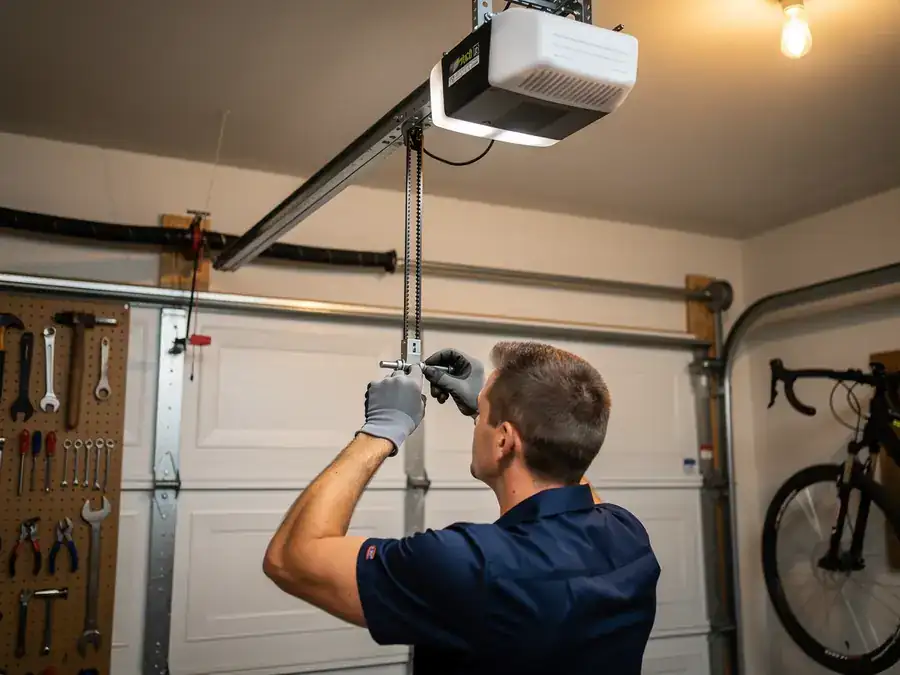
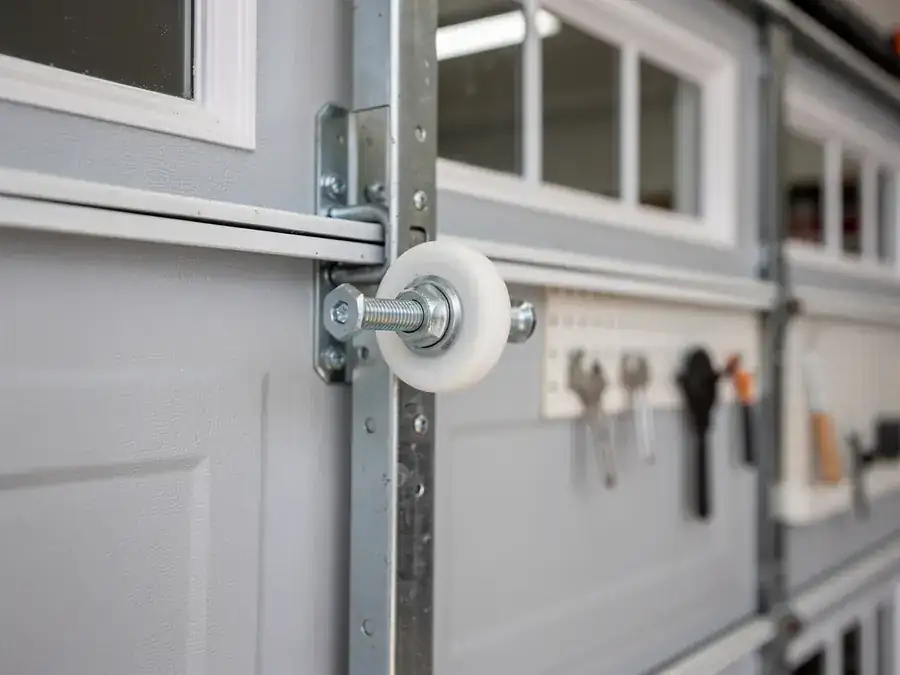
What we do see more of here is first-generation chain-drive openers starting to wear out - belts weren't standard yet when a lot of these houses were built, so a loud, grinding opener is a common call. Cables fraying at the bottom roller bracket is another one that tends to show up right around this age, especially if the door gets used daily for two cars.
What It Costs
We don't have a posted price list for this page, and quoting a number without seeing the door would be a guess, not a fact. What we can tell you is that the income level across this part of the service area - median household income around $94,505 - lines up with what we see in the work order mix: more full opener and spring replacements, fewer patch jobs where someone's trying to stretch a door another year.
One honest limit: if a part on an older or oddball door isn't something we stock, there can be a lead time before we can finish the job in one visit. That's rare on houses from the early 2000s since the hardware is still common, but it happens on mismatched or previously-modified doors. We'll tell you up front if that's the case rather than quote a timeline we can't hit.