How Long You Are Without the Door
We don't keep a crew sitting in India Hook. We run the call out of Fort Mill, about five miles down the road, so the time you're without a working door is mostly the drive plus whatever the fault turns out to be. That's usually a short trip, not a long one.
What slows a job down isn't distance, it's parts. Most of India Hook went up around 2003, and the doors from that build wave used steel sectional panels with torsion springs sized for a 7-foot standard opening - common stuff, and we carry it. Where it gets slower is if a panel needs color-matching or the track width is non-standard for a wider bay door, which does turn up in a handful of the larger houses from that era. That part can mean a special order, and we'll tell you straight if that's what you're looking at rather than guess and have you wait on a part that doesn't fit.
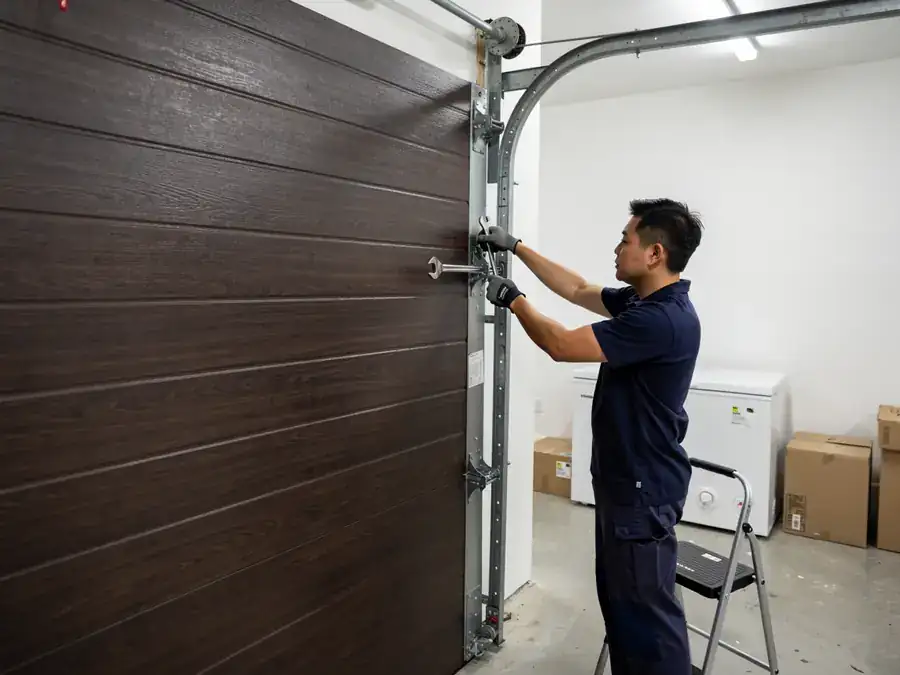
We don't claim a same-day guarantee here - it depends on what's broken and what's in the truck when we get the call. A snapped cable or a stuck roller we handle on the spot almost every time. A full opener swap or a panel replacement is the kind that needs a second trip.
Getting It Booked In
Tell us what you're seeing - door won't open, loud bang, door stuck halfway - and we'll get a rough idea of the fault before the truck leaves Fort Mill. That matters more in India Hook than it sounds, because knowing whether it's a spring or an opener board means we bring the right part the first time instead of making two trips over five miles.
If you're not sure which neighborhood counts as India Hook versus the next pocket over, our coverage page lays out which areas we run from Fort Mill, India Hook included: /coverage/india-hook/. For anything outside a repair call - new installs, full opener replacement, routine service - that's covered on our main Fort Mill page rather than here: /garage-door-repair-fort-mill-sc.
We book by phone, and we ask for the door's age and opener brand if you know it. For a house built around 2003, that's often enough on its own to narrow down whether we're dealing with an aging circuit board or a spring that's simply worn out its cycle count.
What You Are Seeing
A door from the early 2000s is old enough now that the wear shows up in predictable spots
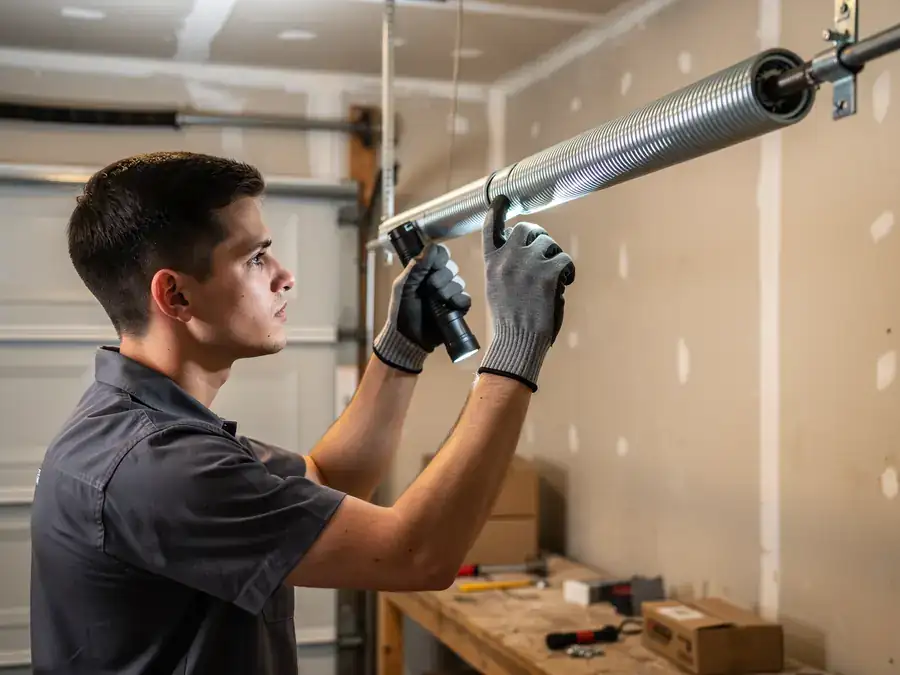
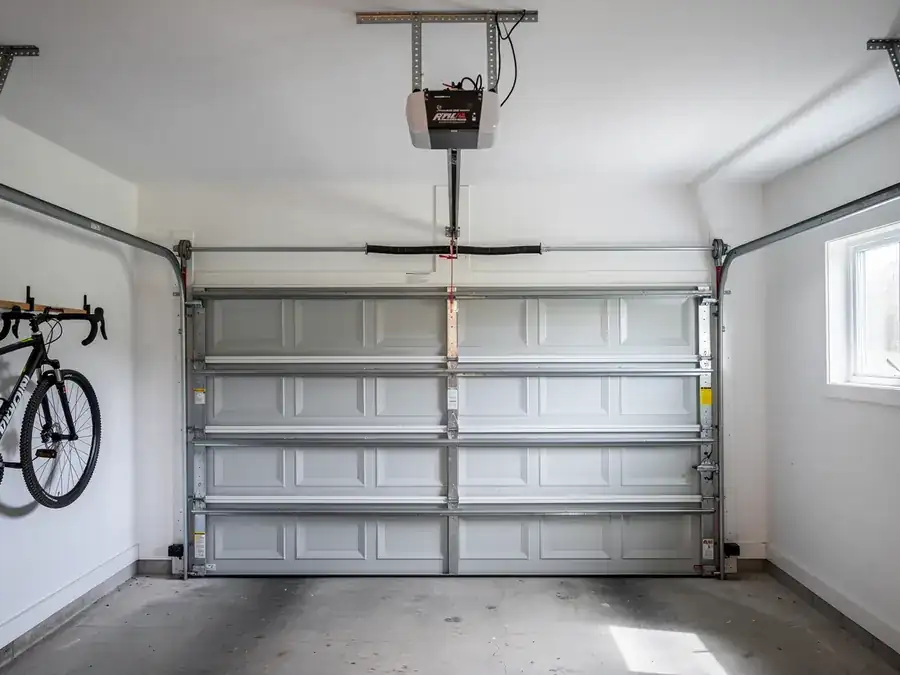
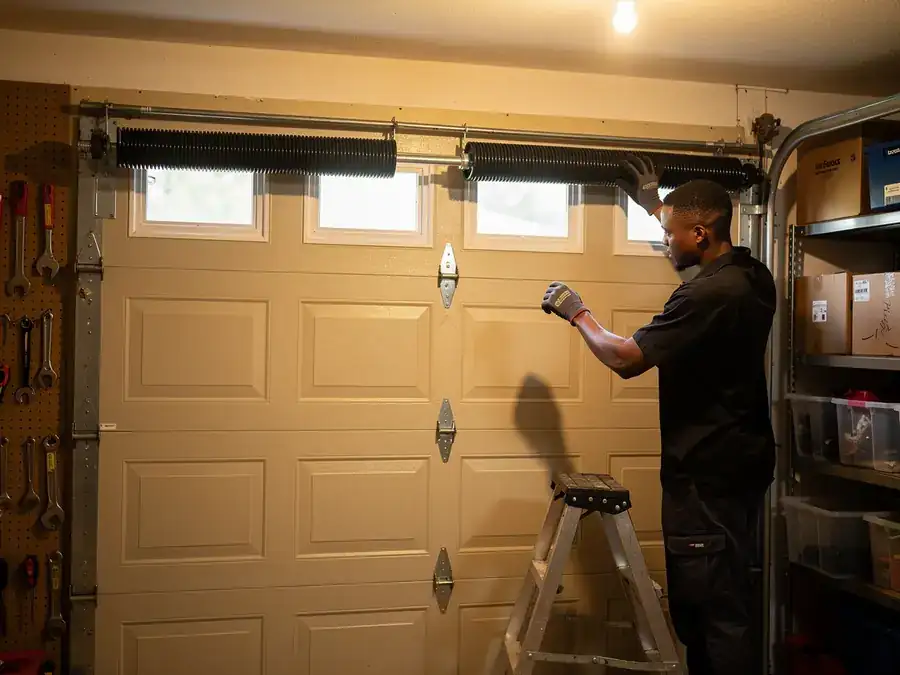
Torsion springs on a standard residential door are rated for a set number of open-close cycles - usually somewhere around 10,000 - and a door installed in 2003 that gets used twice a day has likely burned through that rating once already, maybe twice. That's the loud bang, the door that won't lift, the spring you can see is visibly separated on one side.
Openers from that build era are a second common call
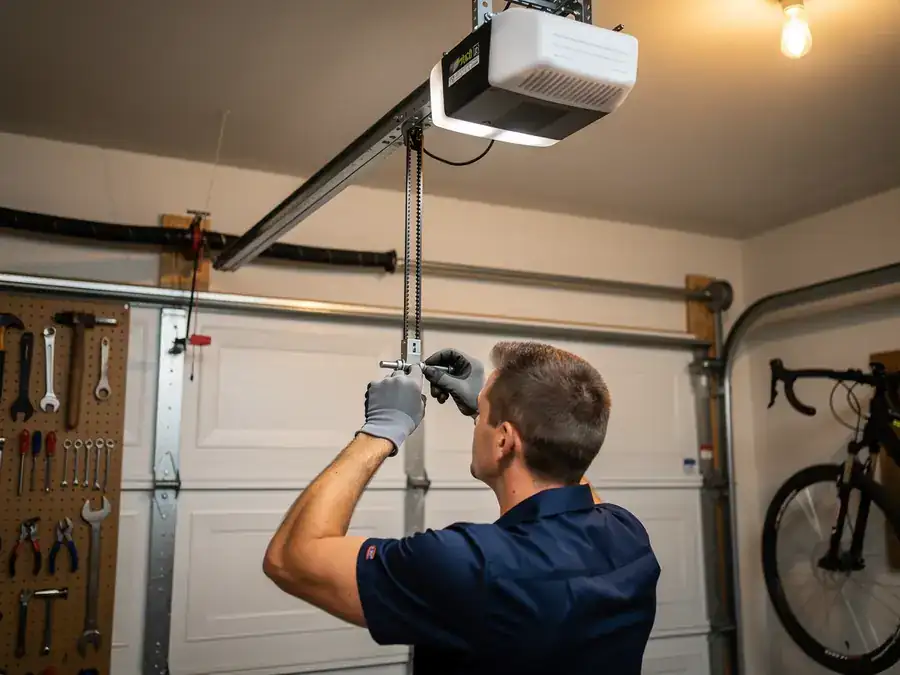
The chain-drive and early belt-drive units from the early 2000s used circuit boards that weren't built to last 20-plus years, and capacitors on those boards tend to fail before the motor itself does. You'll see it as a door that hums but doesn't move, or a remote that stops working while the wall button still does.
Rollers are the quieter failure
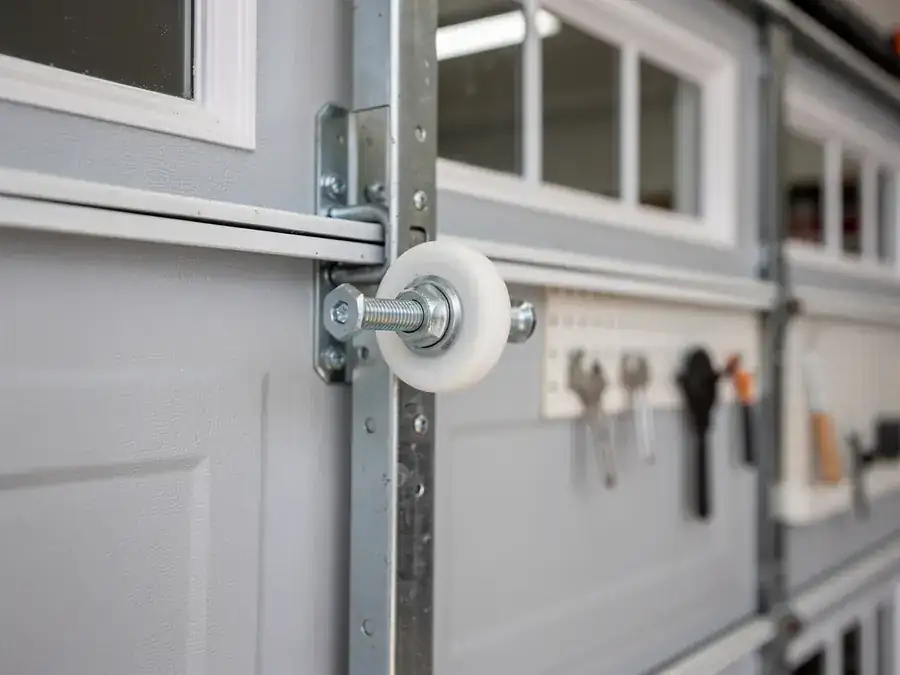
Steel-and-nylon rollers from that period wear down slowly, so the door gets noisier and a little rougher in the track over a few years rather than failing all at once. If your door's been getting louder for a while rather than breaking suddenly, that's usually rollers, not springs.
What It Costs
We're not going to put a number here that doesn't hold up once we've actually seen the door. What drives the cost on a 2003-era door is usually one of three things: a spring replacement, an opener board or full opener swap, or a roller and track adjustment. Those are different jobs with different parts and different labor time, and the honest answer is it depends which one you've got.
What we can tell you is that a door built around 2003 is old enough that a repair sometimes isn't the better move - if the opener board is failing and the springs are also near the end of their cycle life, replacing both piecemeal over separate calls can cost more in the long run than handling it together. We'll say so on the call if that's what we're looking at, rather than run you through three separate visits.
Income levels in this part of the Fort Mill area run higher than a lot of the region, and we see more owners here choose to replace an aging opener outright rather than patch a 20-year-old board. That's a choice, not something we push - plenty of these doors are worth repairing as-is.