How Long You Are Without the Door
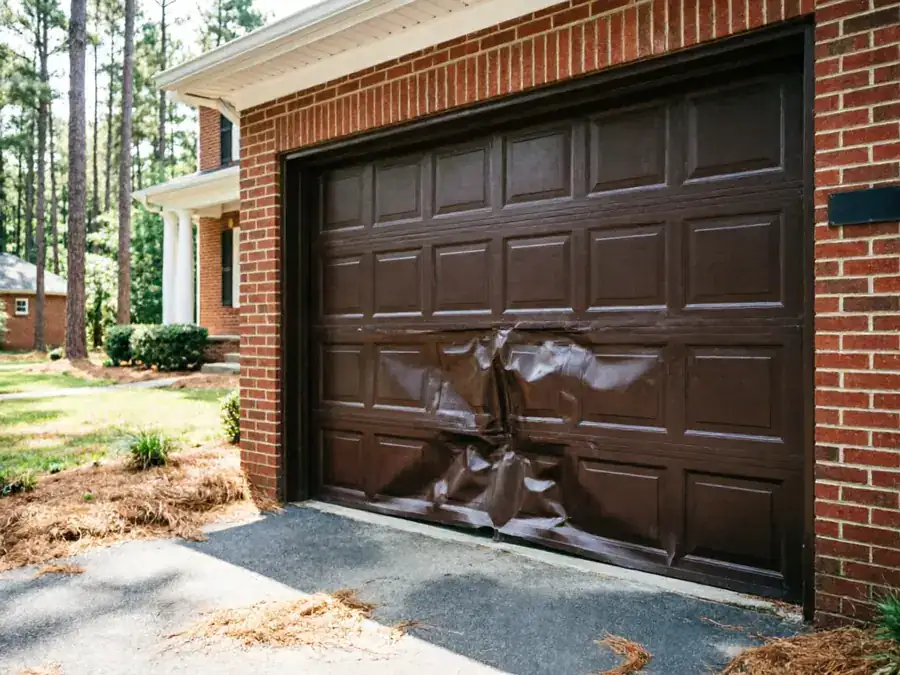
Baxter Village is a small place - about 1,591 households - and that matters more than you'd think for a panel job. A subdivision this size was mostly built up in one stretch, with a median build year around 2006, so a lot of the doors on these streets came from the same handful of builder-grade lines. That's good news for matching: when a section gets caved in by a trailer hitch or a basketball through the bottom panel, there's a decent chance a near-identical door is sitting three driveways down, which helps when we're trying to confirm what we're ordering against. We travel from Fort Mill, about 3 miles out, so there's no local branch sitting idle waiting on a call - the truck comes to you. We won't quote a response time here because that depends on what's on the truck that day and what the supplier has in stock, not on the distance, which is short regardless.
The real variable is the part. If your door is a common builder line from the early-2000s building boom in this area, a single-panel swap can often be scheduled without a long wait. If it's a less common import or a discontinued run, that changes the timeline, and we'll tell you straight when that's the case instead of guessing.
What You Are Seeing
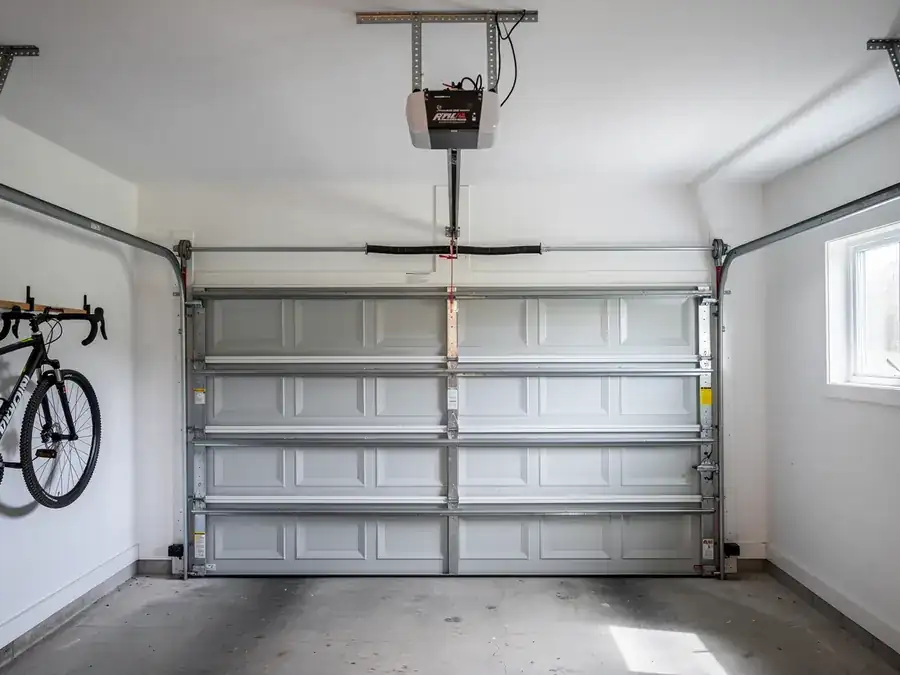
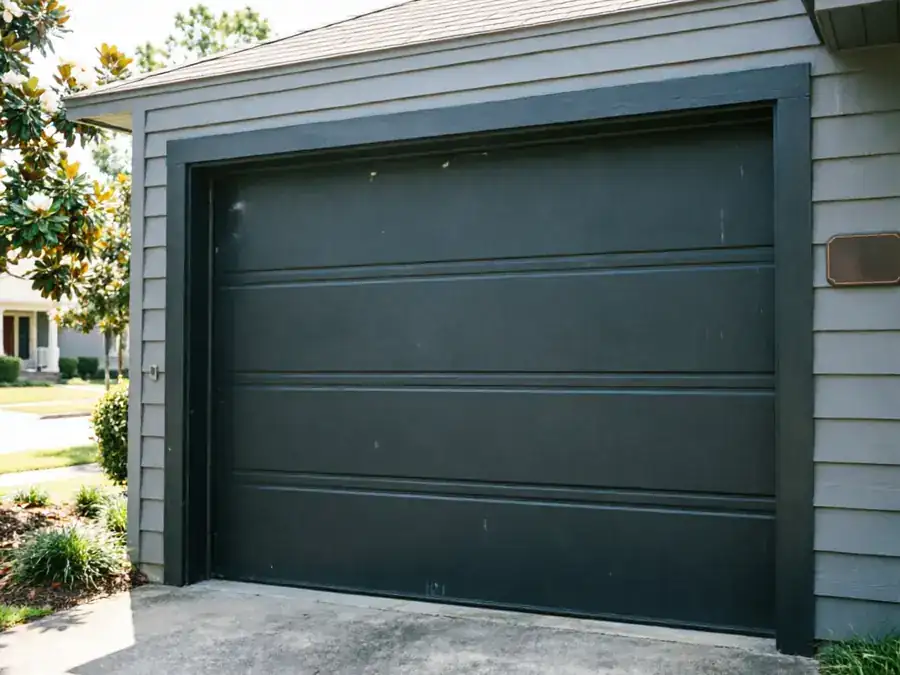
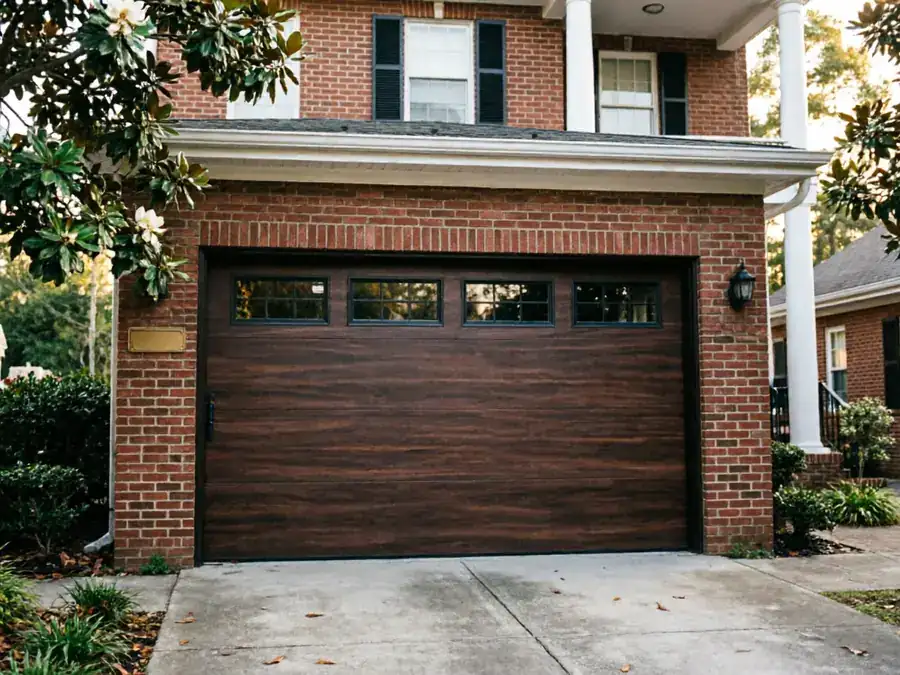
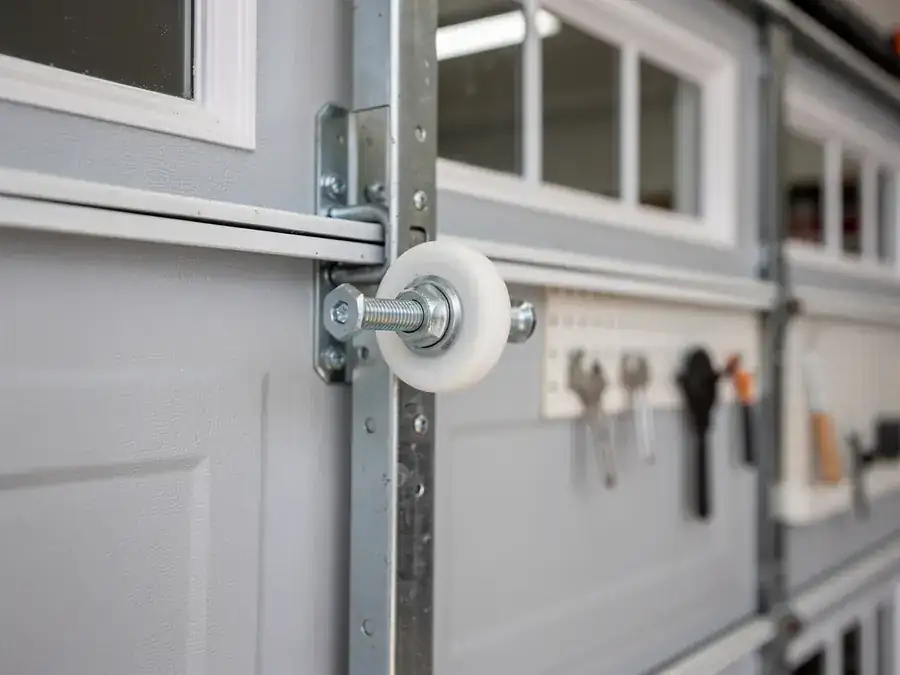
Homes in Baxter Village mostly date from the late 1990s through the mid-2000s, which puts most garage doors here in steel sectional territory - insulated, roll-formed panels on nylon rollers, usually galvanized track. At this age, the failure you're looking at usually isn't rot or warping like you'd see on an older wood door elsewhere in the service area; it's impact damage. A dented bottom section from backing into the door, a cracked panel from a stray branch, or a bowed section where the door caught wrong on the track. Cold-climate swings in this part of the Carolinas mean steel can also develop hairline cracks at stress points over a couple decades, especially near the hinge screws on a section that's taken a hit before.
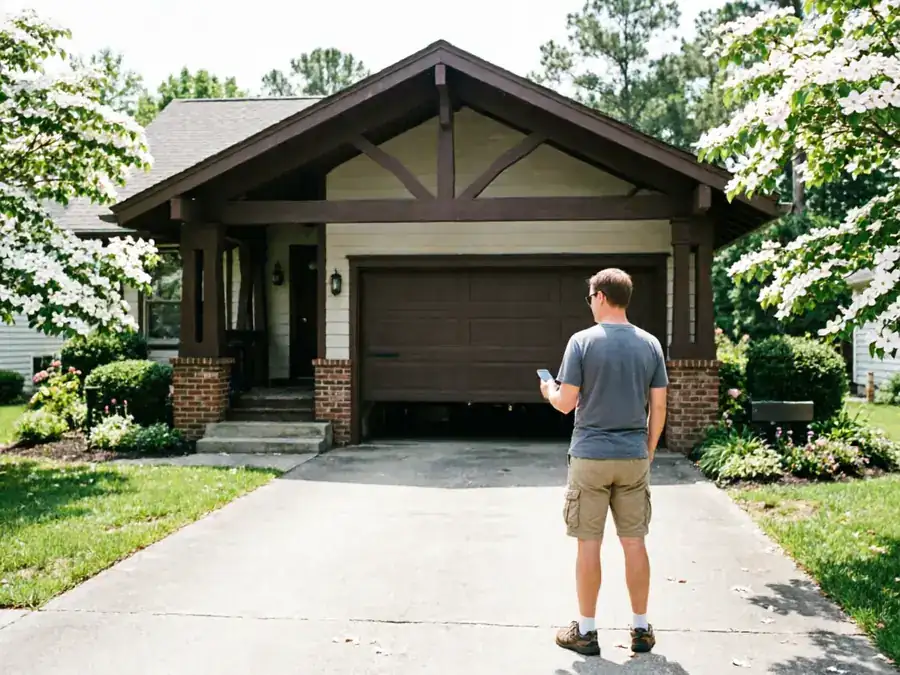
What you want to check before calling: is it one section or more, does the door still run on the track without binding, and are the hinges and rollers on that section still intact. A single dented panel on an otherwise sound door is a straightforward swap. Damage across two or three sections, or a bent track riding alongside it, usually means more than a panel is on the table.
What the Repair Takes
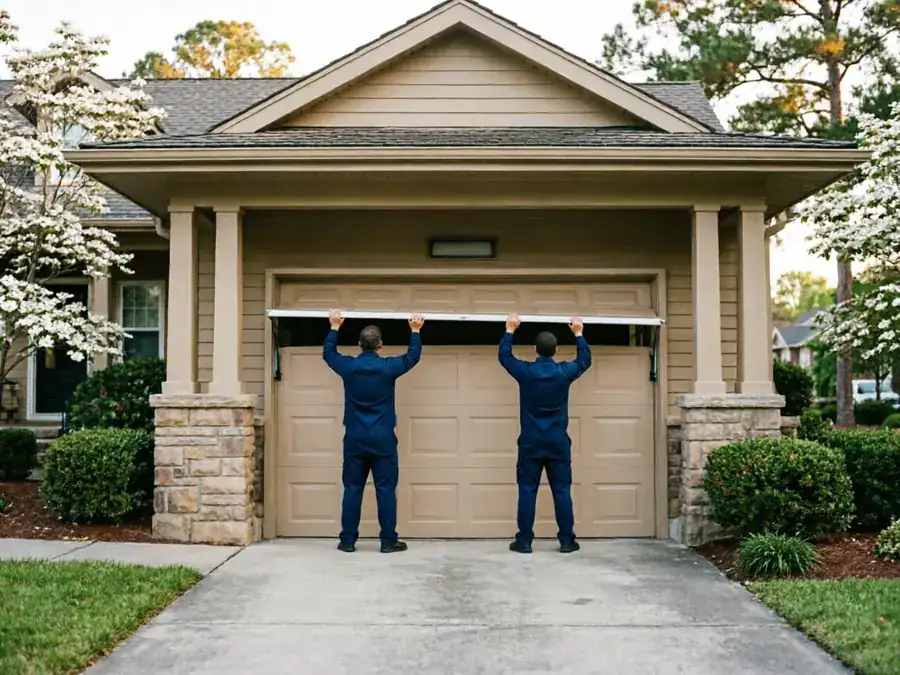
A single-section panel swap on a door from this era is usually a same-visit job once the part's on the truck
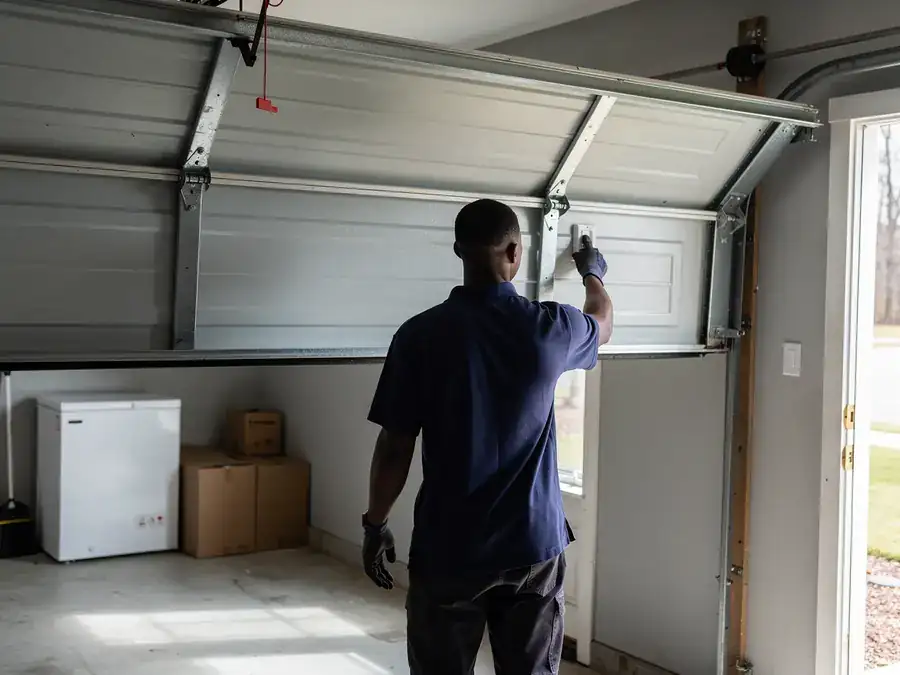
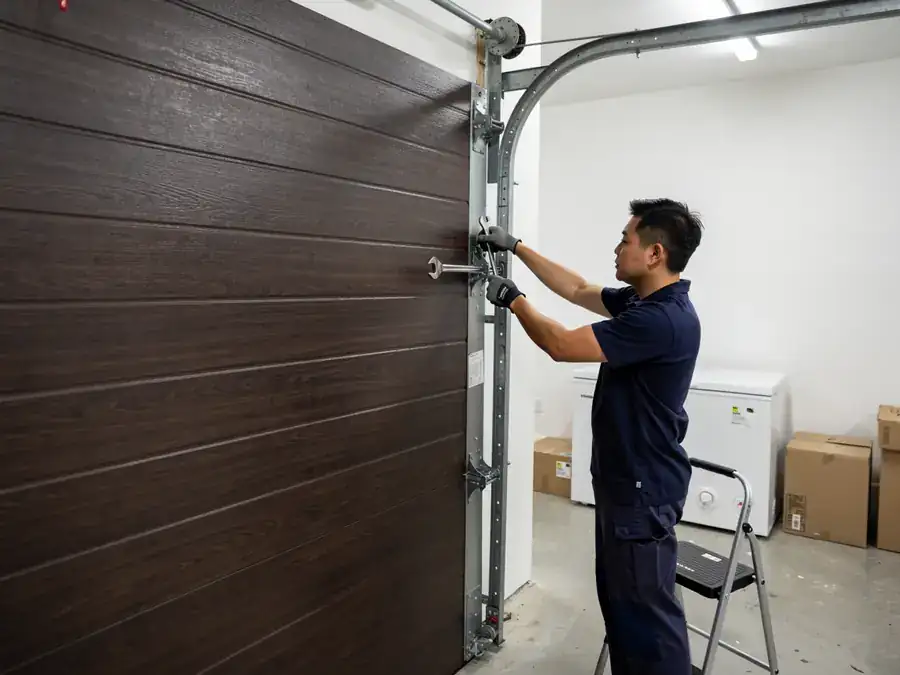
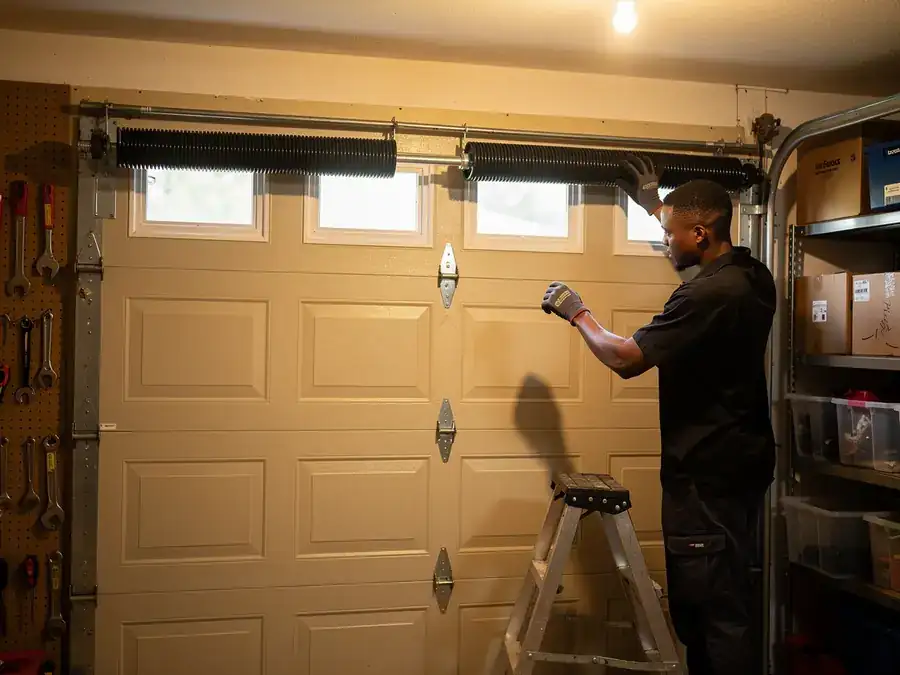
Unbolt the hinges, slide the damaged section out, slide the match in, re-hang and balance. Where it gets slower is sourcing. Builder-grade doors from the early-2000s housing push sometimes used runs that the original manufacturer no longer carries, and matching color and rib pattern on a door that's faded over near two decades isn't always exact. We'll be honest about that upfront rather than promise a seamless match and hand you a door with one section a shade off.
If more than one section is damaged
Or the door's insulation core shows separation at the seams, replacing just the panel can end up costing close to a full door once you add up parts and labor - that's the point where we'll tell you full replacement is the better spend, not the panel route. We don't pad a panel job into something it isn't.
Getting It Booked In
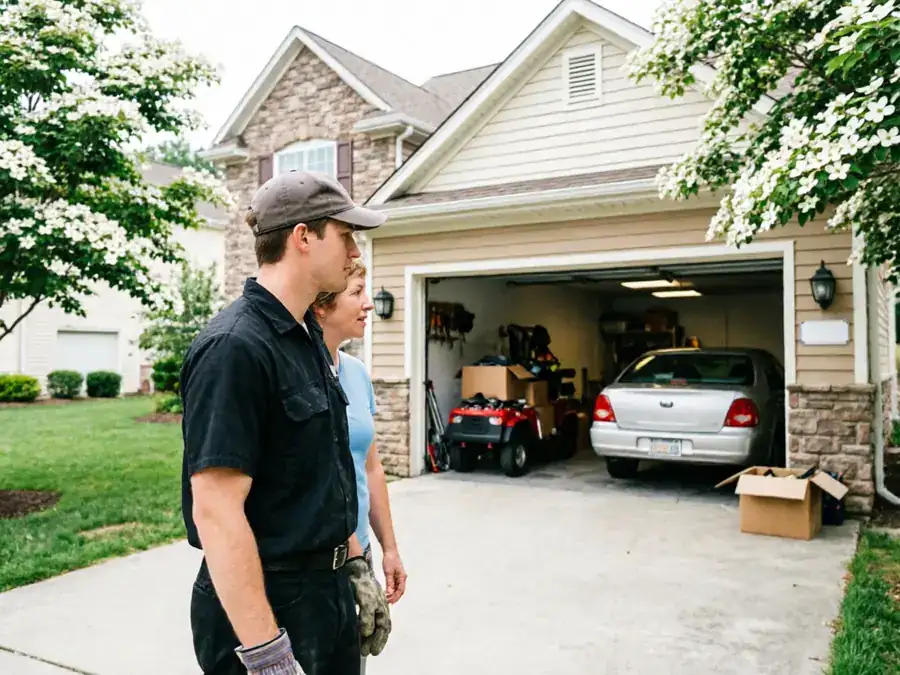
Call us and tell us what you're seeing - one section or more, color, roughly how old the door is if you know it. For a neighborhood like this, knowing the builder or seeing a label inside the door helps us pull the right panel faster since so much of the stock here is from the same era. We cover Baxter Village from Fort Mill, a short drive out, and we'll give you a straight answer on whether a panel is worth replacing or whether the whole door makes more sense once we've seen it.