Parts We Carry
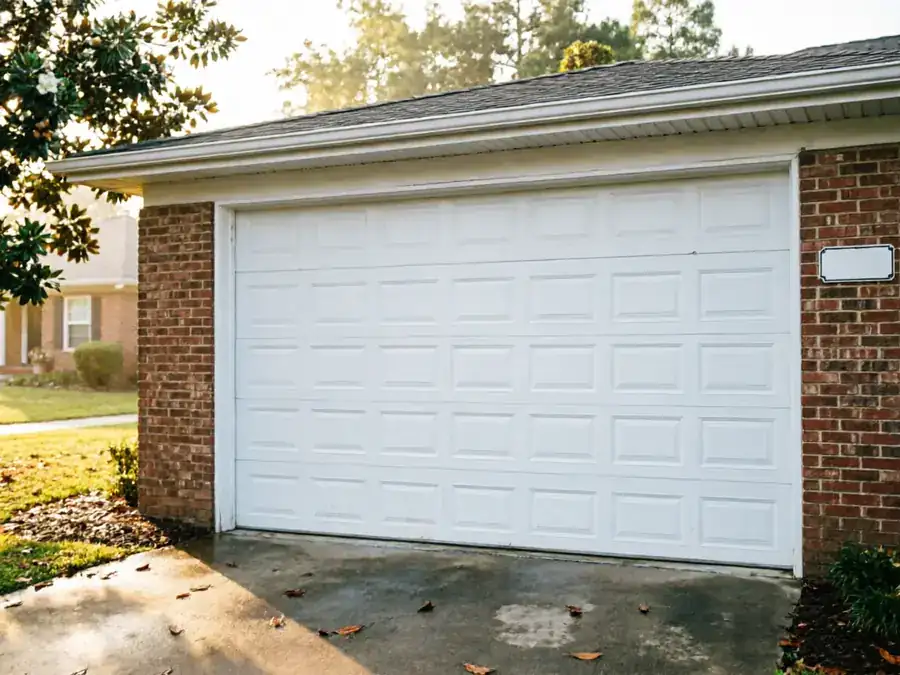
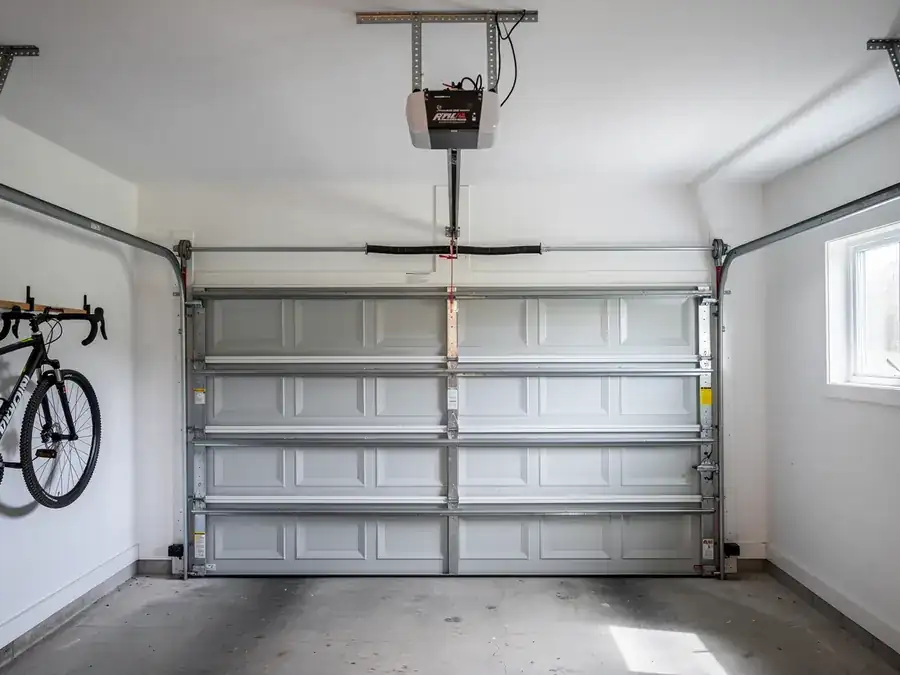
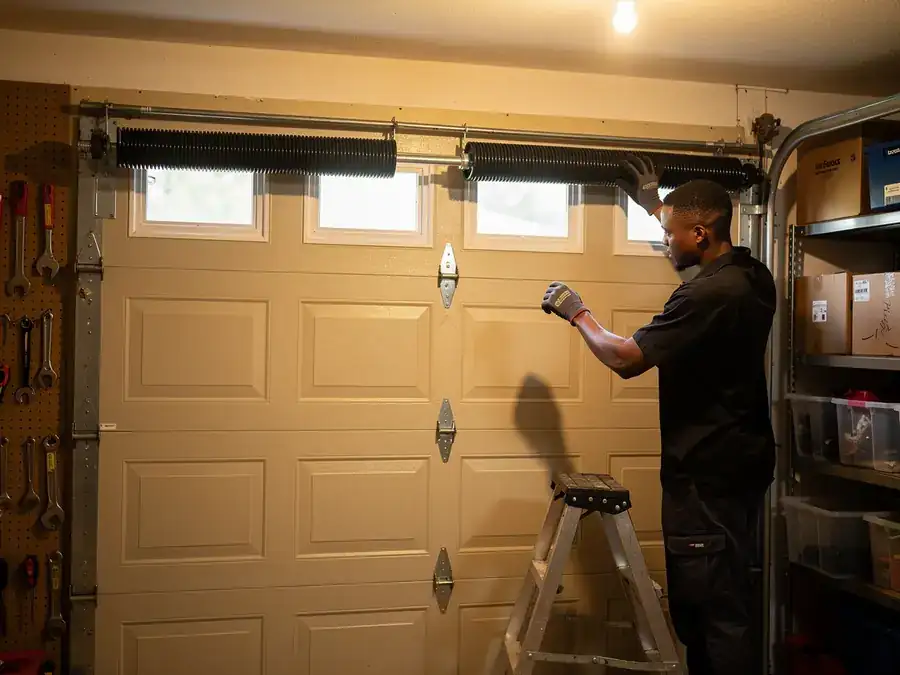
Most of Lesslie went up around 1994, which puts it squarely in the builder-grade steel sectional era - raised-panel steel doors, usually 16x7 for a double bay, hung on standard torsion hardware. These aren't the heavier insulated doors you see on newer construction closer to Baxter Village or Tega Cay; they're single-layer or light double-layer steel, often with a stamped panel pattern that was common across the whole region through the late 90s and into the 2000s.
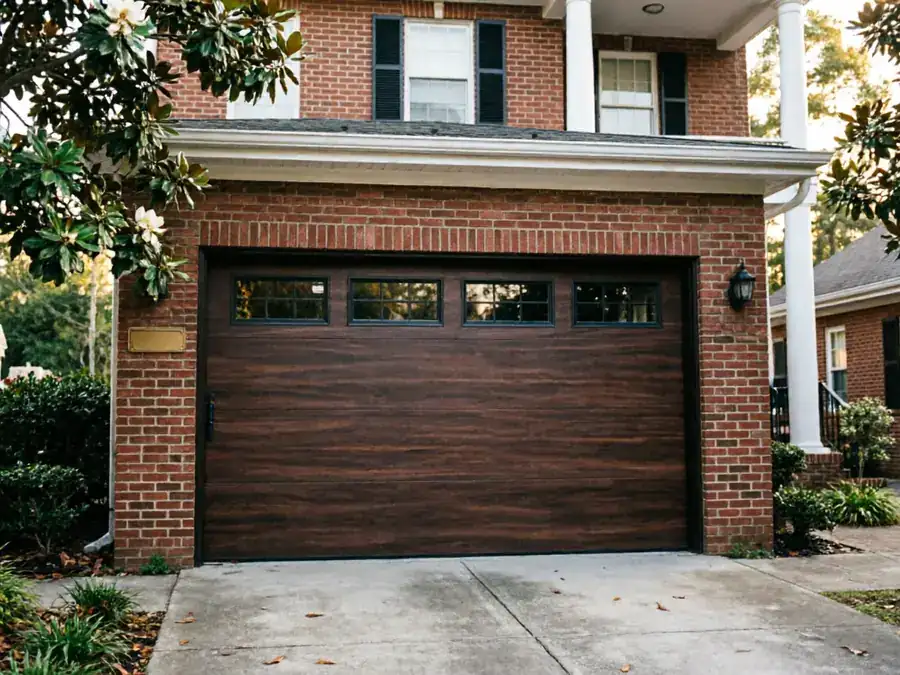
We carry matching steel panel sections in the standard raised and long-panel profiles, along with the end stiles and hinges that era of door uses. What we don't always have on the truck is an exact color or wood-grain laminate match if your door was a higher-end finish - those sometimes need an order from the manufacturer, and that can add a few days. If your door predates the mid-90s batch, hardware spacing can vary enough that we check the panel dimensions before we promise a same-visit fix.
We won't try to force a panel that's a near-miss onto your door. A mismatched panel throws off the balance on the rest of the section, and on a 1990s door that's already carrying thirty years of wear, that's asking for a spring or cable problem six months later.
Getting It Booked In
We run out of Fort Mill, and Lesslie sits about 8 miles out, so a panel job here isn't a same-hour walk-in - we schedule it so we're bringing the right panel stock with us rather than guessing. When you call, have the door's brand name or model sticker ready if you can find it (usually on the inside of the end stile); it saves a trip back for the wrong panel.
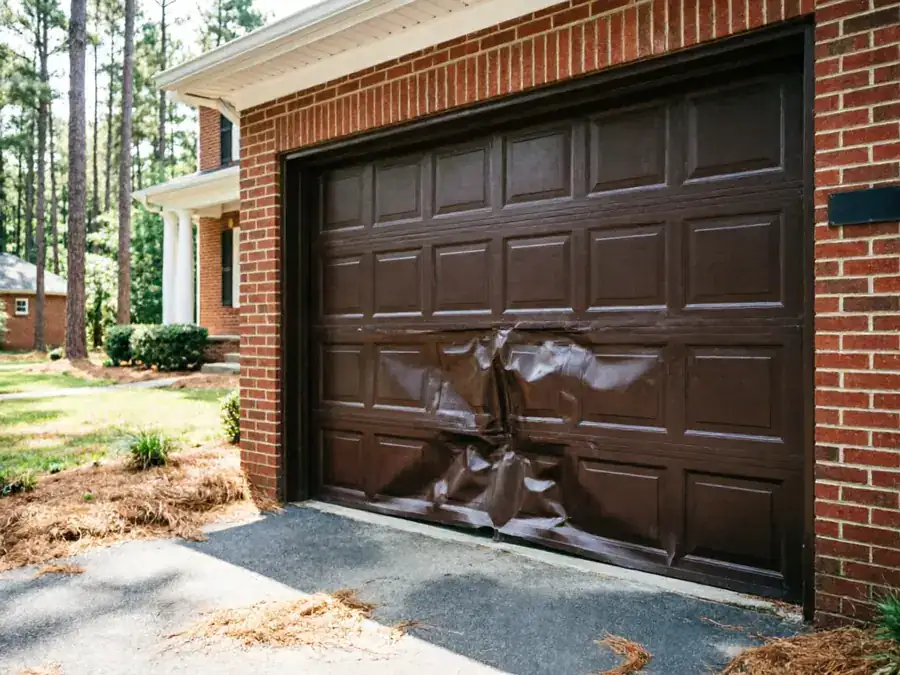
With around 1,114 households in Lesslie and a lot of those homes built in the same few years, we see the same handful of door models repeat across the area, so once we know what's on your house, matching it is usually straightforward. If the damage is cosmetic - a dent from a backed-into bumper, a cracked panel from a storm - we can often quote the fix over the phone once we have the model number. If the track or hardware is bent too, we need to see it in person before we price it.
What You Are Seeing
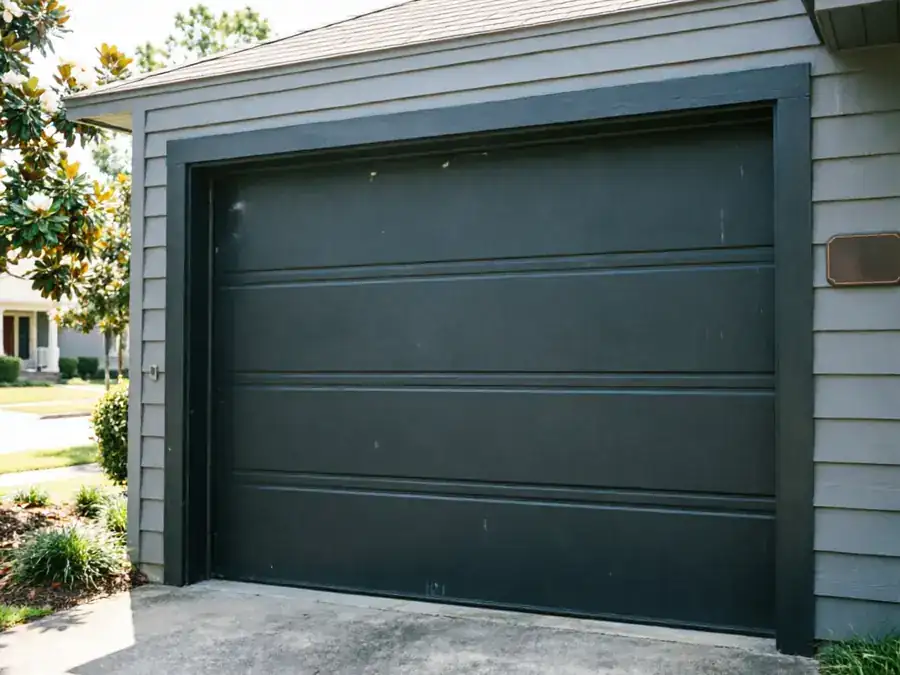
On a door from the 1994 build era, panel failure usually shows up as a dent that's folded the steel sharply enough to bind against the track, or as a crack along a hinge line where thin-gauge steel has fatigued after years of the door working against cold-weather contraction
This area gets a moderate cold season, and steel panels that have gone through enough freeze-thaw cycles can develop stress cracks right where the hinge screws bite into the metal - that's a panel replacement, not a hinge tightening.
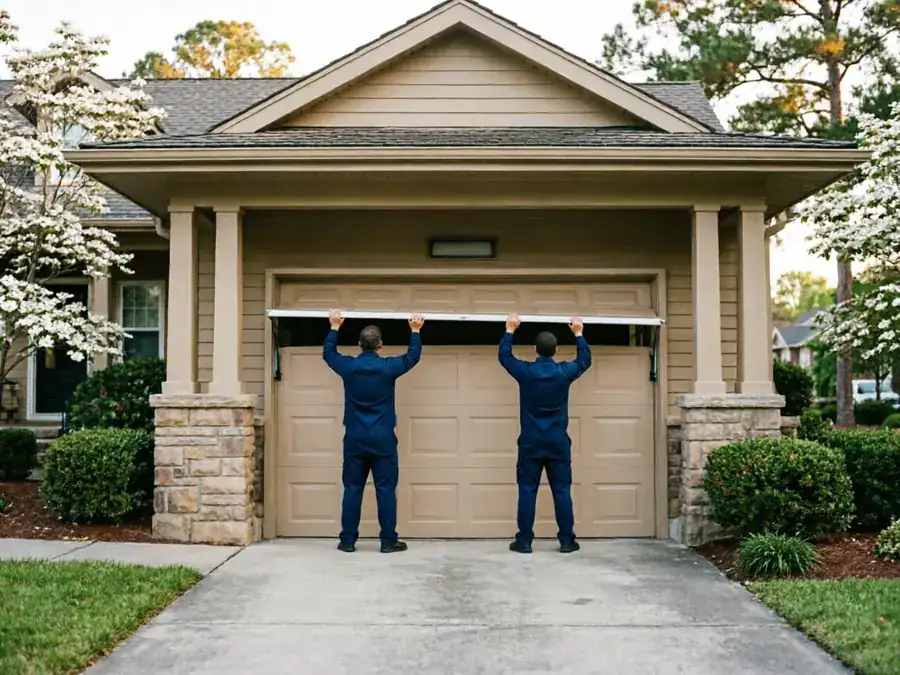
Sometimes what looks like one bad panel is actually a bowed section pulling the whole door out of square
Which puts strain on the opener and the other panels too. We check the full door before we quote a single-panel fix, because replacing one section on a door that's racked out of alignment just moves the problem to the next panel down.
What the Repair Takes
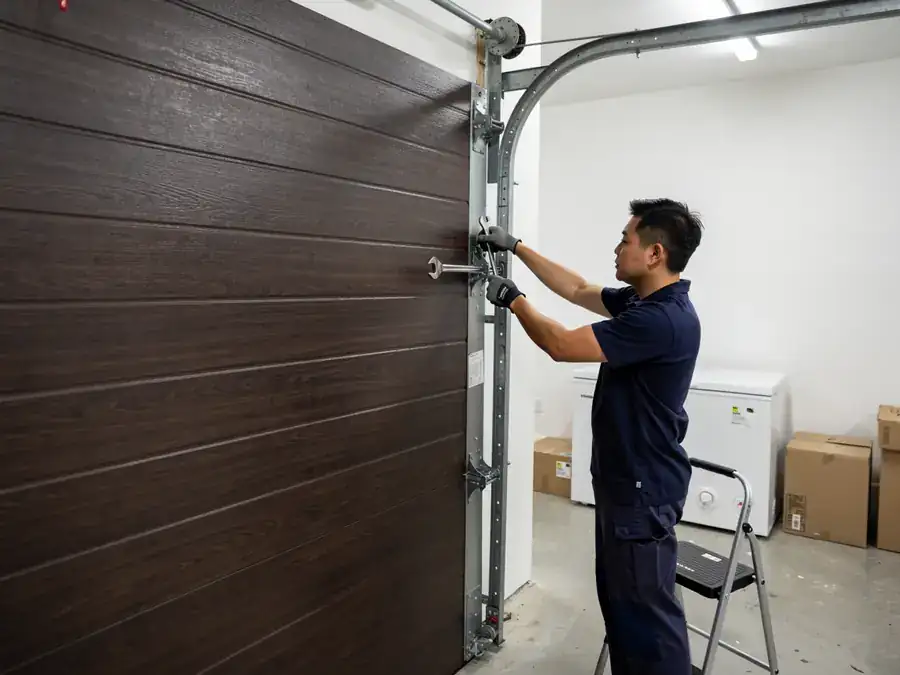
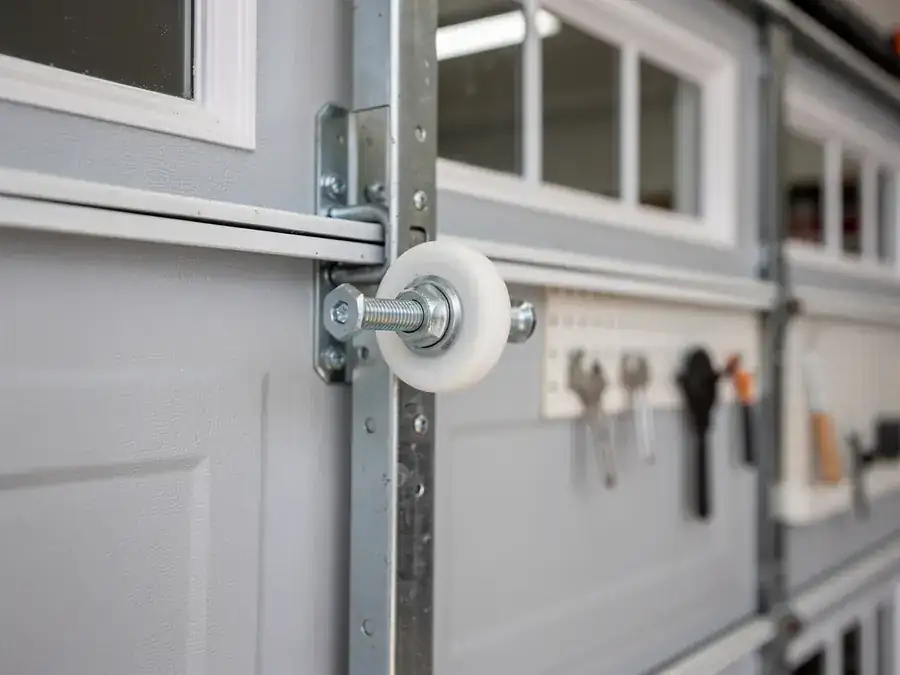
A single-panel swap on a standard 16x7 steel sectional is usually a few hours once we're on site with the right part - removing the hinges and rollers from the damaged section, fitting the new panel, and rehanging it so the door tracks true. Where it runs longer is when the door has settled unevenly over close to thirty years and the track needs adjusting to match, which is common enough on Lesslie's housing stock that we build in time for it rather than treat it as an upsell.
We don't recommend a panel replacement on a door that's already showing rust-through on multiple sections or a spring system well past its rated cycles - at that point the honest number is a full door, not a patch. We'll tell you straight if that's where your door is instead of selling a panel that'll outlast the rest of the door by a week.